
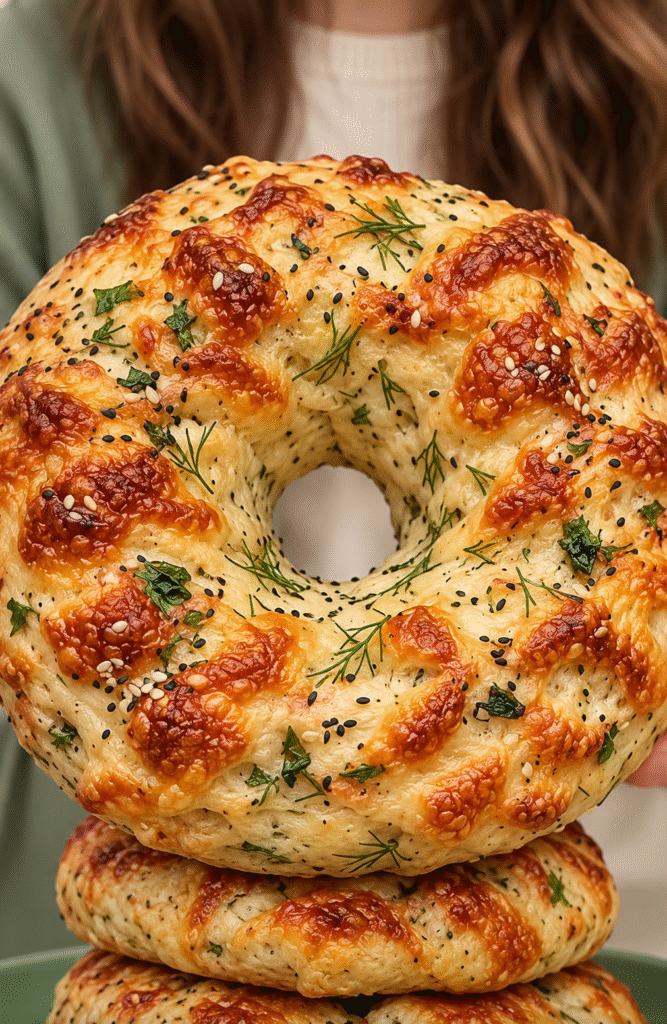
High-Protein Cottage Cheese Dill Bagel Bread combines cottage cheese, eggs, mozzarella, Parmesan, and fresh dill in a savory quick bread. The center stays tender, while the cheese topping turns golden in the oven. Best of all, you can mix the dough without yeast, kneading, or waiting for a rise.
The recipe below follows your original loaf-pan method and makes eight slices. The reference photo shows a ring-shaped version with seeds, so you'll also find guidance for using a ring mold. Either shape offers the same appealing combination of cheese and herbs, although the pan shape changes the baking time.
Imagine setting this bread beside a breakfast plate of sliced tomatoes, scrambled eggs, and a small bowl of cream cheese. The dill adds a fresh aroma, and the browned mozzarella makes even a plain slice feel special. Later, the same loaf can become toast for lunch or a savory afternoon snack. That flexibility gives this recipe its everyday appeal: one bowl of dough, familiar ingredients, and plenty of ways to serve the finished bread.
Expect a moist, tender quick-bread crumb rather than the dense chew of a boiled bagel. Cottage cheese and eggs contribute protein, but the exact amount per slice depends on your cheese brands and portion sizes.
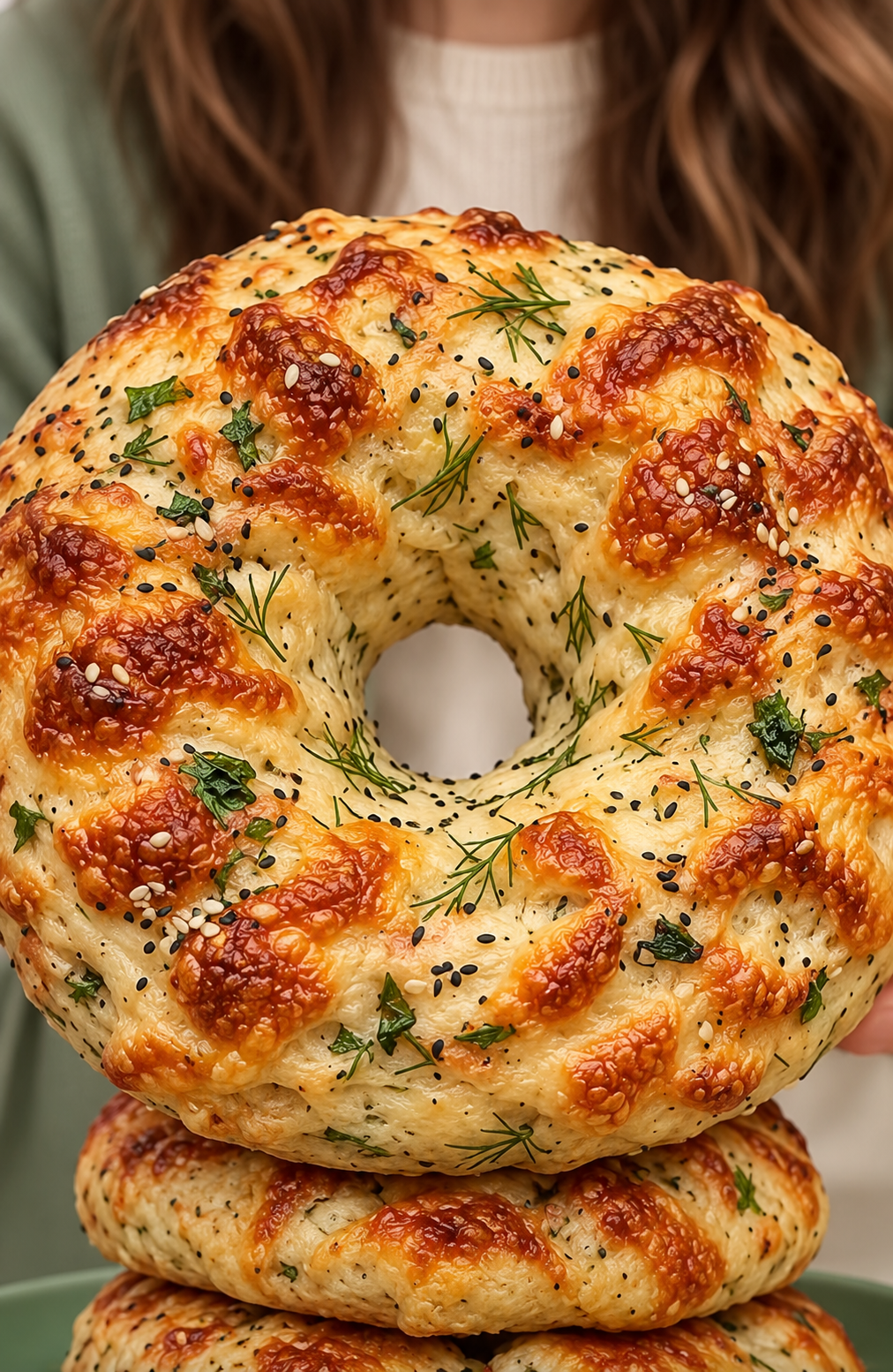
High-Protein Cottage Cheese Dill Bagel Bread
Equipment
- 8-by-4-inch loaf pan For the main loaf method.
- Parchment Paper Leave an overhang for lifting the loaf.
- Blender or food processor An immersion blender also works.
- Large mixing bowl
- Whisk and sturdy spatula
- Measuring cups, spoons, and kitchen scale
- Pastry brush For applying a light egg wash.
- Wire cooling rack
Ingredients
- 1 cup thick cottage cheese, approximately 225 g
- 2 large eggs, for the dough
- 1 1/2 cups all-purpose flour, approximately 180 g
- 2 teaspoons baking powder
- 1/2 cup shredded low-moisture mozzarella, approximately 56 g, for the dough
- 2 tablespoons grated Parmesan, approximately 10 g
- 3 tablespoons finely chopped fresh dill
- 1 tablespoon finely chopped fresh chives, optional
- 1/2 teaspoon garlic powder
- 1/2 teaspoon onion powder
- 1/4 teaspoon salt
- 1/4 teaspoon ground black pepper
- 1 large egg, beaten, for brushing; use only as needed
- 2 tablespoons shredded mozzarella, approximately 14 g, for topping
- 1 teaspoon dried dill, for topping
- 1 teaspoon sesame seeds, optional, for topping
Instructions
- Preheat the oven to 350°F (175°C). Line an 8-by-4-inch loaf pan with parchment paper, leaving an overhang along the long sides.
- Blend the cottage cheese and two eggs until mostly smooth.
- Whisk together the flour, baking powder, garlic powder, onion powder, salt, and pepper in a large bowl.
- Add the cottage cheese mixture, 1/2 cup mozzarella, Parmesan, fresh dill, and optional chives. Fold gently until no dry flour remains. The dough will feel thick and sticky.
- Transfer the dough to the prepared pan. Spread evenly and gently smooth the top.
- Brush lightly with beaten egg. Sprinkle with 2 tablespoons mozzarella, dried dill, and optional sesame seeds.
- Bake for 40-50 minutes, until golden and a skewer inserted into the center comes out without wet dough. Loosely tent with foil if the topping browns before the center finishes. Extend baking as needed.
- Cool in the pan for 10-15 minutes. Lift onto a wire rack and cool for at least another 30 minutes, preferably until fully cool, before slicing into eight portions.
Notes
Nutrition
Understanding the Cheese and Dill Combination
Cottage Cheese Creates a Moist Base
Cottage cheese supplies moisture, mild flavor, and protein. Blending it with the eggs breaks down the curds and helps the mixture spread evenly through the flour. Consequently, each slice develops a more uniform texture.
Choose thick cottage cheese for the most predictable result. If you see a generous pool of liquid in the container, drain off the loose excess before measuring. However, avoid pressing the cheese completely dry, because the dough needs its moisture.
Both full-fat and reduced-fat cottage cheese can work. Full-fat varieties generally give the crumb a richer feel, while reduced-fat versions may produce a slightly leaner result. Since brands vary, watch the dough's consistency as you combine the ingredients.
The eggs also help the bread hold together. Meanwhile, baking powder supplies the lift, so you do not need yeast or a proofing period.
After mixing, expect a thick, sticky dough that you can scoop into a pan. You should not expect a smooth ball that you can knead and roll like traditional bagel dough.
Mozzarella, Parmesan, and Herbs Add Flavor
Mozarella gives the bread a mellow cheese flavor and soft pockets throughout the crumb. For easier measuring and more consistent moisture, use shredded low-moisture mozzarella rather than fresh mozzarella packed in liquid.
Parmesan adds a sharper, saltier note. Because cottage cheese and Parmesan already contain salt, the recipe needs only a modest additional amount. You can adjust that amount in a future batch after tasting your chosen cheese combination.
Fresh dill provides the main herbal flavor. Chop it finely so the delicate leaves distribute throughout the dough. Also, remove any thick stems that could create a tough bite.
Optional chives add a gentle onion flavor without overpowering the dill. Meanwhile, garlic powder and onion powder season the dough evenly without adding extra liquid.
The dried dill topping reinforces the aroma, while a little extra mozzarella creates golden patches across the surface. Together, these ingredients give the bread plenty of flavor before you add any butter or sandwich fillings.
Mixing the Dough and Choosing a Pan
Mix Gently for a Tender Crumb
Prepare the pan and preheat the oven before mixing the wet and dry ingredients. Baking powder starts working once moisture reaches it, so you should move the finished dough into the oven without a long delay.
First, blend the cottage cheese and two eggs until mostly smooth. A blender or small food processor handles this quickly. Alternatively, use an immersion blender in a tall container.
In a separate bowl, whisk the flour, baking powder, garlic powder, onion powder, salt, and pepper. This step spreads the baking powder evenly and prevents concentrated pockets of seasoning.
Next, add the blended cottage cheese mixture, mozzarella, Parmesan, dill, and optional chives. Fold everything together with a sturdy spatula until you no longer see dry flour.
Avoid vigorous stirring once the flour absorbs the wet mixture. Excessive mixing can make the crumb tougher and less delicate.
If the dough feels sticky, that usually matches the intended texture. Resist adding extra flour simply to make it easy to handle by hand. Instead, use a spatula or lightly dampened spoon to transfer and smooth it.
Use a Loaf Pan or a Supported Ring Shape
For the main recipe, line an 8-by-4-inch loaf pan with parchment paper. Leave a little parchment overhanging the long sides so you can lift out the bread after its initial cooling period.
Spread the dough evenly into the corners. Then smooth the top gently without packing it down firmly.
The photograph shows ring-shaped bread, which requires a different approach. Because this dough contains plenty of moisture, a free-form ring may spread or lose its center hole. A greased shallow ring mold or individual bagel molds provide better support.
For a ring variation, distribute the dough into suitable molds, leave room for expansion, and apply the same topping. Begin checking smaller rings around 20-25 minutes, then continue baking as needed. Mold size and dough depth will determine the final time.
Do not expect one batch to create the entire oversized stack shown in the reference photo. The written recipe makes one small loaf or a quantity of molded rings that depends on your molds.
Baking and Cooling the Bread
Build a Golden Topping Without Overbaking
Brush the loaf lightly with beaten egg. You may not need the entire topping egg; a thin coating supplies enough coverage.
Next, scatter the extra mozzarella and dried dill over the surface. Keep the cheese reasonably even so one area does not brown much faster than the rest.
Bake at 350°F (175°C) for approximately 40-50 minutes. However, treat that range as a starting point. Cottage cheese moisture, pan material, and oven temperature can all affect the baking time.
Look for a golden top and a center that feels set. Insert a toothpick or thin skewer into the middle, avoiding a visible pocket of melted cheese. It should come out without wet dough, although a few moist crumbs are fine.
If the topping reaches a deep golden color before the center finishes, loosely tent the pan with foil. Then continue baking until the middle cooks through.
Avoid removing the loaf solely because the cheese looks ready. The interior needs enough time to develop structure and support clean slices.
Let the Crumb Set Before Slicing
After baking, leave the bread in its pan for about 10-15 minutes. This short rest helps the loaf firm up enough for lifting.
Next, use the parchment overhang to transfer it to a wire rack. Let air circulate underneath so trapped steam does not soften the base excessively.
Wait at least another 30 minutes before slicing, and allow longer if the center still feels hot. The cottage cheese and melted mozzarella hold moisture, so an early cut can create a gummy-looking surface even when the bread has baked adequately.
Use a serrated knife and gentle sawing motions. Pressing straight down with a dull blade can compress the tender crumb.
For the neatest sandwich slices, let the loaf cool completely. Then cut it into eight portions of similar thickness.
If you want warm bread, toast individual slices after cooling. That approach gives you a firmer center and crisp edges while preserving the loaf's structure.
Serving, Storing, and Making Small Adjustments
Turn One Loaf into Several Meals
Serve a slice of High-Protein Cottage Cheese Dill Bagel Bread with eggs for breakfast, or spread it with cream cheese and add cucumber for a simple snack.
For lunch, try chicken salad, tuna, sliced tomatoes, or roasted vegetables. The dill pairs particularly well with cucumber and lemon flavors. However, use wet fillings just before serving so they do not soak into the bread.
You can also toast a slice and serve it alongside tomato soup or a green salad. A small amount of butter in a skillet creates especially crisp edges.
For a seed topping similar to the photograph, add a teaspoon of sesame seeds before baking. This optional addition changes the appearance and adds a little crunch. The base recipe does not require seeds.
If you want to adjust the herbs, replace the optional chives with finely chopped parsley. Keep the dill for the bread's characteristic flavor, especially on your first batch.
Avoid adding large amounts of watery vegetables without adjusting the recipe, because they can leave the center overly moist.
Store Carefully and Troubleshoot Texture
Cool the bread completely before placing it in an airtight container. Because this loaf contains moist cheese and eggs, refrigerate it and aim to enjoy it within three to four days.
For longer storage, separate slices with parchment and freeze them in a well-sealed container or freezer bag for up to two months. Then toast individual slices directly from frozen or thaw them in the refrigerator.
If your bread feels unusually dense, check your baking powder and flour measurement. Spoon flour into the measuring cup and level the top, or use the listed gram weight.
If the center stays wet, the loaf may need additional baking time. Excess liquid in the cottage cheese can also contribute, so use a thick variety and drain only the obvious loose liquid.
If the bread crumbles, let it cool longer before cutting. Also, keep the original egg quantity, since the eggs help bind the loaf.
For a stronger dill flavor, use fresh, fragrant herbs rather than increasing the dried topping dramatically.
Ingredients
Makes 1 small loaf, approximately 8 slices.
For the bread:
- 1 cup thick cottage cheese, approximately 225 g
- 2 large eggs
- 1½ cups all-purpose flour, approximately 180 g
- 2 teaspoons baking powder
- ½ cup shredded low-moisture mozzarella, approximately 56 g
- 2 tablespoons grated Parmesan, approximately 10 g
- 3 tablespoons finely chopped fresh dill
- 1 tablespoon finely chopped fresh chives, optional
- ½ teaspoon garlic powder
- ½ teaspoon onion powder
- ¼ teaspoon salt
- ¼ teaspoon ground black pepper
For the topping:
- 1 large egg, beaten; use enough to brush the surface lightly
- 2 tablespoons shredded mozzarella, approximately 14 g
- 1 teaspoon dried dill
- 1 teaspoon sesame seeds, optional, for a finish similar to the photo
Instructions
- Preheat the oven to 350°F (175°C). Line an 8-by-4-inch loaf pan with parchment, leaving an overhang along the long sides.
- Blend the cottage cheese and two eggs until mostly smooth.
- In a large bowl, whisk together the flour, baking powder, garlic powder, onion powder, salt, and pepper.
- Add the cottage cheese mixture, ½ cup mozzarella, Parmesan, fresh dill, and optional chives. Fold gently until you no longer see dry flour. Expect a thick, sticky dough.
- Transfer the dough to the prepared pan. Spread it evenly and gently smooth the top.
- Brush lightly with beaten egg. Sprinkle with the remaining 2 tablespoons mozzarella, dried dill, and optional sesame seeds.
- Bake for 40-50 minutes, or until the loaf turns golden and a skewer inserted into the center comes out without wet dough. Loosely cover the top with foil if it browns before the center finishes.
- Cool in the pan for 10-15 minutes. Lift onto a wire rack and cool for at least another 30 minutes, preferably until fully cool, before slicing.
Preparation takes approximately 15 minutes. Baking takes 40-50 minutes. Allow additional time for cooling.
Frequently Asked Questions
Does this bread taste like a traditional bagel?
It has a different texture. Traditional bagels usually use yeast dough and a boiling step, which create their distinctive chewy crust. This recipe makes a tender, cheesy quick bread with dill flavor.
Can I make the ring shape from the photo?
Yes, with a suitable greased ring mold or bagel molds. The sticky dough needs support, so avoid shaping a large free-form ring. Smaller portions will usually cook faster than the loaf; begin checking around 20-25 minutes and continue until the centers cook through.
Can I use dried dill in the dough?
Yes. As a starting point, replace the 3 tablespoons fresh dill with 1 tablespoon dried dill. Dried herbs taste more concentrated, so avoid substituting equal volumes. You can also reduce or omit the dried dill topping if you prefer a milder flavor.
How much protein does each slice contain?
Using typical cottage cheese and mozzarella values, each of eight slices provides approximately 8 grams of protein. Brands, slice sizes, and the amount of egg wash you use will change that estimate. The bread's title does not represent a verified nutrition-label claim.
Can I skip the egg wash?
Yes. The loaf will still bake, although the surface may look less glossy. Sprinkle the topping cheese directly over the dough and gently press it into place. Keep the two eggs inside the dough, since they contribute structure.
Conclusion
High-Protein Cottage Cheese Dill Bagel Bread offers a straightforward way to bake a savory, cheese-filled loaf without yeast or kneading. Blend the wet ingredients, fold gently, and give the center enough baking and cooling time for clean slices.
Use the loaf-pan method for an easy first batch, or try supported ring molds for a shape closer to the photo. Either way, fresh dill and golden mozzarella make this bread a flavorful choice for toast, sandwiches, or a simple snack.
Leave a Reply