
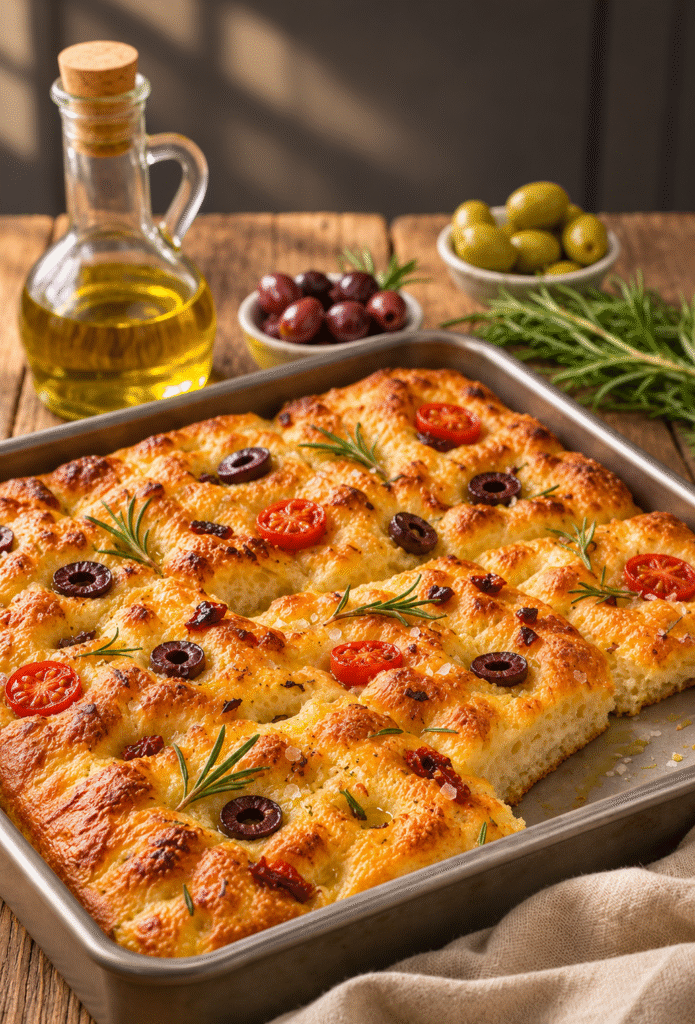
Easy Homemade Focaccia Bread brings together a crisp olive oil crust, a soft center, and fragrant rosemary in one simple pan. You only need basic ingredients, a mixing bowl, and a little patience while the dough rises. No kneading or special shaping skills stand between you and a warm slice.
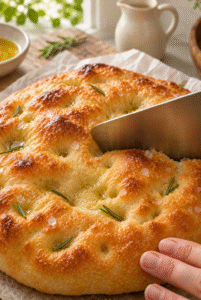
This recipe starts with a sticky dough that develops as it rests. Then, a generous coating of olive oil helps create those golden edges and signature dimples. Keep the topping simple with rosemary and flaky salt, or add cherry tomatoes and olives to match the bread in the photo.
Picture a quiet afternoon with a bowl of dough rising on the counter while you prepare dinner. At first, the mixture looks shaggy and unpromising. After some time, however, bubbles appear and the dough grows soft and pillowy. You ease it into a pan, press in the dimples, and scatter herbs across the surface. Soon, the oven fills the kitchen with the smell of warm bread and olive oil. That small transformation makes focaccia such a satisfying baking project, especially when you want something homemade without spending the afternoon kneading.
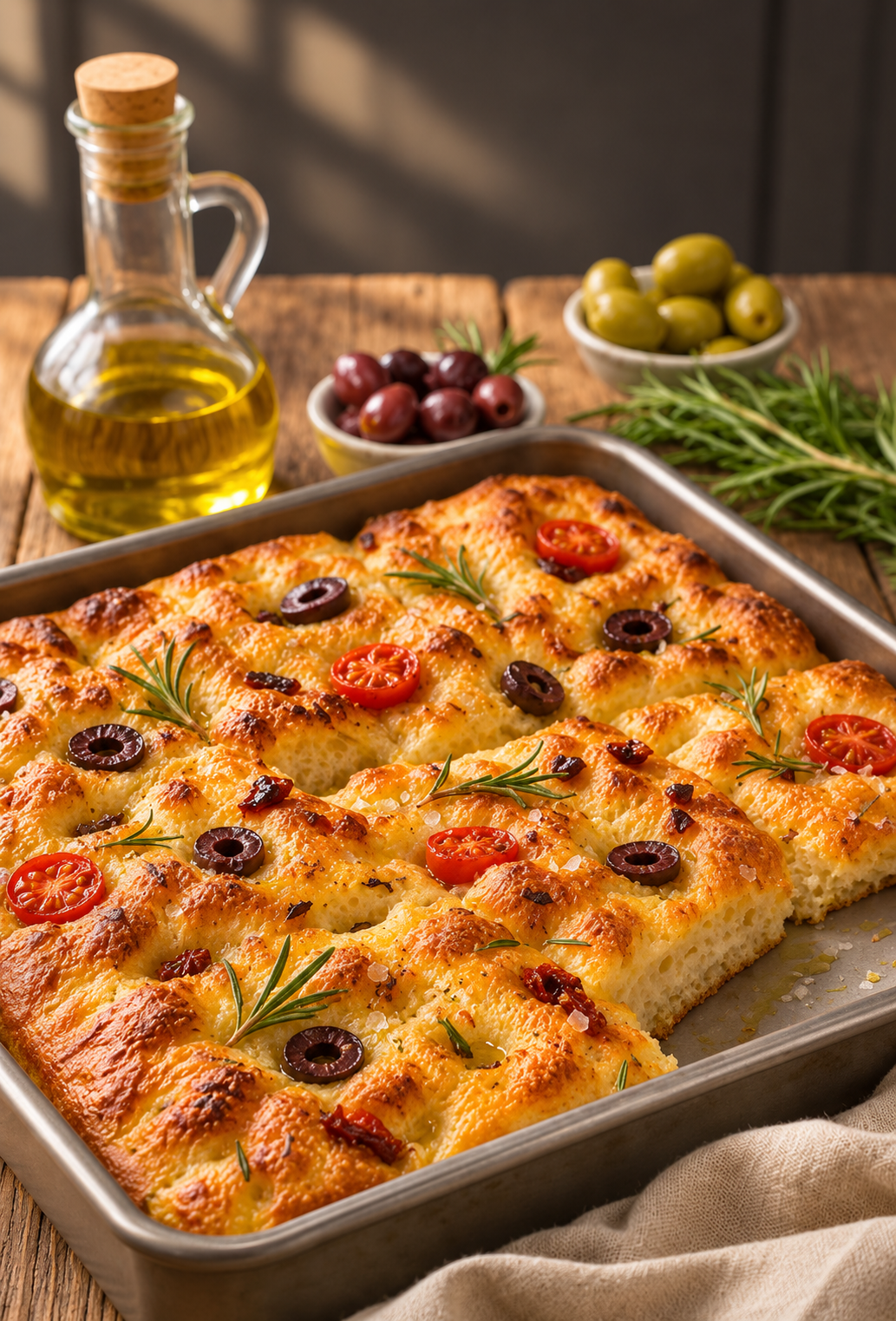
Easy Homemade Focaccia Bread
Equipment
- Large mixing bowl
- Kitchen scale Recommended for measuring flour
- Measuring cups and spoons
- Wooden spoon or sturdy spatula
- 9 × 13-inch metal baking pan
- Bowl cover or clean kitchen towel
- Cooling rack
Ingredients
- 500 g all-purpose flour or bread flour, approximately 4 cups spooned and leveled
- 420 ml lukewarm water, approximately 1¾ cups
- 2 tsp instant yeast
- 2 tsp fine salt
- 1 tsp granulated sugar
- 60 ml olive oil, divided into 2 tablespoons for the dough, 1 tablespoon for the pan, and 1 tablespoon for the top
- 1 tsp dried rosemary, or substitute 1 tablespoon chopped fresh rosemary
- 0.5 tsp flaky sea salt
- 2 cloves garlic, minced, optional
- 0.5 cup cherry tomatoes, halved and patted dry, optional
- 0.25 cup sliced pitted olives, drained and patted dry, optional
Instructions
- Stir the flour, instant yeast, fine salt, and sugar together in a large mixing bowl.
- Add the lukewarm water and 2 tablespoons of olive oil. Stir until a sticky, shaggy dough forms and no dry flour remains. Do not knead.
- Cover the bowl and let the dough rise in a warm spot for 60-90 minutes, or until it roughly doubles and develops visible bubbles. Allow more time in a cool kitchen.
- Spread 1 tablespoon of olive oil across the bottom and sides of a 9 × 13-inch metal baking pan.
- Gently transfer the dough to the pan and turn it once to coat it with oil. Stretch it toward the corners. If it resists, let it rest for 10-15 minutes before stretching again.
- Cover loosely and let the dough rise for 30-45 minutes, until puffy. Meanwhile, preheat the oven to 425°F (220°C).
- Drizzle the remaining 1 tablespoon of olive oil over the dough. Lightly oil your fingertips and press deep dimples across the surface. Add rosemary, flaky sea salt, and optional garlic. If using the optional tomatoes and olives, press them gently into the dough.
- Bake on the middle rack for 20-25 minutes, until golden and cooked through in the center. Allow additional baking time as needed. Tent loosely with foil if the top browns too quickly.
- Let the focaccia rest in the pan for 5-10 minutes. Transfer it to a cooling rack, allow it to cool slightly, and slice into 10 portions.
Notes
Nutrition
What Makes Easy Homemade Focaccia Bread Work
A sticky dough creates a light interior
Focaccia dough feels much wetter than a typical sandwich bread dough. That extra water helps create a tender interior with an irregular network of air pockets. Therefore, resist the urge to add flour until the mixture feels firm or easy to handle.
For consistent results, weigh the flour and use 500 grams. Cup measurements vary depending on how tightly you fill them. If you use measuring cups, gently spoon the flour into each cup and level the surface without packing it down.
Once you combine the ingredients, mix until you no longer see dry flour. The dough should look sticky and rough, but it should hold together as one loose mass.
During the first rise, the flour absorbs water and the dough develops structure. Meanwhile, the yeast produces gas that expands the mixture. You do not need to knead it for this straightforward method.
Both all-purpose flour and bread flour work here. However, bread flour usually creates a slightly chewier bite. All-purpose flour gives the focaccia a softer texture that works especially well alongside soups and salads.
Olive oil adds flavor and a crisp crust
Olive oil plays several roles in Easy Homemade Focaccia Bread. Inside the dough, it contributes richness and tenderness. Underneath the dough, it helps the bottom develop a crisp, flavorful crust.
The oil on top collects inside the dimples and coats the surface. As a result, the bread develops golden ridges around softer pockets.
Use an olive oil that you enjoy tasting. Extra virgin olive oil brings a more noticeable fruity or peppery flavor, while a milder olive oil creates a gentler finish.
Divide the measured oil before you begin: two tablespoons for the dough, one tablespoon for the pan, and one tablespoon for the top. This simple step prevents you from accidentally using all the oil during mixing.
Finally, spread the pan oil into the corners. Thorough coverage helps the bread release cleanly after baking.
Mixing and Rising the Dough
Start with a simple no-knead mixture
First, stir together the flour, instant yeast, fine salt, and sugar in a large bowl. Instant yeast allows you to combine everything directly without a separate activation step.
Next, add the lukewarm water and two tablespoons of olive oil. Stir firmly with a wooden spoon or sturdy spatula, scraping the bottom and sides of the bowl.
Use water that feels gently warm rather than hot. Excessively hot water can damage the yeast, while cool water slows the rise. A comfortably warm kitchen also helps the dough develop at a predictable pace.
Once the mixture comes together, cover the bowl so the surface stays moist. Leave enough room above the dough for expansion.
If you want a little extra structure, you can give the dough one optional set of folds after the first 20 minutes. With damp hands, lift one edge and fold it toward the center. Repeat around the bowl, then cover it again. However, the basic recipe does not require this step.
Follow the dough rather than the clock
The first rise usually takes 60-90 minutes in a warm room. However, temperature, yeast freshness, and flour can change that timing.
Look for dough that roughly doubles in volume and shows bubbles along the surface or sides of the bowl. These signs matter more than a precise number of minutes.
Afterward, gently transfer the dough into the oiled pan. Turn it once to coat both sides, then ease it toward the corners.
If the dough springs back, give it 10-15 minutes to relax before stretching again. Forcing it across the pan can tear the dough and press out too much air.
Next, cover the pan loosely and allow another 30-45 minutes for the second rise. The dough should look puffy and feel soft before you add the dimples.
Plan for roughly two to three hours overall, including mixing, rising, baking, and a brief cooling period. A cool kitchen may require additional rising time.
Topping and Baking for Golden Results
Add dimples and balanced toppings
The dimples give Easy Homemade Focaccia Bread its familiar appearance, but they also help distribute oil across the surface.
Drizzle the final tablespoon of olive oil over the risen dough. Then, lightly oil your fingertips and press down firmly across the pan. Reach almost to the bottom without dragging your fingers through the dough.
Next, scatter the rosemary and flaky sea salt evenly. Crush dried rosemary lightly between your fingers first so you avoid long, tough needles in each bite.
For the version in the photo, add halved cherry tomatoes and sliced pitted olives. Pat both ingredients dry before arranging them over the dough. Then, press them gently into the surface so they stay in place as the bread rises in the oven.
Keep the topping layer light. Too many juicy vegetables can leave damp patches across the center.
If you add minced garlic, mix it with some of the topping oil and tuck it into the dimples. This approach gives the garlic some protection from the oven's direct heat.
Bake until the center and crust finish together
Preheat the oven to 425°F before baking. Start heating it during the second rise so it reaches temperature before the dough finishes proofing.
A metal 9 × 13-inch baking pan works well because it transfers heat efficiently and encourages browning. Place the pan on the middle rack for balanced heat around the bread.
Begin checking after 20 minutes. The top should look golden, the edges should feel crisp, and the center should hold its shape. Some ovens or pans may require another five to ten minutes.
If the surface browns quickly while the middle still looks underdone, loosely tent the top with foil and continue baking.
Afterward, let the focaccia rest in the pan for five to ten minutes. Then, loosen the edges and transfer it to a cooling rack. This step allows steam to escape underneath instead of softening the bottom.
Wait until the bread feels warm rather than piping hot before slicing. A short cooling period helps the crumb settle and gives you cleaner pieces.
Serving, Storing, and Adapting Your Focaccia
Turn one pan into several meals
Easy Homemade Focaccia Bread works as a side dish, an appetizer, or the base for a satisfying sandwich.
For dinner, serve warm squares beside tomato soup, roasted vegetables, or a crisp green salad. The soft center absorbs sauces, while the golden edges add texture to the meal.
For an appetizer, cut the bread into narrow strips and offer a small dish of olive oil for dipping. Because the dough already contains oil and salt, you can keep the accompaniments simple.
You can also split larger pieces horizontally for sandwiches. Try mozzarella, sliced tomatoes, roasted peppers, and arugula. Alternatively, add grilled chicken and a thin layer of pesto.
Adjust the toppings according to how you plan to serve the bread. Rosemary and salt suit nearly any meal. Meanwhile, olives add a briny flavor that pairs well with Mediterranean vegetables and cheeses.
For a softer herb flavor, replace the dried rosemary with one tablespoon of chopped fresh rosemary. Scatter delicate fresh herbs over the bread after baking so they keep their color and aroma.
Keep leftovers enjoyable
Plain rosemary focaccia tastes best on the day you bake it. However, you can keep cooled leftovers in an airtight container at room temperature for up to two days.
If you add tomatoes or other moist toppings, refrigerate the cooled bread and enjoy it within three days. Then, reheat individual portions to restore some of the crust's texture.
For a crisp finish, warm pieces in a 350°F oven for about 8-10 minutes. A brief microwave reheating softens the bread, but it will not recreate the crisp edges.
For longer storage, freeze individual portions after they cool completely. Wrap them well, place them in a freezer container, and use them within two months for the best quality.
Thaw the pieces before reheating, or warm them directly from frozen with a little extra oven time.
Finally, turn slightly stale focaccia into croutons. Cut it into cubes and toast until crisp. Since the bread already contains olive oil and seasoning, taste before adding more. Those crunchy pieces make a useful topping for salads and soups.
Ingredients
Makes 10 portions.
- 4 cups all-purpose flour or bread flour, spooned and leveled (500 g; use the weight for best consistency)
- 1¾ cups lukewarm water (420 ml)
- 2 teaspoons instant yeast
- 2 teaspoons fine salt
- 1 teaspoon granulated sugar
- ¼ cup olive oil (60 ml), divided into 2 tablespoons, 1 tablespoon, and 1 tablespoon
- 1 teaspoon dried rosemary, or 1 tablespoon chopped fresh rosemary
- ½ teaspoon flaky sea salt
- 2 garlic cloves, minced, optional
Optional toppings to match the photo:
- ½ cup cherry tomatoes, halved and patted dry
- ¼ cup sliced pitted olives, drained and patted dry
Preparation time: 15 minutes
Rising time: approximately 1½-2¼ hours, longer in a cool kitchen
Baking time: 20-25 minutes, with additional time as needed
Cooling time: 10 minutes
Instructions
- Combine the dry ingredients. Stir the flour, instant yeast, fine salt, and sugar together in a large mixing bowl.
- Mix the dough. Add the lukewarm water and 2 tablespoons of olive oil. Stir with a sturdy spoon until a sticky, shaggy dough forms and no dry flour remains.
- Let the dough rise. Cover the bowl and leave it in a warm spot for 60-90 minutes, or until the dough roughly doubles and develops visible bubbles. Allow more time if necessary.
- Prepare the pan. Spread 1 tablespoon of olive oil across the bottom and sides of a 9 × 13-inch metal baking pan.
- Transfer and stretch. Gently ease the dough into the pan and turn it once to coat it with oil. Stretch it toward the corners. If it resists, rest it for 10-15 minutes and try again.
- Allow the second rise. Cover loosely and let the dough rise for 30-45 minutes, until puffy. Meanwhile, preheat the oven to 425°F (220°C).
- Dimple and top. Drizzle the remaining 1 tablespoon of olive oil over the dough. Oil your fingertips and press deep dimples across the surface. Add rosemary, flaky salt, and optional garlic. For the pictured variation, gently press the tomatoes and olives into the dough.
- Bake. Bake on the middle rack for 20-25 minutes, or until the top turns golden and the center cooks through. Add a few minutes as needed; tent loosely with foil if the top browns too quickly.
- Cool and slice. Rest the bread in the pan for 5-10 minutes. Then, transfer it to a cooling rack and slice once it cools slightly.
Frequently Asked Questions
Why does my focaccia dough feel so sticky?
This recipe uses a wet dough to encourage a tender, airy crumb. Therefore, stickiness does not automatically signal a problem. Use lightly oiled hands or a dough scraper when transferring it, and avoid adding large amounts of flour.
Can I use active dry yeast instead of instant yeast?
Yes. Use the same quantity, but first stir it into the lukewarm water with the sugar. Let it stand for 5-10 minutes until foamy, then add it to the flour and salt with the oil. The dough may need a little longer to rise.
Why did my focaccia turn out dense?
Common causes include insufficient rising time, inactive yeast, or too much flour. Also, rough handling can push out the gas that gives the bread its airy texture. Weigh the flour, watch for visible expansion, and handle the dough gently after the first rise.
Can I make Easy Homemade Focaccia Bread ahead of time?
Yes. For an overnight option, use 1 teaspoon of instant yeast, cover the mixed dough, and refrigerate it for 8-16 hours. The next day, transfer it to the oiled pan and allow it to warm, relax, and become puffy before dimpling. Expect this stage to take longer than the same-day method.
Do I need tomatoes and olives?
No. The base recipe uses rosemary and flaky salt. Tomatoes and olives create the variation in the photo, so you can include them when you want extra color and savory flavor. Keep them optional when serving the focaccia with strongly flavored dishes.
Conclusion
Easy Homemade Focaccia Bread turns a short ingredient list into golden, fragrant bread with crisp edges and a soft center. Give the sticky dough enough time to rise, handle it gently, and bake until the crust develops a rich color.
Enjoy the simple rosemary version, or add tomatoes and olives for the colorful variation. Either way, one pan gives you warm bread for sharing, dipping, and building your next sandwich.
Leave a Reply