
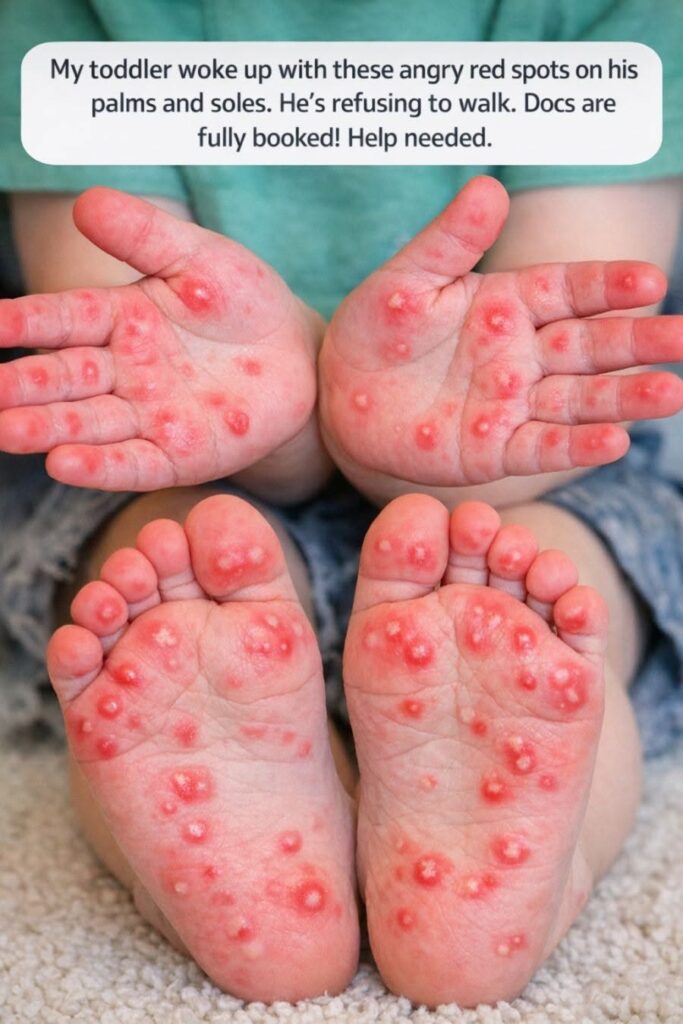
Few situations create panic faster than seeing your toddler refuse to walk and discovering red spots or blisters on their hands and feet. When the pediatrician’s schedule is full and your child seems uncomfortable, it’s natural to worry that something serious is happening.
Fortunately, one of the most common causes of this combination of symptoms is a viral illness called Hand, Foot, and Mouth Disease (HFMD). While the rash can look alarming and the discomfort can be significant, most children recover fully with supportive care and time.
Toddler Has Red Spots on Palms & Soles + Won't Walk? What to Do When the Doctor's Booked provides practical, evidence-informed guidance to help parents understand what may be happening, how to keep children comfortable, and when urgent medical attention is necessary.
I remember a parent describing how their energetic toddler suddenly refused to stand one morning. At first, they worried about an injury. Then they noticed small red spots on the child’s palms and the bottoms of their feet. By lunchtime, a mild fever had appeared, and eating seemed uncomfortable. After speaking with a healthcare provider, they learned it was Hand, Foot, and Mouth Disease-a common childhood illness that often resolves without complications. Understanding the condition transformed a frightening experience into a manageable one.
Understanding Hand, Foot, and Mouth Disease
What Is HFMD?
Hand, Foot, and Mouth Disease is a common viral illness that primarily affects infants and young children.
It is most often caused by viruses from the enterovirus family, including strains of Coxsackievirus.
HFMD spreads through:
- Saliva
- Respiratory droplets
- Nasal secretions
- Fluid from blisters
- Stool during diaper changes
- Contaminated surfaces
Because young children frequently share toys and interact closely with others, the virus spreads easily in homes, daycares, and schools.
Importantly, HFMD has no connection to the livestock disease called foot-and-mouth disease.
Common Signs and Symptoms
Symptoms often appear several days after exposure.
Typical signs include:
- Red spots on palms and soles
- Small blisters
- Mouth sores
- Mild fever
- Irritability
- Reduced appetite
- Drooling
- Fatigue
Many toddlers refuse to walk because blisters on the feet make standing uncomfortable.
Likewise, mouth sores can make eating and drinking painful.
Why Toddlers May Refuse to Walk




Leave a Reply