
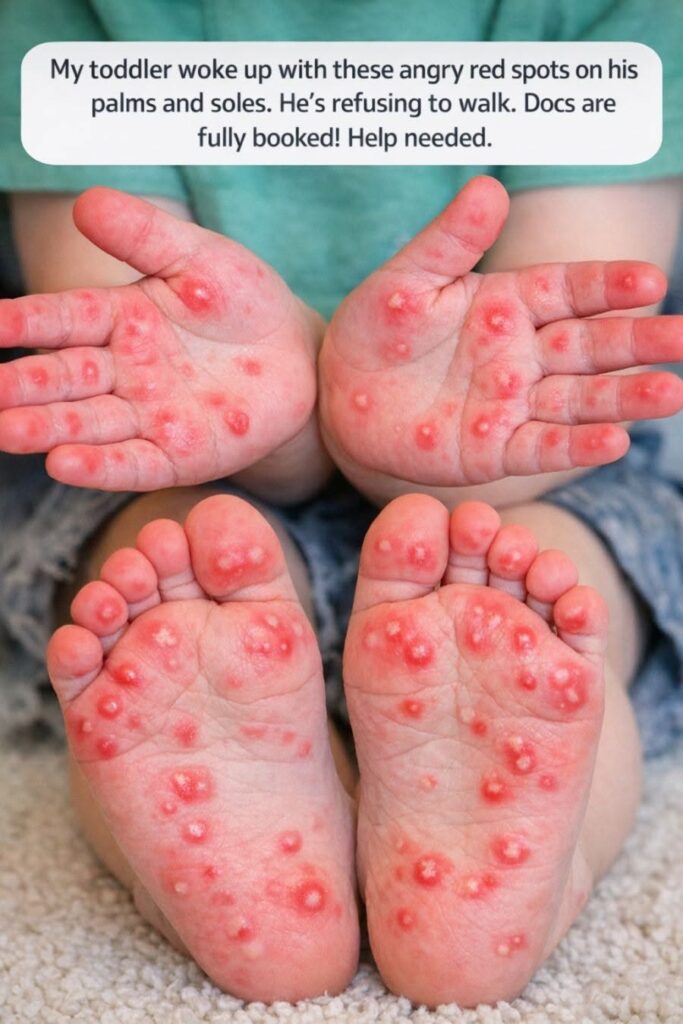
Painful Foot Lesions
One of the most concerning symptoms for parents is a child suddenly refusing to stand or walk.
In many HFMD cases, this occurs because the rash affects pressure points on the feet.
Children may experience:
- Tenderness
- Burning sensations
- Pain when bearing weight
- Discomfort from friction
As a result, toddlers often choose crawling, sitting, or asking to be carried.
Although this behavior can be alarming, it is frequently related to pain rather than muscle weakness or neurological problems.
Monitoring Symptoms Carefully
Even though refusal to walk can occur with HFMD, parents should still pay attention to the overall picture.
Observe whether your child:
- Moves both legs normally
- Can crawl comfortably
- Remains alert
- Responds normally
- Has symptoms consistent with HFMD
If symptoms seem unusual or significantly worsen, medical evaluation becomes more important.
Helping Your Child Feel Better at Home
Comfort and Hydration
Because HFMD is caused by a virus, treatment focuses primarily on symptom relief and hydration.
Helpful supportive measures may include:
- Offering cool fluids
- Providing ice pops if age appropriate
- Serving soft foods
- Encouraging rest
- Dressing your child in comfortable clothing
Cold foods may feel soothing when mouth sores are present.
Hydration deserves special attention because children may avoid drinking due to mouth discomfort.
Creating a Comfortable Environment
Parents can also help by reducing activities that increase discomfort.
Consider:
- Limiting barefoot walking if painful
- Using soft socks when tolerated
- Encouraging quiet activities
- Offering extra comfort and reassurance
Most children begin improving gradually within several days.
Although the rash may take longer to disappear completely, symptoms usually improve steadily.
When to Seek Medical Care
Contact a Healthcare Provider If
While HFMD is usually mild, some situations warrant professional advice.
Contact a healthcare provider if:
- Symptoms worsen significantly
- Fever persists longer than expected
- Your child appears unusually uncomfortable
- Drinking becomes difficult
- Symptoms seem inconsistent with HFMD
- You have concerns about the diagnosis
Telehealth services may provide guidance when office appointments are unavailable.
Seek Urgent Medical Attention If
Certain symptoms require prompt evaluation.
Seek immediate medical care if your child develops:
- Signs of dehydration
- Very little urine output
- Difficulty breathing
- Extreme sleepiness
- Confusion
- Seizures
- Severe headache
- Persistent vomiting
- Stiff neck
- Inability to wake normally
Additionally, if a child refuses all fluids for an extended period, urgent medical evaluation is important because dehydration can develop quickly in young children.
Preventing Spread to Others
Reducing Transmission
HFMD spreads easily among young children.
To reduce transmission:
- Wash hands frequently
- Clean shared surfaces
- Disinfect toys regularly
- Avoid sharing utensils
- Practice careful diaper hygiene
These simple measures can help limit spread within households and childcare settings.
How Long Is HFMD Contagious?
Children are often most contagious during the first week of illness.
However, viruses can sometimes remain in stool for several weeks after symptoms improve.
Following good hygiene practices remains important even after recovery begins.
Frequently Asked Questions
What causes Hand, Foot, and Mouth Disease?
HFMD is caused by viruses, most commonly Coxsackievirus and other enteroviruses.
Why won’t my toddler walk?
Painful blisters or spots on the soles of the feet may make walking uncomfortable.
How long does HFMD last?
Most children recover within 7 to 10 days.
Can adults get HFMD?
Yes. Although it is more common in children, adults can become infected.
When should I worry about dehydration?
Seek medical attention if your child is drinking very little, producing fewer wet diapers, appears unusually lethargic, or shows other signs of dehydration.
Conclusion
Toddler Has Red Spots on Palms & Soles + Won't Walk? What to Do When the Doctor's Booked highlights an important reality for parents: while Hand, Foot, and Mouth Disease can look alarming, it is usually a mild viral illness that improves with supportive care and time. Understanding the typical symptoms, knowing how to encourage hydration and comfort, and recognizing warning signs that require urgent medical attention can help families navigate the illness with greater confidence.
Most importantly, trust your instincts. If your child appears significantly unwell, symptoms worsen rapidly, or dehydration becomes a concern, seek professional medical advice promptly. Knowledge and preparation can turn a stressful situation into one that feels much more manageable.



Leave a Reply