
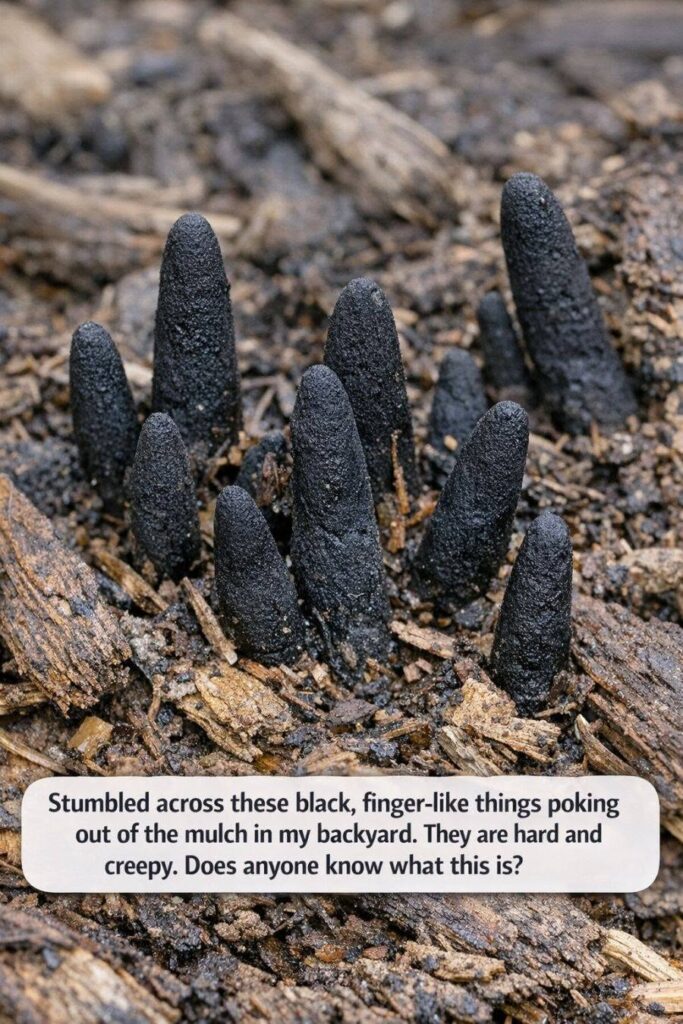
Few garden discoveries are as startling as spotting what appear to be black, skeletal fingers emerging from the mulch. At first glance, the sight can look straight out of a horror movie. Fortunately, the reality is far less frightening-and much more fascinating.
Those Creepy Black "Fingers" in Your Mulch? It's Dead Man's Fingers-And It's Actually Good News! explores what this unusual fungus is, why it appears in gardens, how to identify it, and the surprisingly beneficial role it plays in nature.
I first encountered Dead Man’s Fingers while helping a friend clean up a backyard landscape bed. We noticed several dark, finger-shaped structures pushing through the wood chips near an old tree stump. Our first reaction was confusion, followed by curiosity. After identifying the fungus, we learned it wasn’t harming the garden at all. In fact, it was helping break down old wood and recycle nutrients back into the soil.
What Is Dead Man’s Fingers?
A Unique Woodland Fungus
Dead Man’s Fingers is the common name for the fungus Xylaria polymorpha.
It belongs to a group of fungi that specialize in decomposing dead wood.
Unlike mushrooms that develop caps and stems, this fungus grows as:
- Upright finger-like projections
- Dark club-shaped structures
- Clusters emerging from wood or mulch
Its unusual appearance explains how it earned its memorable name.
Why It Looks So Strange
Young specimens often begin as:
- Pale gray
- Bluish-gray
- Whitish
As they mature, they gradually darken.
Eventually they become:
- Dark brown
- Charcoal colored
- Nearly black
Mature growths often resemble charred fingers protruding from the ground.
The resemblance is uncanny, which has fueled folklore and curiosity for centuries.
Why It Appears in Gardens
Feeding on Dead Wood
Dead Man’s Fingers is a saprobic fungus.
That means it survives by feeding on dead organic material rather than living plants.
Its preferred food sources include:
- Buried roots
- Decaying stumps
- Wood chips
- Mulch
- Fallen branches
If the fungus appears in your landscape, it often indicates hidden wood beneath the surface.
Nature’s Recycling System
Fungi play an essential role in ecosystems.
Dead Man’s Fingers helps break down tough plant materials such as:
- Lignin
- Cellulose
These compounds form the structural framework of wood.
Without decomposers like fungi, forests would accumulate enormous amounts of dead organic matter.
Instead, nutrients are gradually returned to the soil where they become available to other organisms.
Is It Harmful?
Good News for Gardeners
For most homeowners, Dead Man’s Fingers is harmless.
It does not:
- Attack healthy flowers
- Damage vegetable gardens
- Harm lawns
- Infect people
In many cases, its presence simply reflects a healthy decomposition process.
The fungus is doing exactly what nature designed it to do.
What About Trees?
Dead Man’s Fingers typically feeds on dead wood.
However, in some cases, it may colonize weakened or severely stressed trees.
If the fungus appears directly at the base of a living tree, particularly alongside signs of decline, professional evaluation may be worthwhile.
For mulch beds and old stumps, however, concern is usually unnecessary.
How to Identify Dead Man’s Fingers




Leave a Reply