
Key Characteristics
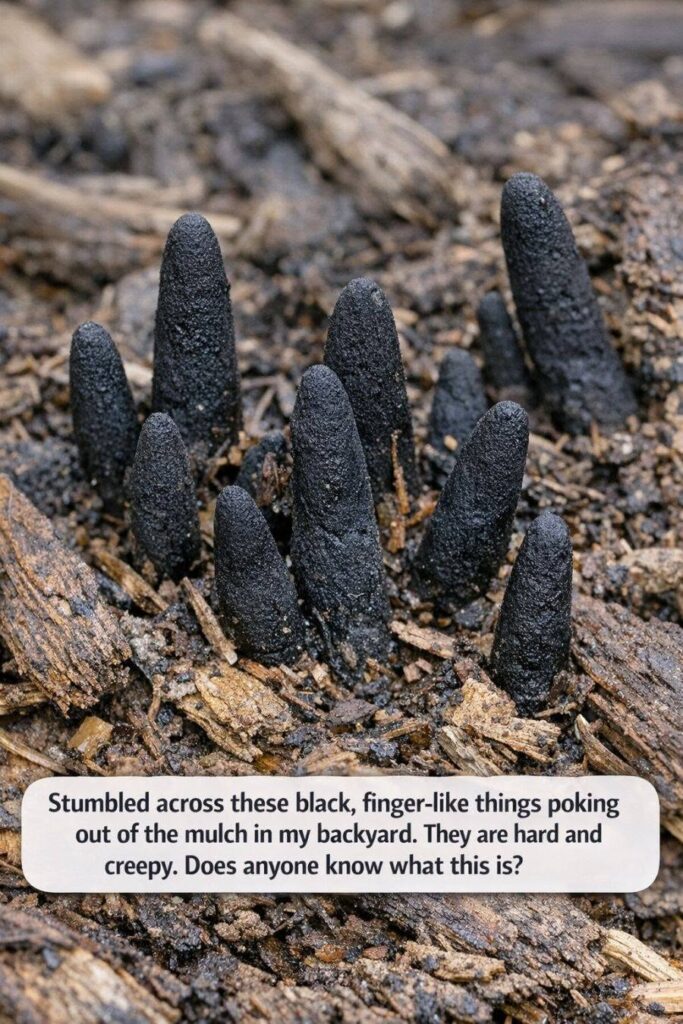
Look for these identifying features:
- Finger-like projections
- Black or dark brown coloration
- Hard, woody texture
- Clustered growth
- Emergence from wood-rich areas
Most structures reach approximately:
- 2 to 4 inches tall
- Occasionally taller
The surface often feels rough and dry rather than soft or slimy.
Common Locations
You may find Dead Man’s Fingers:
- Around old tree stumps
- Near buried roots
- In mulch beds
- Along woodland edges
- In wood-chip pathways
The fungus often appears after periods of moisture.
Should You Remove It?
Removal Is Usually Optional
Because the fungus is generally harmless, removal is rarely necessary.
Some gardeners choose to remove it for appearance alone.
If desired, you can:
- Pull up visible structures
- Remove heavily decayed wood
- Replace affected mulch
However, the fungus may return if buried wood remains.
Embracing Its Ecological Role
Many gardeners choose to leave it alone.
Benefits include:
- Nutrient recycling
- Organic matter decomposition
- Support for soil health
While unusual-looking, it contributes positively to natural ecosystem processes.
Fascinating Folklore and History
The Origin of the Name
The name “Dead Man’s Fingers” has existed for centuries.
Its appearance inspired stories involving:
- Haunted graveyards
- Spirits emerging from the earth
- Supernatural legends
Fortunately, modern mycology offers a much less spooky explanation.
A Reminder of Nature’s Creativity
Fungi represent some of the most diverse and unusual organisms on Earth.
Dead Man’s Fingers serves as a reminder that nature often creates forms that seem almost otherworldly.
Its strange appearance is part of what makes it so memorable.
Frequently Asked Questions
Is Dead Man’s Fingers poisonous?
It is not considered an edible mushroom and should not be consumed. Avoid eating unknown fungi.
Will it harm my flowers or vegetables?
No. It feeds on dead organic matter rather than healthy garden plants.
Why is it growing in my mulch?
Its presence usually indicates buried wood, roots, or decaying organic material beneath the mulch.
Can I remove it?
Yes. Visible structures can be removed, although the fungus may return if its food source remains.
Is it dangerous to pets?
Accidental contact is generally not harmful, but pets should not be encouraged to eat unknown fungi.
Conclusion
Those Creepy Black "Fingers" in Your Mulch? It's Dead Man's Fingers-And It's Actually Good News! reveals that one of the garden’s strangest sights is actually a sign of nature at work. Rather than a threat, this unusual fungus serves as a valuable decomposer, helping recycle nutrients and break down old wood hidden beneath the soil.
Although its appearance may initially cause alarm, understanding its role transforms concern into appreciation. The next time you notice these eerie black fingers reaching from your mulch, you can view them not as a problem-but as evidence of a healthy ecosystem quietly doing its job.


Leave a Reply