
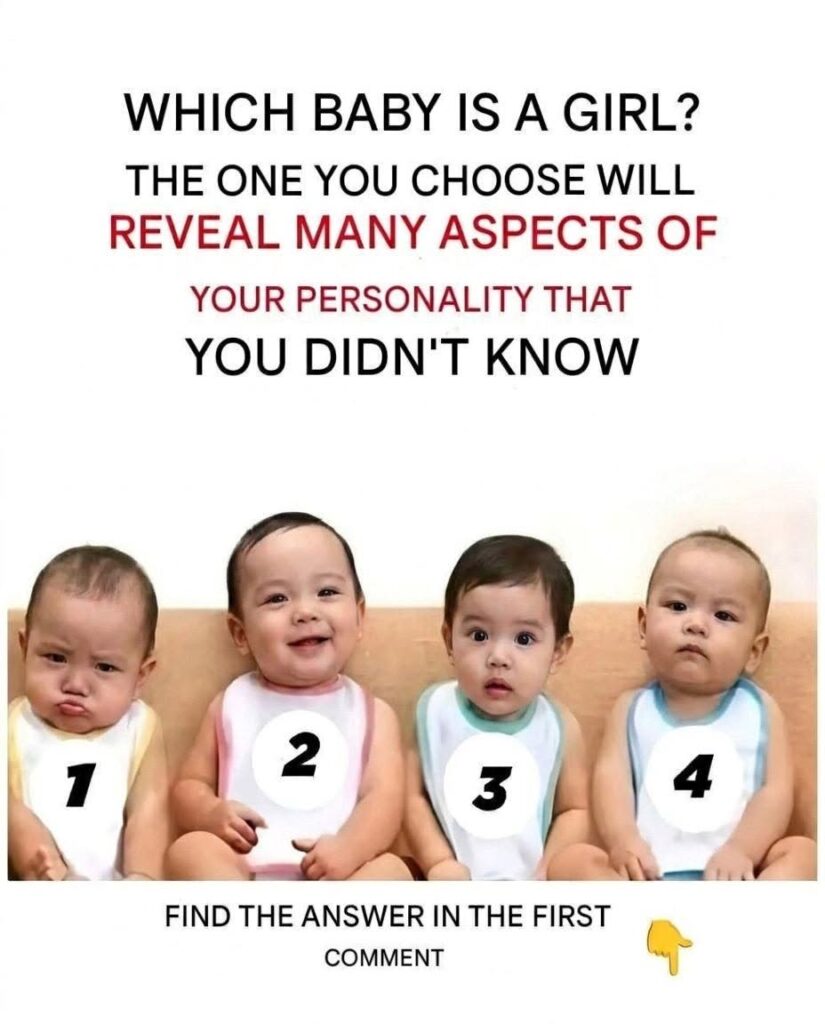
You’ve likely seen it while scrolling through social media: four adorable babies, a simple question, and the promise that your answer reveals something about your personality.
“Which of these babies is a little girl?”
At first glance, it seems like a harmless guessing game. Yet beneath the surface, this viral quiz highlights something surprisingly fascinating about human psychology: our tendency to recognize patterns, make assumptions, and assign meaning even when very little information is available.
Why We Think We Can Tell
Humans are natural pattern seekers.
Our brains constantly process visual information and make rapid judgments based on experience, culture, and expectations.
When we look at unfamiliar faces, we automatically search for clues that help us categorize what we’re seeing.
In the case of infant photos, people often focus on:
- Facial expressions
- Clothing colors
- Hair length
- Eye shape
- Smiles
- Perceived softness of features
The challenge is that these cues rarely provide reliable information about a baby’s gender.
Many of the characteristics people associate with boys or girls are actually cultural expectations rather than biological indicators.




Leave a Reply