
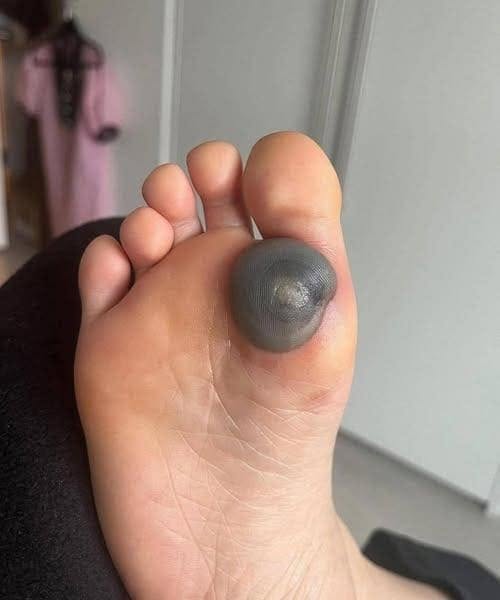
Few things worry parents more than discovering a sudden, painful mark on their child’s body. When that spot appears dark, swollen, and tender-especially on a foot where every step hurts-it can quickly trigger concerns about infections, injuries, or more serious conditions.
Fortunately, one of the most common explanations is often far less alarming: a blood blister. Although blood blisters can look dramatic because of their dark red, purple, or nearly black appearance, most are harmless and heal naturally with time and proper care.
My Child Woke Up With a Large Painful Spot on Her Foot - What Could It Be? provides a compassionate, evidence-informed overview of what blood blisters are, why they develop, how parents can care for them at home, and when professional medical evaluation may be necessary.
One morning, a parent noticed their daughter limping as she walked into the kitchen. After taking a closer look, they discovered a large dark spot on the bottom of her foot that hadn’t been there the night before. The appearance was alarming, and concern immediately set in. However, after an evaluation, the cause turned out to be a simple blood blister likely caused by friction from new shoes and an active day of play. The experience served as a reminder that some of the most frightening-looking conditions can have surprisingly straightforward explanations.
Understanding Blood Blisters
What Is a Blood Blister?
A blood blister is a raised pocket of skin filled with blood rather than clear fluid.
It develops when small blood vessels, called capillaries, break beneath the skin while the outer layer remains intact.
As blood becomes trapped under the skin, a blister forms.
Blood blisters commonly appear:
- Dark red
- Purple
- Maroon
- Dark brown
- Nearly black
Because of their color, they often look more serious than they actually are.
In many cases, the body’s natural healing processes gradually reabsorb the trapped blood over time.
Why Blood Blisters Form
Blood blisters usually result from friction, pressure, or minor trauma.
Common causes include:
- Tight shoes
- New footwear
- Sports activities
- Running or jumping
- Pinching injuries
- Repeated rubbing
- Long periods of walking
Children are especially prone to blood blisters because they are active and may not immediately notice developing irritation.
Even a single day of intense activity can sometimes lead to a blister appearing by the following morning.
Signs and Symptoms Parents May Notice




Leave a Reply