
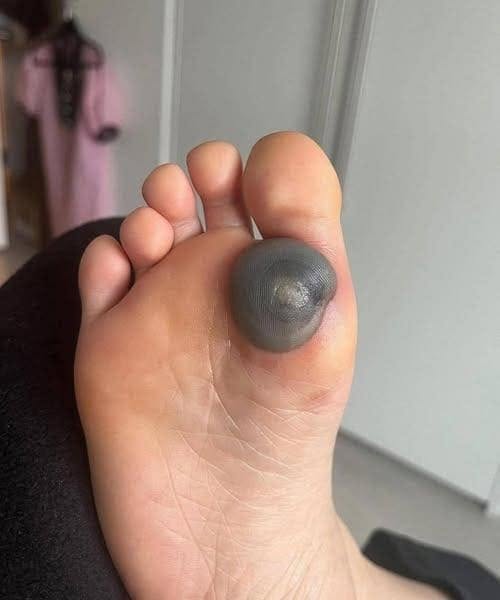
Typical Appearance
Blood blisters often have several distinctive features.
Parents may observe:
- A raised bubble under the skin
- Dark coloration
- Localized tenderness
- Mild swelling
- Pain when pressure is applied
- Discomfort during walking
The size can vary from a small pinpoint spot to a larger blister several centimeters across.
While the appearance may be dramatic, size alone does not necessarily indicate severity.
Symptoms That Suggest a Simple Blood Blister
Most uncomplicated blood blisters:
- Remain localized
- Do not spread
- Cause mild to moderate discomfort
- Improve gradually over time
- Show no signs of infection
Children may complain that the area hurts when walking, running, or standing.
Otherwise, they often feel well and continue normal activities with only minor adjustments.
Caring for a Blood Blister at Home
Protecting the Area
In most cases, the best approach is to leave the blister intact.
The skin covering the blister serves as a natural protective barrier against bacteria.
Helpful home care measures include:
- Keeping the area clean
- Covering it with a protective bandage if needed
- Wearing comfortable footwear
- Reducing pressure on the area
- Avoiding activities that increase friction
If walking causes discomfort, temporary activity modification may help promote healing.
What Not to Do
Parents often feel tempted to drain or pop a blood blister.
However, this can increase the risk of infection.
Avoid:
- Popping the blister
- Cutting the skin
- Peeling away the blister roof
- Applying harsh chemicals
- Excessive rubbing
Instead, allow the body to heal naturally whenever possible.
Most blood blisters gradually flatten as the trapped blood is reabsorbed.
When to Contact a Healthcare Professional
Warning Signs That Need Evaluation
Although most blood blisters heal without complications, certain symptoms warrant medical attention.
Contact a healthcare provider if you notice:
- Increasing redness
- Pus or drainage
- Worsening pain
- Fever
- Warmth around the blister
- Spreading swelling
- Difficulty walking that worsens
- No improvement after two weeks
These symptoms may indicate infection or another condition requiring evaluation.
Other Conditions That Can Mimic a Blood Blister
Not every dark spot on a child’s foot is a blood blister.
Other possibilities may include:
- Bruising
- Warts
- Insect bites
- Skin infections
- Foreign body injuries
- Certain skin conditions
For this reason, professional evaluation is appropriate whenever the diagnosis is uncertain or symptoms appear unusual.
Parents should trust their instincts if something does not seem right.
Healing and Recovery
How Long Do Blood Blisters Last?
Most uncomplicated blood blisters improve within one to two weeks.
Larger blisters may take slightly longer to resolve.
As healing occurs, the color often changes gradually from dark red or purple to brown and eventually fades.
The blister may also flatten as the trapped blood is absorbed.
Helping Prevent Future Blood Blisters
Several simple steps may reduce future risk.
These include:
- Ensuring proper shoe fit
- Wearing moisture-wicking socks
- Replacing worn footwear
- Using protective padding when necessary
- Taking breaks during prolonged activity
Because friction is the most common cause, addressing pressure points can significantly reduce recurrence.
Frequently Asked Questions
Are blood blisters dangerous?
Most blood blisters are harmless and heal naturally without complications.
Should I pop my child’s blood blister?
No. Keeping the blister intact helps protect against infection and supports healing.
How long does a blood blister take to heal?
Most heal within one to two weeks, although larger blisters may require up to three weeks.
Can a blood blister become infected?
Yes. While uncommon, infection can occur if the blister opens or bacteria enter the area.
When should I call a doctor?
Seek medical advice if symptoms worsen, infection signs develop, fever occurs, or the blister fails to improve within two weeks.
Conclusion
My Child Woke Up With a Large Painful Spot on Her Foot - What Could It Be? highlights an important lesson for parents: appearance does not always reflect severity. Blood blisters often look alarming because of their dark color and sudden onset, yet most result from simple friction or pressure and heal on their own with basic care.
By understanding what blood blisters are, protecting the affected area, and recognizing warning signs that require medical attention, parents can respond confidently and appropriately. While it is always wise to seek professional guidance when concerns arise, knowledge can transform a frightening discovery into a manageable situation and help families navigate these moments with greater peace of mind.


Leave a Reply