
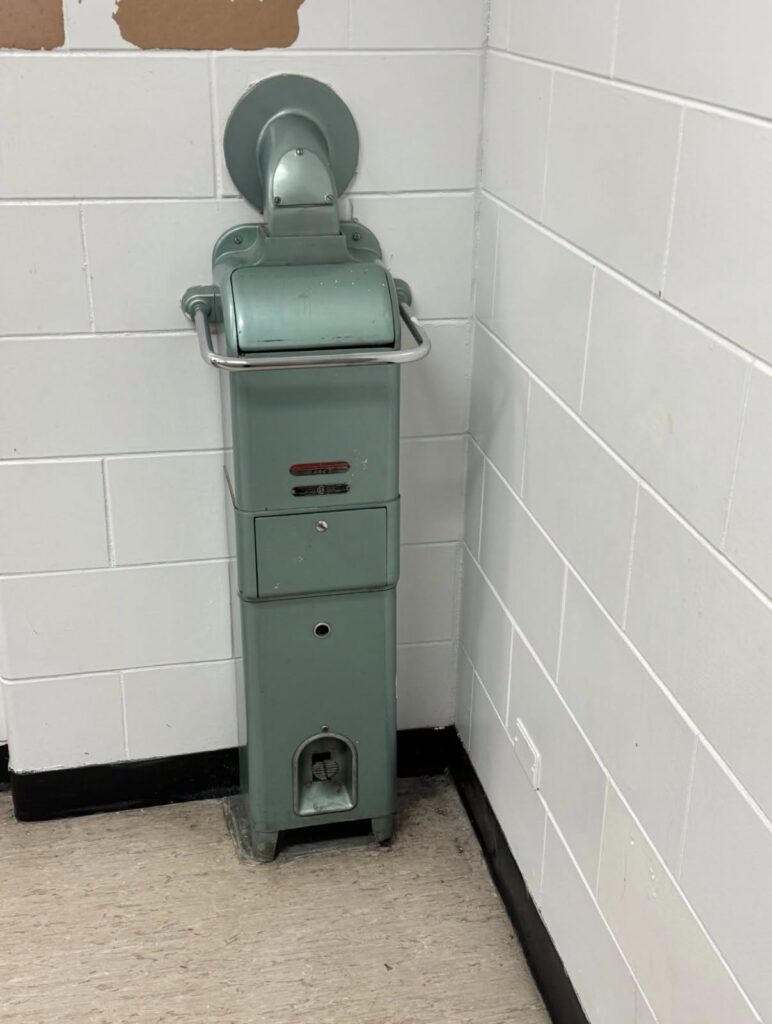
Walk into an older school, apartment building, hospital, or public facility, and you may occasionally spot a strange relic from another era: a heavy metal door built directly into a wall, often blackened with age and surrounded by brick or concrete.
At first glance, it can seem intimidating. The thick iron door, sturdy latch, and soot-stained interior look more like the entrance to a furnace than a simple utility fixture. Yet for decades, these built-in incinerators were considered an essential part of modern life.
Today, they stand as reminders of a time when burning garbage was viewed as a practical, efficient solution to one of society’s biggest challenges: waste disposal.
To understand why these imposing metal boxes became so common, we need to step back into a world before curbside recycling, modern landfills, and municipal waste management systems.
The Menacing Metal Box: What Was It?
Built-in trash incinerators were designed to safely burn waste inside homes, schools, apartment buildings, and institutions.
Most featured:
- Heavy cast-iron or steel doors
- Fire-resistant brick or concrete construction
- Internal grates to support burning materials
- Ash collection compartments below
- Chimneys or flues to carry smoke away
The design was intentionally rugged. These units had to withstand intense heat while minimizing the risk of fire spreading to surrounding structures.




Leave a Reply