
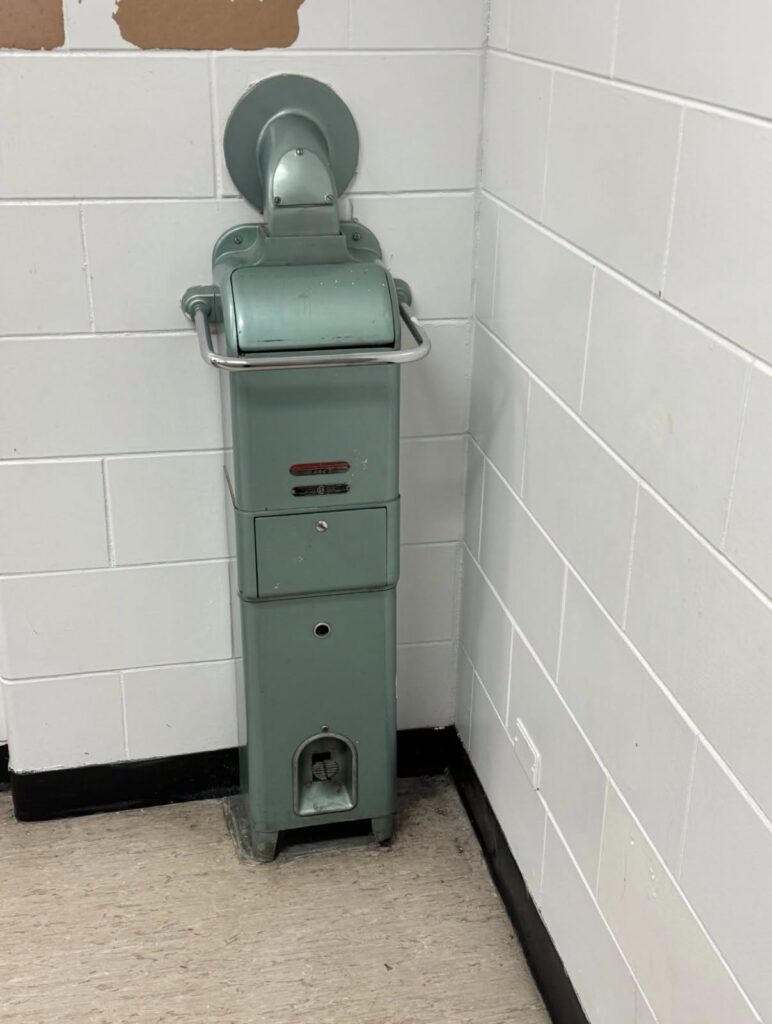
Why They Look So Intimidating Today
Modern eyes aren’t accustomed to seeing fire-based appliances built directly into walls.
Several features contribute to their imposing appearance:
| Feature | Original Purpose | Modern Impression |
|---|---|---|
| Thick iron door | Contain heat and flames | Resembles a vault or furnace |
| Heavy latch | Secure operation | Looks industrial and severe |
| Cast-iron grate | Support burning waste | Appears like machinery from a factory |
| Soot stains | Evidence of regular use | Creates a dark, mysterious look |
| Deep fire chamber | High-temperature burning | Suggests danger and intensity |
To the people who used them, however, these incinerators were no more unusual than a furnace or boiler.
A Growing Problem: Cities Drowning in Waste
The popularity of trash incinerators was driven by necessity.
During the late 1800s and early 1900s, urban populations expanded rapidly. As cities grew, so did the amount of household garbage.
Unlike today, many communities lacked:
- Organized garbage collection
- Modern sanitary landfills
- Recycling programs
- Advanced waste treatment facilities
Residents needed practical ways to dispose of daily waste.
Why Burning Seemed Like the Perfect Solution
At the time, burning offered several apparent advantages.
Reduced Waste Volume
A large pile of garbage could be reduced to a small amount of ash.
Improved Sanitation
People believed burning helped eliminate disease-causing materials and reduced unpleasant odors.
Fewer Pests
Garbage attracted rats, flies, and other vermin. Burning waste removed a major food source.
Convenience
Rather than waiting for collection services, people could dispose of waste immediately.
In an era increasingly focused on cleanliness and public health, incineration appeared to be a modern and efficient solution.
Incinerators in Schools, Hospitals, and Apartment Buildings
While some single-family homes had small incinerators, larger institutional buildings often relied on much larger systems.
Schools
School custodians regularly burned:
- Paper waste
- Classroom debris
- Packaging materials
- Maintenance refuse
Built-in incinerators helped reduce the volume of trash generated by hundreds of students each day.
Hospitals
Hospitals produced significant amounts of potentially contaminated waste.
Before modern medical waste disposal systems, incineration was viewed as one of the safest methods available.
Apartment Buildings
Many apartment complexes included communal incinerator systems.
Residents could place garbage into designated chutes that carried waste directly to a central incinerator room, where building staff managed the burning process.
At the time, this arrangement was considered a convenience and even a selling point.
The Hidden Problems Begin to Emerge
Although incinerators solved some waste issues, they eventually created new concerns.
As scientific understanding advanced, researchers began studying the environmental and health impacts of burning trash.
The results raised serious questions.
Air Pollution
Burning waste released smoke, soot, and airborne particles into surrounding neighborhoods.
Toxic Emissions
As manufactured materials became more complex, burning certain products released harmful chemicals into the atmosphere.
Fire Hazards
Even well-designed incinerators carried risks.
Improper use, inadequate maintenance, or structural failures occasionally resulted in fires.
Neighborhood Complaints
Residents often objected to odors, smoke, and ash drifting through nearby areas.
What once seemed like a clean solution increasingly appeared to be a source of environmental and public health challenges.
The Decline of the Built-In Incinerator
Beginning in the mid-20th century, many communities started moving away from localized incineration.
Several factors accelerated the transition.
Improved Waste Collection
Municipal garbage services became more reliable and widespread.
Modern Landfills
Engineered landfills offered centralized waste management solutions.
Environmental Regulations
Governments introduced stricter air-quality standards and emissions controls.
Changing Public Attitudes
People became more aware of pollution and its effects on health and the environment.
Over time, thousands of building incinerators were shut down, sealed, or removed entirely.
Many remain hidden behind locked doors, bricked-over openings, or renovated walls.
Why These Relics Fascinate Us Today
Part of the fascination comes from how dramatically everyday life has changed.
The old incinerator represents a period when people approached problems differently. Burning trash seemed practical, modern, and efficient because the long-term consequences were not yet fully understood.
These forgotten fixtures remind us that every generation develops solutions based on the knowledge available at the time.
What appears obvious today was not always obvious in the past.
A Window into Daily Life
Historic incinerators reveal more than waste-disposal practices.
They tell stories about:
- Urban growth
- Public health priorities
- Technological innovation
- Environmental awareness
- Changing attitudes toward convenience and cleanliness
In many ways, they are small time capsules built into the walls of older buildings.
The Legacy of a Forgotten Technology
Today, most people rarely think about where their garbage goes after it leaves the curb. Modern waste management systems handle the process largely out of sight.
Yet the heavy metal incinerator serves as a reminder that waste disposal has always been a challenge, and society’s solutions continue to evolve.
What once stood as a symbol of progress now appears outdated and even unsettling. Still, these imposing iron fixtures played an important role in the daily lives of millions of people.
The next time you encounter one hidden in the basement of an old school, apartment building, or hospital, take a closer look. Behind that thick iron door lies a fascinating chapter of history-one that reveals how previous generations dealt with one of civilization’s oldest and most persistent problems: what to do with the trash.



Leave a Reply