
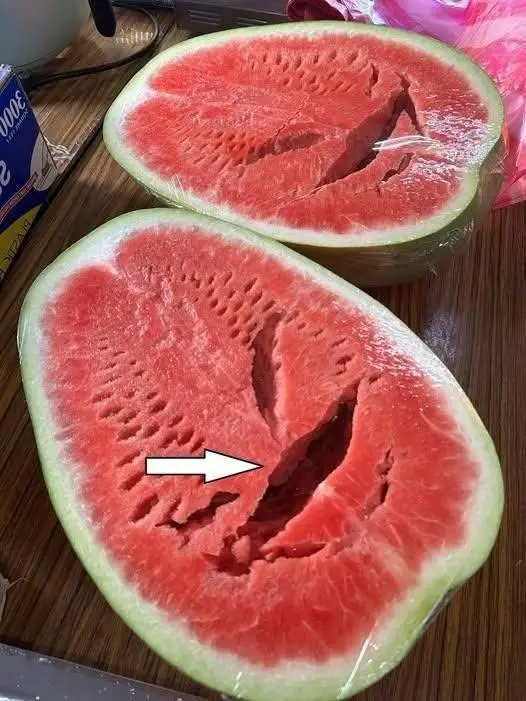
Why Watermelons Sometimes Develop Internal Cracks
Internal cracking, sometimes called “hollow heart,” is a relatively common condition in watermelons.
These cracks can appear as:
- Small fissures in the flesh
- Hollow cavities near the center
- Open spaces surrounded by otherwise normal fruit
- Slightly grainy or uneven texture
In many cases, these changes occur naturally during growth.
Rapid growth, fluctuations in temperature, inconsistent pollination, and environmental stress can all contribute to internal cracking.
Importantly, the presence of cracks alone does not automatically mean the watermelon is unsafe to eat.
What Is Hollow Heart?
One of the most common explanations for internal watermelon cracks is a condition known as hollow heart.
Hollow heart develops when the fruit grows faster than the internal tissues can properly develop. As a result, small gaps or cavities form within the flesh.
Agricultural experts generally consider hollow heart a quality issue rather than a food safety concern.
Watermelons affected by hollow heart may have:
- Reduced sweetness
- Slightly different texture
- Less appealing appearance
However, they are often still safe to consume if no signs of spoilage are present.
The Role of Growth Regulators
Some online articles suggest that internal cracks prove the use of chemical growth regulators.
While certain growth regulators are used in agriculture to improve fruit development, the presence of cracks alone cannot reliably indicate whether such products were used.
Many factors influence watermelon growth, including:
- Weather conditions
- Soil quality
- Irrigation practices
- Pollination success
- Variety of watermelon
Therefore, seeing cracks does not provide enough evidence to determine how the fruit was grown.
When Should You Avoid Eating a Watermelon?
Rather than focusing solely on cracks, pay attention to signs of spoilage.
You should discard a watermelon if you notice:
Sour or Fermented Smell
Fresh watermelon has a mild, sweet aroma.
A sour, alcoholic, or fermented smell may indicate bacterial growth or decomposition.
Slimy Texture
Healthy watermelon flesh should feel firm and juicy.
If the surface becomes slimy or unusually soft, spoilage may be occurring.
Mold Growth
Visible mold on either the rind or flesh is a clear sign that the fruit should not be consumed.
Discoloration
Dark, mushy, brown, or unusually colored areas can indicate deterioration.
Bubbling or Foaming
If cut watermelon produces bubbles or foam, fermentation may be taking place.
This is a strong indicator that the fruit should be discarded.
The Nutritional Benefits of Watermelon
When fresh and properly stored, watermelon remains an excellent addition to a healthy diet.
Watermelon provides:
- High water content for hydration
- Vitamin C
- Vitamin A
- Potassium
- Lycopene
- Antioxidants
Because it contains over 90% water, it can be especially refreshing during hot weather.
Many people also enjoy watermelon as a naturally low-calorie snack.
How to Choose a Good Watermelon
Selecting a quality watermelon can improve your chances of getting sweet, flavorful fruit.
Look for:
A Creamy Yellow Field Spot
The field spot is the area where the watermelon rested on the ground.
A creamy yellow color often indicates the fruit had time to ripen naturally.
Uniform Shape
Choose watermelons with a consistent shape and no major deformities.
Heavy Weight
A watermelon should feel heavy for its size, suggesting high water content.
Dull Exterior
A slightly dull rind is often a sign of maturity, while very shiny watermelons may be less ripe.
Proper Storage Matters
Even the best watermelon can spoil if stored improperly.
Whole watermelons generally keep best in a cool environment. Once cut, they should be refrigerated promptly and covered to reduce contamination and moisture loss.
For food safety, cut watermelon should not remain at room temperature for extended periods.
The Bottom Line
Finding cracks or hollow spaces inside a watermelon can be surprising, but these features do not automatically mean the fruit is unsafe.
In many cases, internal cracking results from natural growth conditions and affects appearance more than safety. Instead of focusing solely on cracks, examine the fruit for signs of spoilage such as mold, unpleasant odors, sliminess, or discoloration.
A fresh watermelon with minor internal cracks may still be perfectly edible and nutritious. As with any fresh produce, using your senses and practicing proper storage are the best ways to determine quality and safety.
The next time you slice open a watermelon and spot a few cracks, there’s no need to panic. Take a closer look at the overall condition of the fruit before deciding whether it belongs on your plate or in the trash.



Leave a Reply