
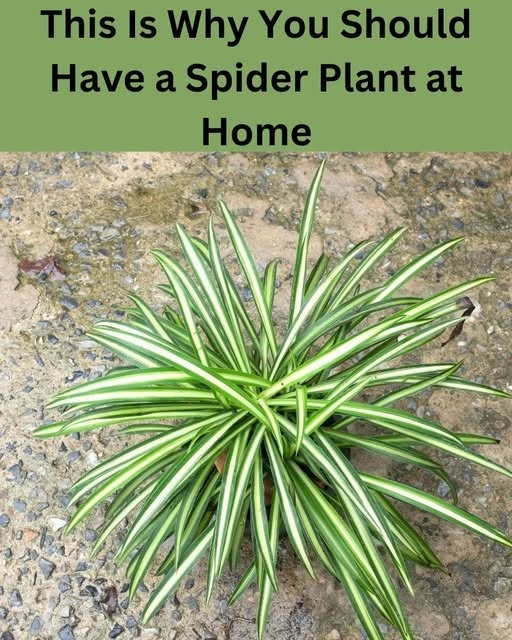
🌿 5 Reasons This Humble Plant Deserves a Spot in Your Home
1. It Forgives Your Forgetfulness (Again and Again)
Forget to water it for a week? Maybe two?
Spider plants store water in their thick roots, helping them survive occasional neglect.
They thrive in:
- Bright indirect light
- Medium light
- Some lower-light locations
While they won’t grow quite as quickly in darker spaces, they usually continue doing just fine.
That’s why so many first-time plant owners succeed with them.
2. It Helps Improve Indoor Air Quality
Spider plants became famous after research highlighted their ability to absorb certain airborne compounds under controlled conditions.
They have been associated with removing small amounts of substances such as:
- Formaldehyde
- Carbon monoxide
- Xylene
While no houseplant can replace proper ventilation or air filtration, adding greenery may contribute to a fresher-feeling indoor environment.
As a bonus, plants can increase humidity slightly around their immediate surroundings.
3. It’s Safe for Pets
Many popular houseplants can be toxic to cats and dogs.
Spider plants are generally considered non-toxic to:
- Cats
- Dogs
- Most household pets
That means you can decorate your home without constantly worrying if a curious pet takes a nibble.
Pet owners often appreciate having a plant that doesn’t require strategic placement far out of reach.
4. It Produces Baby Plants for Free
This may be the most satisfying thing about spider plants.
Healthy plants produce long stems called runners that develop tiny plantlets.
These miniature versions of the parent plant can be:
- Left attached
- Rooted in water
- Planted directly in soil
- Shared with friends and family
One spider plant can eventually become several.
Many plant lovers started their collection from a single spider plant passed down through generations.
5. It Brings Life to Any Space
There’s something timeless about the graceful arching leaves of a spider plant.
They work beautifully in:
- Hanging baskets
- Bookshelves
- Office desks
- Bedrooms
- Kitchens
- Bathrooms with natural light
Their striped green-and-white foliage brightens rooms without overwhelming the décor.
🌱 How to Care for a Spider Plant
The care routine is refreshingly simple.
Light
Best:
- Bright, indirect sunlight
Also tolerates:
- Moderate light
- Some lower-light environments
Avoid prolonged harsh afternoon sun, which can scorch leaves.
Water
Water when the top inch of soil feels dry.
General rule:
- More in summer
- Less in winter
The biggest mistake most people make is overwatering.
When in doubt, wait another day.
Soil
Spider plants prefer:
- Well-draining potting mix
- Containers with drainage holes
Good drainage helps prevent root rot.
Temperature
Ideal temperatures:
- 65°F-80°F (18°C-27°C)
Most indoor environments are perfectly suitable.
Fertilizer
Feed lightly during spring and summer.
A balanced houseplant fertilizer once a month is usually plenty.
Why Do Spider Plants Get Brown Tips?
This is probably the most common concern.
If you notice brown leaf tips, possible causes include:
Minerals in Tap Water
Fluoride and salts sometimes accumulate in the soil.
Try:
- Filtered water
- Rainwater
- Allowing tap water to sit overnight before use
Low Humidity
Dry indoor air can contribute to tip browning.
Fertilizer Buildup
Too much fertilizer can stress the plant.
Flushing the soil occasionally helps remove excess salts.
The good news?
A few brown tips don’t mean your plant is unhealthy.
They’re extremely common.
Common Spider Plant Myths
Myth: They Need Constant Attention
Reality:
Spider plants are among the easiest houseplants to maintain.
Myth: They Only Grow in Bright Windows
Reality:
They adapt surprisingly well to various lighting conditions.
Myth: Brown Tips Mean the Plant Is Dying
Reality:
Most spider plants continue thriving despite minor cosmetic browning.
Myth: They Stay Small Forever
Reality:
Healthy spider plants can become impressively full and lush over time.
Decorating with Spider Plants
Spider plants fit almost anywhere.
Popular placements include:
Hanging Baskets
Their cascading leaves create a dramatic waterfall effect.
Home Offices
A touch of greenery can make workspaces feel more inviting.
Bedrooms
Their soft appearance helps create a calm atmosphere.
Kitchens
They appreciate the occasional humidity from cooking.
Bathrooms
If enough natural light is available, bathrooms can be excellent homes for spider plants.
The Plant That Builds Confidence
Many people who think they’re bad at plants simply started with difficult plants.
Spider plants offer something different.
They grow steadily.
They recover from mistakes.
They reward minimal effort.
And they remind you that gardening doesn’t have to be complicated.
Final Thoughts
If you’ve struggled with houseplants before, a spider plant may be exactly what you need. It’s affordable, adaptable, attractive, and surprisingly resilient. Whether you’re looking to add a little greenery to your living room, brighten your workspace, or simply prove to yourself that you can keep a plant alive, this humble favorite is hard to beat.
Sometimes the best houseplant isn’t the rarest or most expensive one. It’s the one that grows happily alongside you, asks for very little, and quietly makes your home feel more alive.



Leave a Reply