
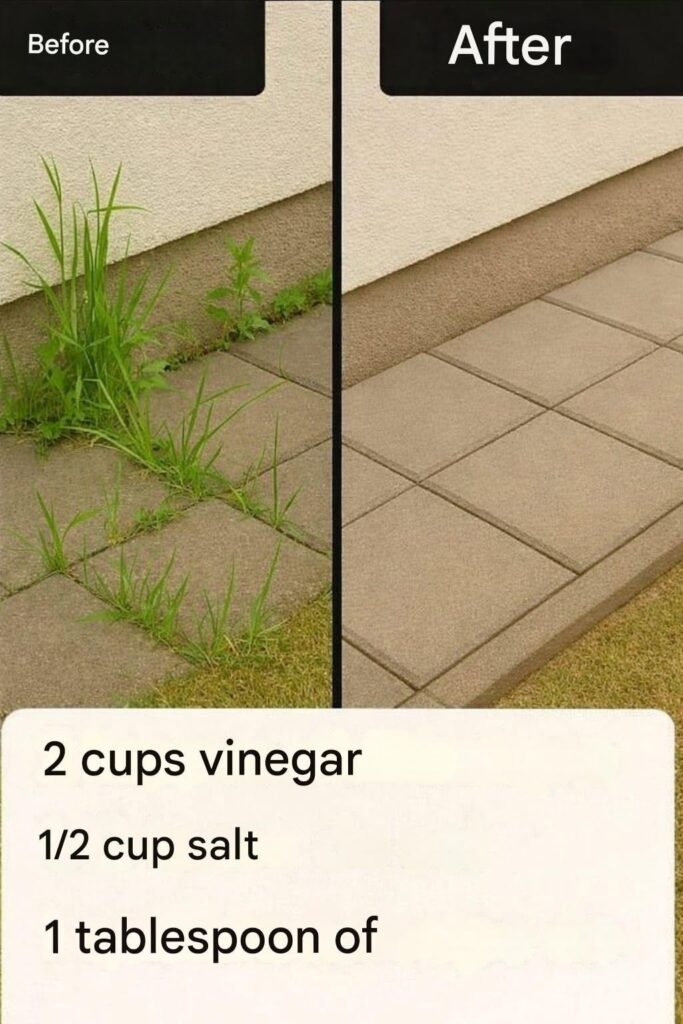
How It Works
Each ingredient plays a different role:
| Ingredient | Function |
|---|---|
| Vinegar | Damages plant tissue by drawing moisture from leaves |
| Salt | Dehydrates plants and disrupts water uptake |
| Dish Soap | Improves contact between the solution and the leaf surface |
Together, these ingredients can quickly dry out young weeds and visible foliage.
What This Mixture Does Well
Homemade herbicides tend to work best on:
- Young annual weeds
- Small seedlings
- Weeds growing in pavement cracks
- Gravel driveways
- Stone pathways
- Patio edges
Under hot, sunny conditions, visible wilting may occur within hours.
Many people appreciate that the ingredients are inexpensive, widely available, and easy to mix at home.
The Limitations Most People Don’t Discuss
While homemade herbicides can be effective, they are not miracle solutions.
They Usually Don’t Kill Deep Roots
Vinegar primarily affects the parts of the plant it touches.
Many perennial weeds-including dandelions, bindweed, thistle, and certain grasses-store energy deep underground. Even if the leaves die back, the root system often survives and produces new growth.
This means repeat treatments are frequently necessary.
Salt Can Damage Soil
Salt is often the most controversial ingredient in homemade herbicide recipes.
While it helps kill weeds, it can also:
- Harm nearby plants
- Reduce soil quality
- Persist in the ground
- Affect beneficial microorganisms
For this reason, salt-based mixtures are generally best reserved for areas where you do not want vegetation growing at all, such as driveways and sidewalk cracks.
It Doesn’t Distinguish Between Weeds and Plants
This solution is non-selective.
If it lands on:
- Flowers
- Vegetables
- Shrubs
- Grass
it may damage them as well.
Always spray carefully and avoid windy conditions.
Safety Tips for Responsible Use
Even natural ingredients deserve respect.
Follow these simple precautions:
Protect Your Eyes and Skin
Vinegar can irritate skin and eyes, especially stronger horticultural varieties.
Wear:
- Gloves
- Closed-toe shoes
- Eye protection when spraying large areas
Avoid Water Sources
Never spray near:
- Streams
- Ponds
- Storm drains
- Wetlands
Although vinegar breaks down relatively quickly, salt can persist and negatively affect surrounding ecosystems.
Keep Pets and Children Away During Application
Allow treated areas to dry completely before normal activity resumes.
Eco-Friendly Alternatives Worth Considering
Depending on the situation, other weed-management methods may be even more sustainable.
Mulching
A thick layer of mulch:
- Blocks sunlight
- Conserves moisture
- Reduces weed germination
It is one of the most effective long-term weed-control strategies available.
Hand Removal
For small infestations, pulling weeds by hand remains one of the most environmentally friendly options.
Removing weeds after rainfall often makes the job easier because roots slide out more readily.
Boiling Water
For isolated weeds growing in pavement cracks, carefully poured boiling water can destroy plant tissue without introducing chemicals into the environment.
Frequently Asked Questions
Is vinegar stronger than commercial weed killers?
No. Most household vinegar contains about 5% acetic acid and generally acts as a contact herbicide. Many commercial products are designed to kill the entire plant, including roots.
Can I use cleaning vinegar?
Cleaning vinegar often contains a higher concentration of acetic acid and may be more effective on weeds. However, it can also increase the risk of skin and eye irritation.
How long does it take to see results?
Visible wilting often appears within a few hours on a sunny day, with more complete browning occurring within one to three days.
Will the weeds come back?
Many perennial weeds can regrow because the roots remain alive. Repeat treatment or physical removal may be necessary.
Is this safe for vegetable gardens?
Generally, no. Salt can remain in the soil and affect future plant growth. Use extreme caution around edible crops.
The Bottom Line
A homemade herbicide made from vinegar, salt, and dish soap can be a practical tool for managing weeds in driveways, patios, sidewalks, and gravel areas. It is affordable, easy to prepare, and capable of delivering quick visible results.
However, effectiveness comes with trade-offs. Salt can affect soil health, desirable plants can be harmed by accidental overspray, and many deep-rooted weeds may eventually return.
The most successful approach combines realistic expectations with responsible use. When applied thoughtfully, homemade herbicides can become one useful part of a broader, environmentally conscious weed-management strategy.



Leave a Reply