
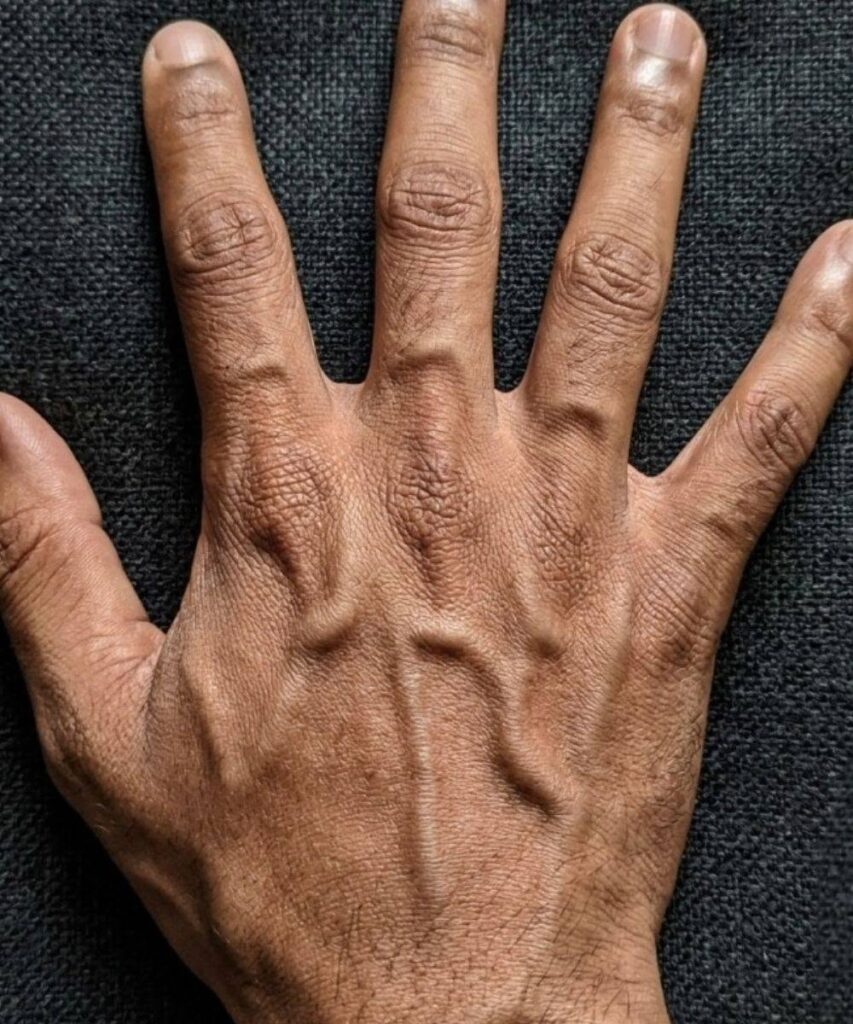
Many people glance down at their hands one day and suddenly notice something they hadn’t paid much attention to before: visible veins running across the backs of their hands. For some, these veins appear gradually over the years. For others, they seem to become more noticeable almost overnight.
Because veins are associated with circulation, it’s natural to wonder whether their appearance signals a health problem. Some people worry that prominent hand veins indicate poor circulation, high blood pressure, heart disease, or another underlying medical condition. Others simply feel self-conscious about how their hands look and wonder whether the change is normal.
The reassuring news is that visible hand veins are usually a completely normal part of human anatomy. In fact, for most healthy people, prominent veins are simply a result of genetics, aging, body composition, or temporary environmental factors. They often reflect natural changes in the skin and underlying tissues rather than any serious medical concern.
Understanding why hand veins become more visible can help separate fact from fiction and provide peace of mind for those who have noticed these changes. While there are situations where vein-related symptoms deserve medical attention, visible veins alone are rarely a cause for alarm.
Let’s explore what causes hand veins to become more prominent, when they may warrant further evaluation, and what medical experts want people to know about this common physical trait.
Understanding the Veins in Your Hands
What Veins Actually Do
Veins are an essential part of the circulatory system. Their primary role is to carry blood back toward the heart after oxygen has been delivered to tissues throughout the body.
Unlike arteries, which transport oxygen-rich blood away from the heart under higher pressure, veins operate under lower pressure and often lie closer to the skin’s surface.
Because of their location, veins can sometimes become visible through the skin, particularly in certain areas of the body such as:
- The hands
- The wrists
- The forearms
- The feet
- The temples
Their visibility alone does not indicate a problem. It simply means the veins are close enough to the surface to be seen.
Why Hands Make Veins More Noticeable
The backs of the hands contain relatively little fat compared to many other parts of the body.
As a result, veins naturally sit closer to the skin’s surface and may become easier to see under certain conditions.
This visibility often increases over time due to normal changes in skin thickness and tissue composition.
Aging: The Most Common Cause
Skin Naturally Changes Over Time
One of the primary reasons hand veins become more noticeable is aging.
As people get older, several natural changes occur:
- Skin becomes thinner
- Collagen production decreases
- Elasticity declines
- Fat beneath the skin gradually diminishes
These changes allow structures beneath the skin-including veins, tendons, and bones-to become more visible.
Many individuals first notice prominent hand veins during middle age or later adulthood.
Loss of Subcutaneous Fat
Subcutaneous fat acts as a cushion beneath the skin.
When this layer becomes thinner with age, veins have less tissue covering them. Consequently, they may appear larger and more pronounced even though the veins themselves remain perfectly healthy.
This process is entirely normal and occurs in most people to some degree.
Low Body Fat and Athletic Physiques
Lean Individuals Often Have Visible Veins
People with lower body fat percentages frequently have more noticeable veins throughout the body.
This occurs because there is less tissue between the skin and underlying blood vessels.
Visible veins are particularly common among:
- Athletes
- Runners
- Cyclists
- Bodybuilders
- Fitness enthusiasts
In these individuals, prominent veins often reflect physical conditioning rather than medical problems.
Muscle Development Can Increase Visibility
Increased muscle mass can also make veins appear more prominent.
As muscles grow and occupy more space beneath the skin, superficial veins may become easier to see.
This effect is especially noticeable in the hands, forearms, and arms.
For many athletes, visible veins are considered a normal consequence of training and body composition.
Heat and Temperature Effects
Warm Weather Causes Vein Expansion
Many people notice their veins become more visible during hot weather.
This occurs because the body uses blood vessels to help regulate temperature.
When temperatures rise:
- Blood vessels expand
- Blood flow near the skin increases
- Heat is released more efficiently
As veins expand, they become more noticeable.
Temporary Changes Are Normal
These temperature-related changes are usually temporary.
After cooling down, veins often return to their usual appearance.
This process is a normal physiological response and generally does not indicate any health concerns.
Exercise and Physical Activity
Increased Blood Flow
Exercise increases circulation throughout the body.
As the heart pumps more blood to working muscles, veins may expand to accommodate increased blood flow.
This can create the appearance of larger, more visible veins.
The “Workout Vein” Effect
Many people notice that their veins seem larger immediately after physical activity.
This phenomenon is common and usually fades as the body returns to a resting state.
For athletes and active individuals, temporarily prominent veins are often a sign of healthy circulation rather than poor circulation.
Genetics Play a Significant Role
Family Traits Matter
Genetics strongly influence vein visibility.
Some people inherit:
- Thinner skin
- Less subcutaneous fat
- More superficial veins
- Specific vein patterns
If your parents or grandparents had prominent hand veins, there is a good chance you may develop them as well.
Individual Differences Are Normal
Just as people inherit different hair colors, eye colors, and facial features, they also inherit differences in skin thickness and vein appearance.
These variations are part of normal human diversity.
Common Myths About Visible Hand Veins
Myth: Visible Veins Mean Poor Circulation
This is one of the most widespread misconceptions.
In reality, poor circulation often produces symptoms such as:
- Cold hands or feet
- Numbness
- Tingling
- Skin discoloration
- Delayed wound healing
Visible veins alone are generally not a sign of poor circulation.
Myth: Prominent Veins Indicate Heart Disease
Most visible hand veins have no relationship to heart disease.
Cardiovascular conditions typically produce symptoms related to blood flow, chest discomfort, breathing difficulties, or exercise intolerance-not simply visible veins on the hands.
Myth: Only Older People Have Visible Veins
While aging increases vein visibility, younger individuals can also have prominent veins due to genetics, body composition, exercise, or naturally thin skin.
Visible veins occur across all age groups.
When Visible Veins May Deserve Medical Attention
Pain Should Not Be Ignored
Visible veins themselves are usually harmless.
However, pain associated with veins deserves evaluation.
Persistent discomfort may indicate inflammation or another condition requiring medical assessment.
Swelling and Redness
Seek medical attention if visible veins are accompanied by:
- Swelling
- Warmth
- Redness
- Tenderness
These symptoms may suggest vein inflammation or other circulatory issues.
Sudden Changes
If veins become dramatically more prominent over a short period, particularly alongside other symptoms, discussing the change with a healthcare professional may be worthwhile.
Bulging or Twisted Veins
Large, bulging, twisted veins can sometimes be associated with varicose veins or other vascular conditions.
Although varicose veins are more common in the legs, they can occasionally affect other areas.
What Poor Circulation Actually Looks Like
Signs Beyond Visible Veins
Poor circulation generally involves impaired blood flow rather than visible blood vessels.
Common symptoms may include:
- Persistent coldness
- Numbness
- Tingling sensations
- Skin color changes
- Muscle cramps
- Delayed healing
These symptoms are typically more informative than vein visibility alone.
Why Confusion Exists
Because veins are part of the circulatory system, many people assume that seeing them means circulation is abnormal.
In reality, visible veins often indicate nothing more than their location beneath the skin.
Healthy circulation and visible veins frequently coexist.
Can You Reduce the Appearance of Hand Veins?
Moisturizing the Skin
Healthy skin may make veins appear slightly less noticeable.
Regular moisturizing supports skin quality and overall hand appearance.
Sun Protection
Ultraviolet exposure contributes to skin thinning and collagen breakdown.
Protecting hands from excessive sun exposure may help preserve skin structure over time.
Staying Hydrated
Proper hydration supports overall skin health and vascular function.
Although hydration alone will not eliminate visible veins, it contributes to healthy tissue maintenance.
Cosmetic Procedures
For individuals bothered by the appearance of prominent veins, cosmetic treatments may be available.
Options can include:
- Sclerotherapy
- Vein treatments
- Dermal fillers
- Other cosmetic procedures
These treatments are typically elective and not medically necessary.
Emotional and Cosmetic Concerns
It’s Normal to Notice Changes
Hands are among the most visible parts of the body.
Because people see them constantly, even small changes can attract attention.
Many individuals become concerned simply because they have not noticed their veins before.
Appearance Does Not Equal Health
Visible veins often create cosmetic concerns rather than medical ones.
A person’s overall health cannot be accurately judged by the appearance of hand veins alone.
Aging Gracefully
For many people, prominent hand veins are simply one of many natural changes that occur with age.
Like wrinkles, gray hair, or changes in skin texture, they represent normal aspects of the aging process.
Frequently Asked Questions
Are visible hand veins dangerous?
In most cases, no. Visible hand veins are a normal physical trait and are usually harmless.
Do hand veins indicate poor circulation?
Not necessarily. Poor circulation typically causes symptoms such as numbness, cold extremities, discoloration, or delayed healing.
Why do my veins appear larger after exercise?
Exercise increases blood flow and temporarily expands blood vessels, making veins more noticeable.
Can dehydration cause visible veins?
Temporary fluid shifts may affect vein appearance, but genetics, aging, and body composition are usually more significant factors.
Should I see a doctor about my hand veins?
Medical evaluation may be appropriate if visible veins are accompanied by pain, swelling, redness, sudden changes, or other concerning symptoms.
Final Thoughts
Prominent hand veins are one of the most common physical traits people notice as they age. In the overwhelming majority of cases, these veins are simply a normal consequence of thinner skin, reduced subcutaneous fat, genetics, exercise, or body composition.
Although visible veins may seem alarming at first, they rarely indicate poor circulation or serious illness on their own. In fact, many healthy individuals have highly visible veins throughout their lives without experiencing any vascular problems.
The key is to pay attention to accompanying symptoms. Pain, swelling, redness, warmth, or sudden changes deserve medical evaluation, while visible veins alone are usually nothing more than a natural variation in human anatomy.
Sometimes the body works exactly as it should-and prominent hand veins are often one of those perfectly normal examples. Understanding this can help replace unnecessary worry with confidence and appreciation for the remarkable circulatory system that keeps us alive every day.



Leave a Reply