
Why Certain Areas Attract More Attention
Dogs aren’t randomly choosing where to sniff.
They’re targeting locations that provide the richest chemical information.
The Role of Apocrine Sweat Glands
Humans possess specialized sweat glands called apocrine glands.
These glands are concentrated in areas such as:
- Underarms
- Groin region
Unlike ordinary sweat glands, apocrine glands release substances that contain a variety of chemical signals.
What These Signals Communicate
Dogs may gather clues related to:
- Age
- Sex
- Hormonal status
- Stress levels
- Emotional state
- Health changes
To a dog, these areas function like information centers.
They’re simply following the strongest scent trail available.
Dogs Read Scents Like Humans Read Faces
Imagine meeting someone new.
You probably notice:
- Facial expressions
- Clothing
- Body language
- Voice tone
Dogs gather similar information through scent.
A Different Language
When a dog sniffs someone, they’re often attempting to answer questions such as:
- Who is this?
- Have I met them before?
- Are they relaxed?
- Are they nervous?
- Are they safe?
Rather than relying on visual cues, they use scent to form their impressions.
This process feels natural to them.
The Amazing Jacobson’s Organ
Dogs possess a second scent-processing system that many people have never heard of.
What Is the Jacobson’s Organ?
Also known as the vomeronasal organ, it is located in the roof of the mouth.
This specialized structure helps dogs detect certain chemical signals known as pheromones.
Why It Matters
Pheromones can provide additional information about:
- Social communication
- Reproductive status
- Emotional signals
Sometimes dogs appear to pause after smelling something interesting because they’re processing information through this secondary system.
Their noses aren’t just smelling.
They’re analyzing.
Sniffing Is Normal Dog Etiquette
Many canine behaviors make more sense when viewed through a dog’s perspective.
How Dogs Greet Each Other
When dogs meet, they often begin with sniffing.
This behavior serves several purposes:
- Identification
- Information gathering
- Social assessment
- Relationship building
To dogs, this interaction is completely normal.
Extending the Same Courtesy to Humans
When your dog sniffs a person, they’re often applying the same social rules they use with other dogs.
In their mind, they’re being friendly and informative.
They’re not trying to embarrass anyone.
They’re trying to communicate.
What Your Dog May Be Detecting
Scientists continue researching canine scent abilities, and the findings are fascinating.
Emotional States
Dogs may detect changes associated with:
- Fear
- Stress
- Excitement
- Anxiety
Chemical changes in sweat can provide valuable information.
Hormonal Changes
Research suggests dogs can sometimes notice:
- Pregnancy
- Menstrual cycles
- Hormonal fluctuations
through scent-related cues.
Health Changes
Specially trained dogs have demonstrated the ability to detect certain medical conditions.
While household pets are not medical diagnostic tools, their sensitivity to scent remains remarkable.
When Sniffing Becomes a Problem
Although sniffing is natural, it can occasionally create uncomfortable social situations.
Common Challenges
Guests may feel:
- Embarrassed
- Uncomfortable
- Surprised
Particularly if the dog is unusually persistent.
The Goal Isn’t Punishment
Because sniffing is instinctive, punishment is rarely productive.
Your dog isn’t intentionally misbehaving.
Instead, focus on redirection.
How to Politely Redirect Your Dog
Training can help balance natural behavior with social expectations.
Teach an Alternative Greeting
Reward your dog for:
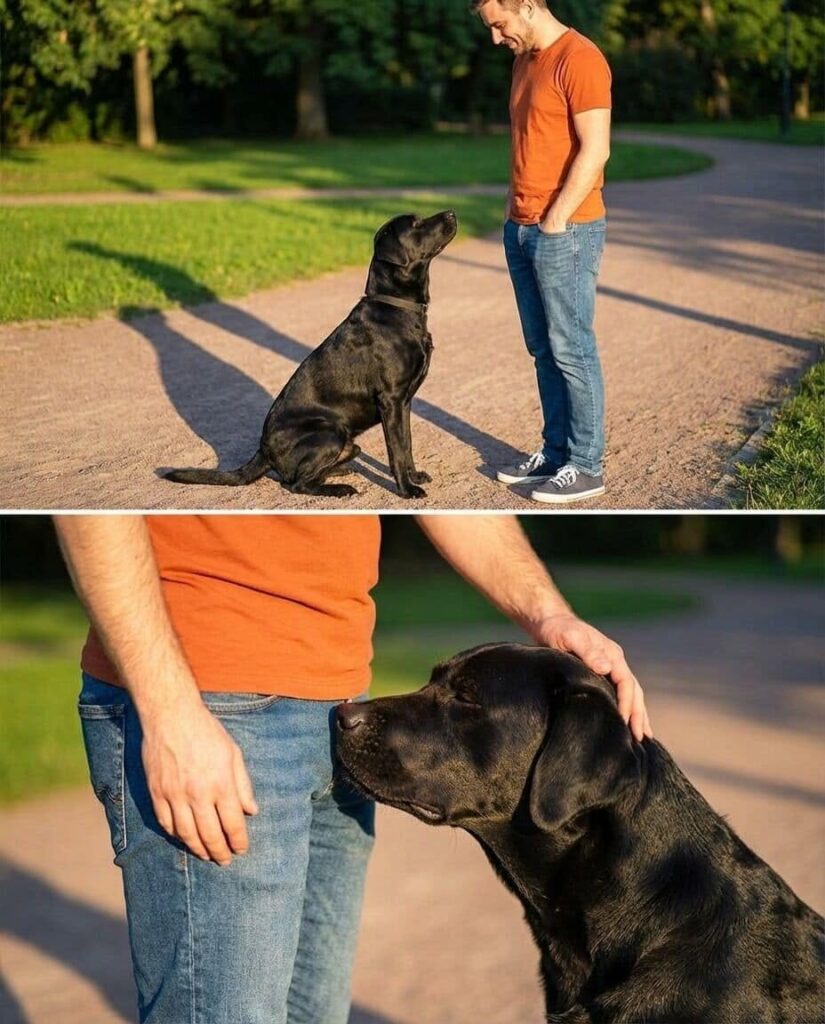
- Sitting calmly
- Making eye contact
- Offering a paw
- Remaining beside you
These behaviors provide socially acceptable alternatives.
Use Positive Reinforcement
Whenever your dog greets someone appropriately:
- Offer praise
- Give treats
- Reinforce the behavior immediately
Dogs learn best when rewarded for desired actions.
Redirect Early
If you anticipate a greeting situation:
- Call your dog to your side
- Ask for a sit
- Reward calm behavior
Prevention is often easier than correction.
What Not to Do
Avoid Harsh Punishment
Scolding a dog for using their nose can create confusion.
After all, smelling is one of the most natural behaviors they have.
Don’t Assume Aggression
Sniffing typically reflects curiosity rather than dominance or aggression.
Understanding the motivation behind the behavior helps prevent unnecessary concern.
Avoid Creating Fear Around Greetings
The goal is to teach manners-not eliminate your dog’s natural curiosity.
Why Puppies Do It More Often
Young dogs often appear especially enthusiastic about sniffing.
Puppies Are Learning Constantly
Every new scent helps them understand the world.
Their curiosity drives them to investigate:
- People
- Animals
- Objects
- Environments
This exploration is an important part of development.
Training Takes Time
With consistent guidance, most dogs learn more appropriate greeting habits as they mature.
Appreciating Your Dog’s Unique Perspective
It’s easy to judge canine behavior through a human lens.
However, dogs experience reality differently.
Their World Is Built on Smell
While humans often rely on:
- Sight
- Language
- Facial expressions
dogs prioritize scent information.
What appears strange or embarrassing to us may simply be ordinary communication for them.
A Different Kind of Intelligence
Your dog’s ability to gather information through scent is one of their greatest strengths.
The behavior may not always be socially convenient, but it reflects an extraordinary sensory system that humans can barely imagine.
The Bottom Line
When your dog sniffs someone’s groin or underarm area, they’re not being rude, inappropriate, or intentionally embarrassing. They’re using their most powerful sense to gather information about a new person, much like humans use conversation, facial expressions, and body language.
These areas contain scent-rich chemical signals that provide dogs with valuable clues about identity, emotions, and familiarity. From a canine perspective, sniffing is simply a polite greeting and an important form of communication.
If the behavior becomes socially awkward, gentle redirection and positive training can help. But understanding the motivation behind it can make the situation feel less embarrassing and more fascinating.
The next time your dog greets someone nose-first, remember: they’re not breaking social rules. They’re speaking their native language.

Leave a Reply