
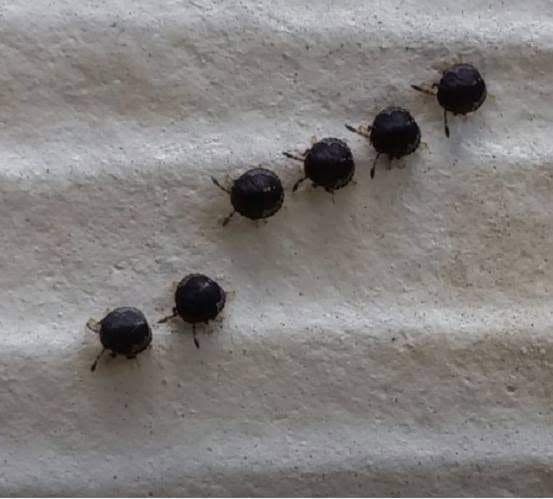
Are They Harmful to Gardens?
That depends on the species and population size.
Many jewel bugs feed by piercing plant tissues and sucking sap from leaves, stems, flowers, or developing fruits.
Signs of feeding damage may include:
- Yellow spots on leaves
- Distorted growth
- Wilting shoots
- Reduced plant vigor
- Cosmetic damage to fruits
A few bugs rarely cause serious problems. Large infestations, however, can stress plants and reduce yields in vegetable gardens.
How to Tell the Difference Between Blueberries and Jewel Bugs
If you’re unsure what you’re looking at, use this simple checklist:
| Feature | Real Blueberries | Jewel Bugs |
|---|---|---|
| Attached by stems | Yes | No |
| Surface texture | Matte with powdery bloom | Glossy, metallic shine |
| Movement | None | May move slowly when disturbed |
| Legs visible | No | Yes, upon close inspection |
| Shape consistency | Varies naturally | Often nearly identical |
| Location | On berry-producing plants | On leaves and stems |
A good rule of thumb: if you’re not absolutely certain it’s edible, don’t touch it and definitely don’t eat it.
What Should You Do If You Find Them?
If the insects aren’t causing noticeable damage, the best approach is often observation.
Many gardeners enjoy watching these fascinating creatures as part of the garden ecosystem.
If populations become excessive:
- Inspect plants regularly.
- Remove heavily infested leaves.
- Hand-pick insects using gloves if necessary.
- Encourage natural predators such as birds and beneficial insects.
- Avoid broad-spectrum pesticides whenever possible.
Chemical treatments often harm beneficial insects alongside pests and may create larger ecological problems.
Why Encounters Like This Matter
Moments like these remind us how surprising nature can be.
What looks like fruit may be an insect.
What appears dangerous may be harmless.
And what initially sparks alarm often becomes an opportunity to learn something fascinating about the world around us.
Many of the most memorable gardening discoveries begin with a simple question:
“What on earth is that?”
In this case, the answer isn’t a mysterious berry or an exotic fruit.
It’s a jewel bug-a tiny masterpiece of natural engineering wearing one of the most convincing disguises in the garden.
Frequently Asked Questions
Can jewel bugs bite humans?
No. Jewel bugs are not known for biting people and generally avoid human interaction.
Are jewel bugs poisonous?
They are not considered poisonous to touch, but they should never be eaten. Some species produce defensive chemicals that may be unpleasant or irritating.
Why are they so shiny?
Their brilliant appearance comes from microscopic structures in their outer shell that reflect and scatter light, creating metallic and iridescent colors.
Should I remove them from my garden?
Only if they are causing significant plant damage. Small numbers are usually not a major concern.
Do they help the environment?
Like many insects, they play a role in local ecosystems and contribute to biodiversity, even if gardeners don’t always appreciate their feeding habits.
The Bottom Line
Those mysterious “blueberries” growing on your garden plants may not be berries at all. In many cases, they’re jewel bugs-beautiful insects whose glossy blue shells can easily fool the eye.
While they’re generally harmless to people, they aren’t something you should handle unnecessarily or attempt to eat. A closer look usually reveals the telltale signs: shiny surfaces, tiny legs, and a complete lack of stems.
So the next time you spot a cluster of perfect blue spheres in your garden, pause before you pick.
Nature may be showing off one of its cleverest illusions.


Leave a Reply