
Paints to Avoid
Tree care specialists generally discourage:
- Oil-based paints
- Heavy exterior coatings
- Paints containing harsh solvents
These products may interfere with the tree’s natural processes or damage the bark.
Other Benefits of White Tree Trunks
Although sunscald prevention is the primary reason, white paint can provide additional advantages.
Pest Deterrence
The bright coating makes it easier to spot:
- Borers
- Insect damage
- Bark injuries
In some agricultural settings, specialized trunk coatings may also discourage certain pests.
Rodent Protection Monitoring
Mice, rabbits, and other animals sometimes chew bark during winter.
A painted trunk can make damage easier to identify before it becomes severe.
Improved Visibility
In orchards and farms, white trunks can be easier to see during:
- Snowfall
- Fog
- Early morning work
This may help reduce accidental equipment damage.
Which Trees Benefit Most?
Not every tree requires white paint.
The practice is typically most useful for:
Young Trees
Newly planted trees often have thinner bark and less protection against temperature fluctuations.
Fruit Trees
Many orchard owners routinely protect:
- Apple trees
- Peach trees
- Pear trees
- Cherry trees
- Plum trees
Thin-Barked Species
Certain ornamental and shade trees are naturally more susceptible to sunscald.
Examples include:
- Maple
- Birch
- Aspen
- Honey locust
Alternatives to White Paint
Some homeowners prefer other methods.
Tree Wraps
Commercial tree wraps are commonly used during winter.
Benefits include:
- Easy installation
- Seasonal removal
- Physical protection
Plastic Tree Guards
These can help shield young trunks from:
- Sun damage
- Rodents
- Mechanical injuries
Natural Shade Protection
Strategic planting locations can sometimes reduce sunscald risk naturally.
Does White Paint Harm the Tree?
When properly applied, diluted latex paint is generally considered safe for healthy trees.
Problems typically occur only when:
- Incorrect paint types are used
- Thick coatings are applied
- Damaged bark is sealed improperly
For best results, gardeners should follow recommendations from local agricultural or forestry experts.
Why the Practice Is Common in Orchards
Commercial fruit growers have long understood the economic impact of bark damage.
A single winter injury can:
- Reduce fruit production
- Invite disease
- Shorten a tree’s lifespan
Because the cost of paint is relatively low, many orchard managers view trunk painting as inexpensive insurance against future losses.
The Science Behind Temperature Stress
Trees enter a dormant state during winter, but their tissues remain alive.
When winter sunlight warms one side of the trunk:
- Cells become temporarily active.
- Metabolic activity increases.
- Nighttime temperatures drop rapidly.
- Activated cells freeze and die.
The resulting injury appears as:
- Cracked bark
- Peeling sections
- Sunken areas
- Long vertical splits
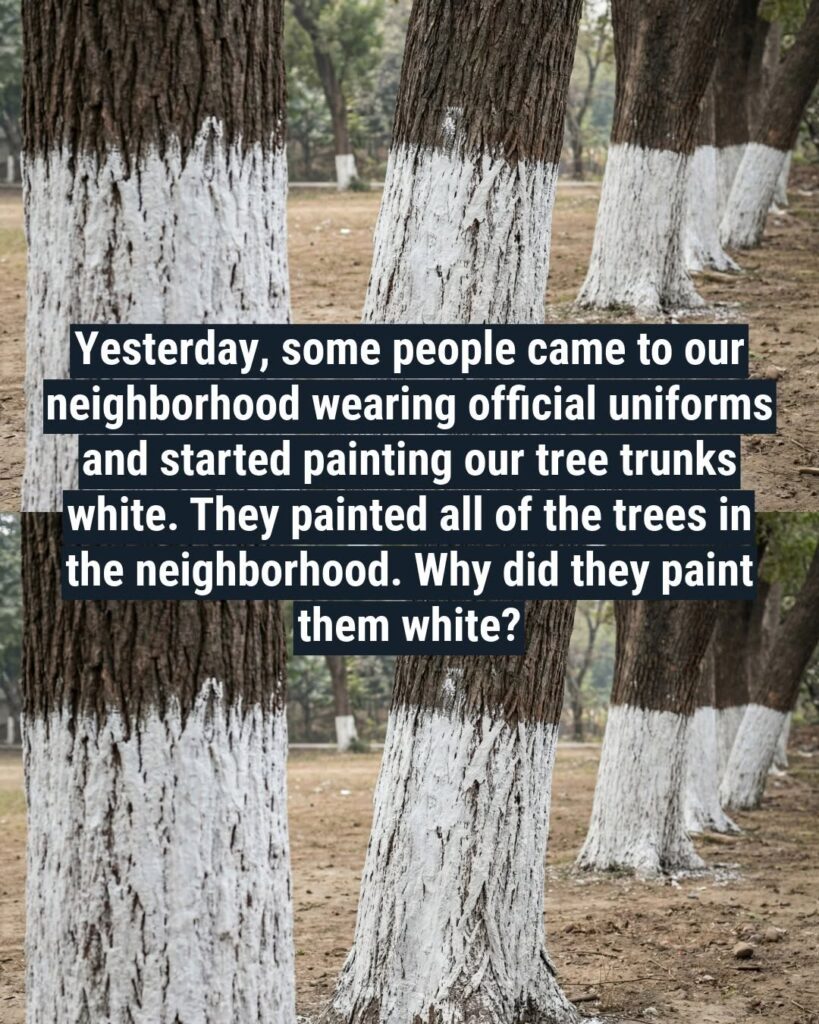
Reflective white paint helps reduce these extreme temperature swings.
A Tradition With Deep Roots
The practice of whitening tree trunks dates back generations.
Farmers and orchardists in many countries have used:
- Whitewash
- Lime-based coatings
- Modern latex paint mixtures
to protect valuable trees from environmental stress.
Although materials have evolved, the goal remains the same: preserving tree health through the harshest months of the year.
When Should Trees Be Painted?
Most experts recommend applying protective coatings in:
Late Fall
Before severe winter conditions arrive.
Early Winter
If protection was not applied earlier.
The coating can remain throughout winter and continue providing benefits during early spring temperature fluctuations.
Final Thoughts
Those white-painted tree trunks aren’t decorative at all-they’re a practical defense against one of winter’s most overlooked threats. By reflecting sunlight and reducing rapid temperature swings, white paint helps protect vulnerable bark from sunscald, cracking, and long-term damage. Young trees, fruit trees, and thin-barked species often benefit the most from this simple protective measure.
What appears to be an odd landscaping choice is actually a time-tested technique rooted in science and agriculture. The next time you spot a row of white tree trunks, you’ll know you’re looking at a clever form of winter protection that has helped trees survive for generations.


Leave a Reply