
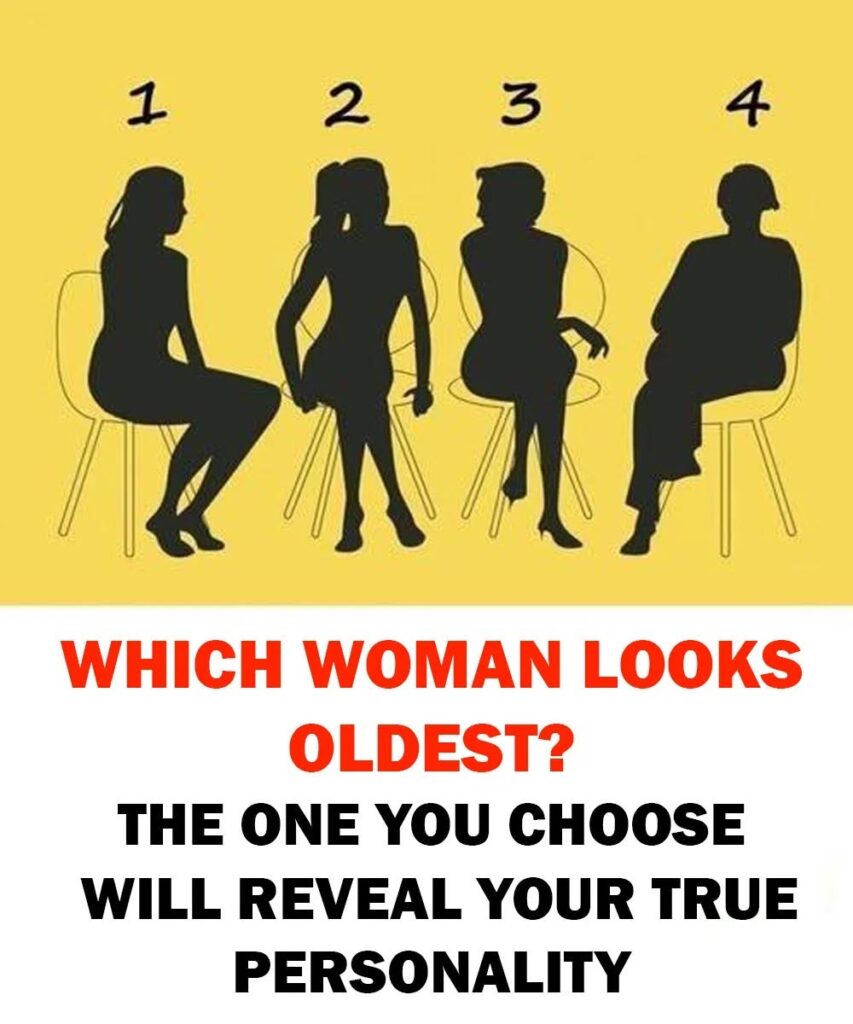
You have probably seen this type of image before while scrolling through social media. Four silhouettes sit side by side, each labeled with a number. The question appears simple: "Which woman looks oldest?" Then comes the promise that your answer will reveal something profound about your personality, hidden traits, or even your future.
Millions of people click, comment, and share these puzzles every year. Some confidently choose one silhouette. Others debate with friends and family. Many are surprised when the personality description seems to match them perfectly.
But do these tests actually reveal anything meaningful about who you are?
The short answer is no-not in the way they claim.
Psychologists generally agree that viral personality quizzes based on visual choices are entertainment rather than scientific assessments. While these images can be fun and engaging, they do not provide reliable insight into personality, intelligence, emotional health, or character.
What they do reveal is something equally fascinating: how the human brain interprets visual information, makes rapid judgments, and searches for patterns in the world around it.
The popularity of these puzzles says less about personality and more about human psychology itself.
Why These Images Become So Popular
The Brain Loves Quick Decisions
Humans are constantly making judgments.
Every day we evaluate faces, expressions, clothing, body language, and countless visual cues without consciously thinking about it.
Our brains evolved to process information quickly because rapid decisions often helped our ancestors survive.
When presented with four silhouettes and asked which person appears oldest, the brain immediately begins looking for clues.
You might notice:
- Posture
- Hairstyle
- Body shape
- Sitting position
- Clothing style
- Perceived confidence
The decision often happens within seconds.
Many people feel confident in their answer even though very little actual information is available.
People Enjoy Learning About Themselves
Self-discovery is a powerful motivator.
Humans naturally wonder:
- Who am I?
- Why do I think this way?
- What makes me different from others?
- What hidden traits do I possess?
Personality quizzes tap directly into that curiosity.
Even when the scientific foundation is weak, the promise of learning something new about oneself remains highly attractive.
What You’re Actually Judging
The Image Contains Limited Information
In most versions of the “Which Woman Looks Oldest?” puzzle, the figures are silhouettes.
This means viewers cannot see:
- Facial wrinkles
- Skin texture
- Eye features
- Hair color
- Actual age indicators
Yet people still make confident judgments.
How?
The brain fills in missing information using assumptions.
Posture Influences Perception
Research consistently shows that posture affects how people perceive age.
For example:
- Upright posture is often associated with youth and vitality.
- Slouched posture is sometimes associated with aging.
- Relaxed positions may be interpreted differently depending on cultural expectations.
These assumptions influence choices even when no age information exists.
Hairstyles Trigger Associations
Hair is another powerful visual cue.
People often associate certain hairstyles with particular generations.
However, these associations vary dramatically across cultures, regions, and age groups.
A hairstyle that appears youthful to one person may seem mature to another.
This subjectivity helps explain why different people choose different silhouettes.
Body Shape Influences Judgments
Body shape can also influence perceptions of age.
Some viewers may associate certain body proportions with youth.
Others may associate different shapes with maturity.
Again, these interpretations reflect cultural experiences rather than objective reality.
The Psychology Behind First Impressions
Humans Form Opinions Quickly
Studies show people often form impressions within seconds of seeing someone.
These impressions may involve assumptions about:
- Intelligence
- Confidence
- Trustworthiness
- Competence
- Age
The remarkable part is that these judgments occur automatically.
The brain constantly seeks shortcuts that simplify decision-making.
These Shortcuts Are Called Heuristics
Psychologists use the term heuristic to describe mental shortcuts.
Heuristics help people make decisions efficiently.
Without them, everyday life would feel overwhelming.
However, shortcuts can also produce errors.
When viewing silhouette puzzles, people rely heavily on heuristics because very little information is available.
The brain essentially fills in the blanks.
The Barnum Effect: Why The Results Feel Accurate
The Secret Behind Most Personality Quizzes
One reason these quizzes remain popular is a psychological phenomenon known as the Barnum Effect.
The Barnum Effect occurs when people accept vague, general statements as highly personal and accurate.
For example:
- You are independent but sometimes appreciate support.
- You value honesty but occasionally struggle with difficult decisions.
- You care about others yet need time for yourself.
Almost everyone can relate to these statements.
Yet many people feel they describe them specifically.
Personality Quiz Results Are Often Designed This Way
After selecting a silhouette, readers typically receive descriptions such as:
“If you chose Woman #1, you are compassionate and thoughtful.”
“If you chose Woman #2, you are creative and independent.”
“If you chose Woman #3, you are intelligent but cautious.”
“If you chose Woman #4, you are strong and resilient.”
These descriptions sound meaningful because they contain qualities most people view positively.
The result feels personal even though it could apply to millions of individuals.
Why Different People Choose Different Women
Personal Experiences Shape Perception
Every person’s life experience influences how they interpret visual information.
Someone raised around older relatives with a particular posture may associate that posture with aging.
Another person may have completely different associations.
These differences affect which silhouette appears oldest.
Culture Influences Interpretation
Ideas about age vary significantly across cultures.
Different societies associate age with:
- Clothing styles
- Haircuts
- Body language
- Physical appearance
What seems youthful in one culture may appear mature in another.
This makes universal conclusions impossible.
Emotional State Can Influence Choices
Mood can affect perception.
Someone feeling confident may focus on different visual cues than someone feeling anxious.
Even temporary emotions can influence decision-making during visual puzzles.
Common Myths About Personality Tests
Myth: Your Choice Reveals Hidden Personality Traits
There is no scientific evidence that choosing one silhouette over another reveals core personality characteristics.
Personality is far more complex.
Reliable personality assessment requires carefully validated methods developed through years of psychological research.
Myth: Visual Choices Reveal Intelligence
These quizzes do not measure intelligence.
Choosing one silhouette instead of another says nothing about cognitive ability, knowledge, or problem-solving skills.
Myth: The Results Are Scientifically Designed
Most viral personality tests are created for entertainment purposes.
Their primary goal is engagement and sharing rather than psychological accuracy.
Myth: There Is One Correct Answer
In silhouette puzzles, there is often no objectively correct answer.
The image intentionally lacks sufficient information.
The ambiguity is part of what makes the puzzle interesting.
What Actually Shapes Personality?
Genetics Play a Role
Research suggests personality develops through a combination of genetics and life experiences.
Certain traits appear partly influenced by biological factors.
However, genetics alone do not determine personality.
Life Experiences Matter
Experiences shape how people think, feel, and behave.
Examples include:
- Family relationships
- Education
- Friendships
- Culture
- Career experiences
- Personal challenges
These influences contribute significantly to personality development.
Habits Create Long-Term Patterns
Daily behaviors gradually shape character.
The way people respond to stress, interact with others, and pursue goals often influences personality over time.
These factors are far more meaningful than responses to visual puzzles.
Why Humans Love Finding Meaning
Pattern Recognition Is Natural
The human brain evolved to identify patterns.
This ability helps people:
- Recognize faces
- Learn languages
- Detect danger
- Solve problems
However, the brain sometimes finds patterns even when none exist.
Personality quizzes often capitalize on this tendency.
We Enjoy Stories About Ourselves
Humans naturally create narratives.
People want explanations for:
- Their strengths
- Their weaknesses
- Their relationships
- Their choices
A quiz that promises self-discovery provides an appealing narrative.
Even when scientifically weak, the experience can feel meaningful.
Can These Quizzes Be Useful?
As Entertainment
Absolutely.
There is nothing wrong with enjoying personality quizzes as lighthearted fun.
Many people enjoy comparing answers with friends and discussing different interpretations.
As Conversation Starters
These puzzles often spark interesting discussions.
People may debate:
- Why they made a particular choice
- What visual cues influenced them
- How different individuals perceive the same image
These conversations can be engaging and insightful.
As Examples of Human Psychology
Ironically, the most interesting thing about these quizzes is not the result.
It is the psychological process behind the choice.
Understanding why we make rapid judgments can teach us valuable lessons about perception and decision-making.
What This Particular Image Reveals
The image asks which woman appears oldest.
Because the figures are silhouettes, the viewer lacks reliable age information.
Any choice depends largely on assumptions about:
- Posture
- Hair
- Shape
- Body language
Different viewers will interpret these clues differently.
That variation demonstrates how perception works.
The image reveals more about human pattern recognition than about personality.
Frequently Asked Questions
Which woman is actually the oldest?
The image does not provide enough information to determine the true age of any figure.
Does my choice reveal my personality?
No scientific evidence supports that claim.
Why do the results feel accurate?
The Barnum Effect makes broad, flattering descriptions feel personally meaningful.
Are any online personality tests scientifically valid?
Some professionally developed assessments have research support, but most viral social media quizzes do not.
Why do people keep sharing these puzzles?
They are fun, easy to understand, and encourage discussion and curiosity.
Final Thoughts
The viral question “Which Woman Looks Oldest?” continues to attract attention because it combines curiosity, self-discovery, and visual perception into a simple challenge. While the results may seem insightful, the puzzle does not actually reveal hidden truths about personality, intelligence, or character.
What it does reveal is something arguably more interesting: the remarkable way the human brain processes information. Faced with limited details, we instinctively search for patterns, make assumptions, and construct meaning. We rely on personal experiences, cultural influences, and subconscious associations to fill in missing gaps.
That process is not a flaw. It is part of what makes human thinking so fascinating.
So if you enjoy these quizzes, keep enjoying them. Share them with friends, compare answers, and have fun discussing the results. Just remember that the real lesson is not hidden inside the personality description.
The real lesson is how eagerly the human mind searches for meaning-even in a simple silhouette puzzle.
Sometimes the most revealing thing about these tests is not what they say about you.
It’s what they teach us about being human.

Leave a Reply