
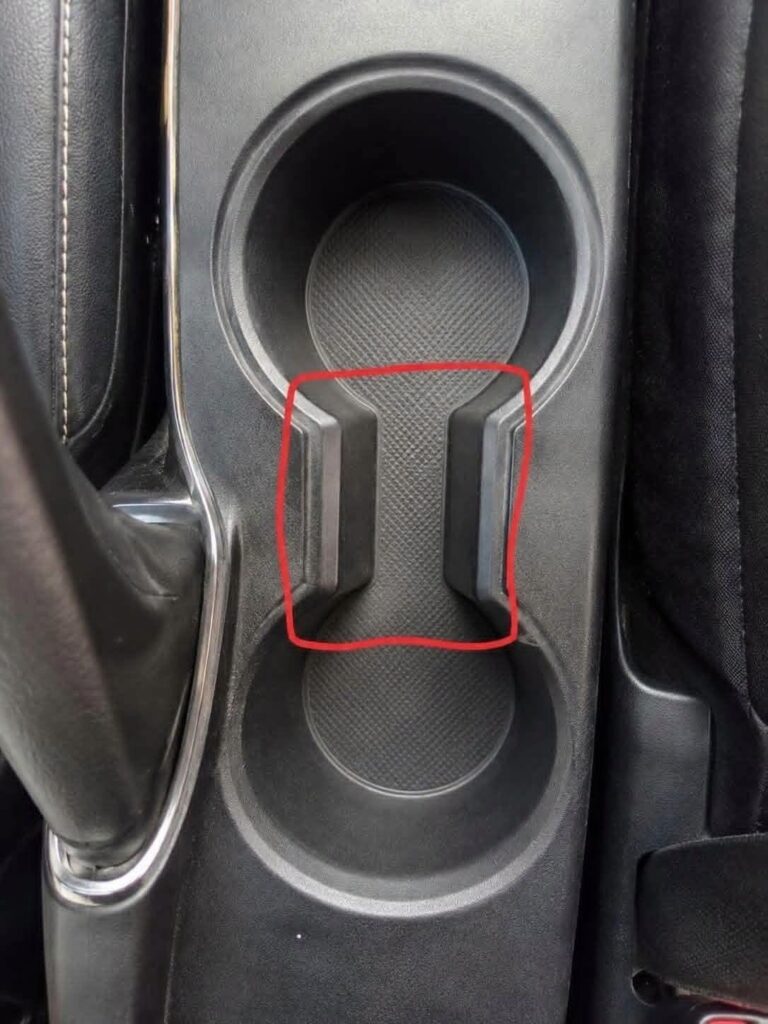
Almost every driver has noticed it.
You glance at your center console and see a narrow slot, channel, or mysterious gap sitting between-or sometimes beside-your vehicle’s cup holders. It looks too small for a drink, too narrow for most storage needs, and too intentional to be an accident.
Many people assume it’s wasted space.
Others believe it’s simply a design flaw or leftover room from the manufacturing process.
Then social media gets involved, and suddenly thousands of drivers are debating the purpose of this tiny feature. Some insist it’s meant for phones. Others swear it’s designed for coins, parking tickets, or keys. A few even suggest it serves no purpose at all.
The truth is that these gaps usually exist for very practical reasons. In many cases, automotive engineers deliberately include these spaces as part of a larger design strategy involving convenience, safety, storage, manufacturing requirements, and interior functionality.
Like many features inside modern vehicles, the answer depends on the specific make and model. However, once you understand how automotive interiors are designed, that strange little gap begins to make much more sense.
Let’s explore why this overlooked feature exists and how it quietly contributes to everyday driving.
Why Car Interiors Are More Complex Than They Look
Every Inch Has a Purpose
Modern vehicle interiors are carefully engineered environments.
Designers must fit an enormous number of components into a relatively small area, including:
- Storage compartments
- Cup holders
- Charging ports
- Wiring harnesses
- Climate controls
- Safety systems
- Electronic modules
- Structural supports
As a result, what appears to be unused space often serves a hidden function.
Automotive engineers rarely leave empty areas without a reason.
Every section of the console typically contributes to comfort, convenience, manufacturing efficiency, or mechanical operation.
Cup Holders Are Surprisingly Complicated
At first glance, cup holders seem simple.
In reality, modern cup holders must accommodate an enormous variety of containers, including:
- Coffee cups
- Soda cans
- Reusable water bottles
- Travel mugs
- Sports drink containers
- Large insulated tumblers
Creating a system capable of securely holding all these shapes requires more engineering than many drivers realize.
The surrounding gaps often play an important role in making that flexibility possible.
A Convenient Storage Space for Small Items
Phones Fit Naturally
One of the most common functions of these narrow spaces is temporary storage.
Modern smartphones are larger than ever, but many still fit neatly into the slots located beside cup holders.
Manufacturers understand that drivers frequently need a place to set down:
- Smartphones
- Parking passes
- Toll tickets
- Garage access cards
- Receipts
A narrow compartment helps keep these items secure while reducing movement during travel.
Preventing Sliding and Clutter
Without dedicated storage spaces, small items often slide around the vehicle.
This can create distractions while driving.
A simple channel or slot gives drivers a predictable location for frequently used objects.
The result is a cleaner and more organized cabin.
Easy Access Matters
Items stored in the center console remain within easy reach.
Designers frequently position these spaces where drivers can access them without excessive movement or visual distraction.
Convenience plays a major role in interior design decisions.
Hidden Space for Cup Holder Mechanisms
Adjustable Holders Require Internal Components
Many cup holders contain internal mechanisms that drivers never see.
These may include:
- Spring-loaded grips
- Flexible retention arms
- Rubber inserts
- Adjustable supports
The visible gap nearby may provide room for these components beneath the console surface.
Supporting Different Container Sizes
A small coffee cup and a large insulated bottle require very different levels of support.
Adjustable systems allow one cup holder to accommodate multiple sizes.
The surrounding structure often houses the hardware necessary to make this adaptability possible.
Engineering Hidden Below the Surface
Much of a vehicle’s interior engineering remains invisible.
Manufacturers frequently use nearby empty spaces to route mechanisms, supports, and moving components without affecting appearance.
The “weird gap” may simply be the visible result of what’s happening underneath.
Room for Larger Cups and Bottles
Today’s Drinks Are Bigger Than Ever
Vehicle interiors designed twenty years ago often struggle with modern beverage containers.
Large reusable water bottles and oversized coffee tumblers have become increasingly common.
Designers now create cup holders with greater flexibility.
Clearance Is Essential
Extra space surrounding cup holders helps prevent larger containers from interfering with:
- Gear selectors
- Armrests
- Adjacent cup holders
- Console controls
Without adequate clearance, larger drinks could become difficult to remove or reposition.
Preventing Spills
Engineers aim to minimize beverage-related distractions.
A slightly larger area around cup holders allows users to insert and remove drinks more easily, reducing accidental spills.
Storage for Keys, Coins, and Cards
Multi-Purpose Design
Some gaps are intentionally designed as miniature storage trays.
Depending on the vehicle, they may accommodate:
- Coins
- House keys
- USB drives
- Business cards
- Toll transponders
- Small electronic devices
Manufacturers recognize that drivers carry many small items requiring temporary storage.
Different Manufacturers, Different Solutions
Not every automaker approaches storage in the same way.
Some prioritize:
- Open storage channels
- Deep compartments
- Covered consoles
- Sliding trays
What appears to be a random gap in one vehicle may function as a dedicated storage feature in another.
Local Driving Habits Influence Design
Vehicles sold in different regions may include storage solutions tailored to local needs.
For example:
- Coin storage may be more common in countries with toll roads.
- Card slots may be prioritized where parking access cards are frequently used.
- Phone storage may receive greater attention in markets with widespread smartphone usage.
Accommodating Hidden Electronics
Modern Vehicles Contain Extensive Wiring
Today’s vehicles contain far more electronics than previous generations.
Hidden beneath the center console may be:
- USB connections
- Wireless charging components
- Vehicle communication modules
- Wiring harnesses
- Power outlets
The surrounding structure often requires additional space.
Supporting Future Features
Manufacturers frequently use common console designs across multiple vehicle trims.
This means even if your particular model lacks a feature, the space may exist because higher-end versions include:
- Wireless charging
- Heated cup holders
- Additional ports
- Electronic controls
The visible gap may reflect shared engineering across multiple configurations.
Manufacturing Efficiency Plays a Role
Shared Parts Reduce Costs
Automotive companies strive to reduce manufacturing complexity.
One way they achieve this is through shared components.
A single console design may appear in:
- Multiple trims
- Different model years
- Various vehicle configurations
The gap may exist because it supports flexibility during manufacturing.
Designing for Assembly
Engineers must consider how parts fit together on assembly lines.
Additional space may:
- Simplify installation
- Improve service access
- Reduce production costs
- Increase structural integrity
Sometimes a feature exists because it makes the entire vehicle easier to build.
Why Drivers Become Curious About It
It Looks Intentional
Humans naturally seek explanations for unusual features.
The gap attracts attention because it appears deliberate.
Most people instinctively recognize that designers probably had a reason for including it.
It’s Too Small to Be Obvious Storage
Large storage bins clearly communicate their purpose.
Narrow slots and unusual gaps do not.
This ambiguity creates curiosity.
People wonder whether they are missing a hidden function.
Social Media Amplifies Curiosity
Platforms filled with automotive tips and “hidden feature” videos often highlight obscure vehicle details.
As a result, drivers increasingly scrutinize small design elements that previously went unnoticed.
The cup-holder gap has become one of the most discussed examples.
Other Surprising Automotive Features People Misunderstand
Small Dashboard Compartments
Many tiny compartments originally served specific purposes such as:
- Coins
- Sunglasses
- Access cards
- Garage remotes
Seat Belt Adjusters
Some drivers never realize their vehicle includes adjustable seat belt anchors designed to improve comfort and safety.
Headrest Functions
Headrests are often misunderstood as comfort devices when they primarily serve important safety purposes.
Fuel Door Indicators
Many vehicles include a small arrow on the fuel gauge indicating which side of the car contains the fuel filler.
Countless drivers remain unaware of this simple feature.
The cup-holder gap belongs to a long list of design elements that quietly perform useful functions.
Frequently Asked Questions
Is the gap always designed for phones?
No. While many drivers use it for phones, its intended purpose varies by manufacturer and model.
Why does my car’s gap look different from others?
Automakers design consoles differently based on storage priorities, available features, and engineering requirements.
Can I use the space for keys?
In many vehicles, yes. Small items such as keys, cards, and receipts often fit well in these areas.
Is it just unused space?
Usually not. Even when it appears empty, the area may support hidden mechanisms, wiring, or manufacturing requirements.
How can I know its exact purpose?
Your vehicle owner’s manual sometimes provides information about console storage features and intended uses.
The Hidden Genius of Everyday Design
The most interesting thing about the gap between cup holders is not necessarily what it does.
It’s what it represents.
Modern vehicles contain thousands of design decisions that drivers rarely notice. Engineers spend years refining interiors to improve convenience, safety, durability, and comfort.
A tiny slot beside a cup holder may seem insignificant, yet it reflects countless considerations involving ergonomics, manufacturing, storage, and user behavior.
These small details often go unnoticed precisely because they work so well.
Good design tends to disappear into the background.
Final Thoughts
The mysterious gap between car cup holders is rarely an accident. Depending on the vehicle, it may function as storage for phones, cards, tickets, keys, and other small items. It may also provide room for adjustable cup-holder mechanisms, hidden electronics, structural supports, or manufacturing components beneath the console.
Its exact purpose varies from one vehicle to another, but the common theme remains the same: practicality.
What looks like wasted space is often the result of thoughtful engineering and careful design. Automotive manufacturers work hard to maximize functionality in limited interior space, and even the smallest compartments usually serve a purpose.
The next time you notice that narrow gap beside your cup holder, remember that it probably isn’t there by mistake. It may be one of the many hidden details quietly making your vehicle more convenient, more flexible, and more useful every time you get behind the wheel.
Sometimes the most puzzling features are simply examples of clever design hiding in plain sight.



Leave a Reply