
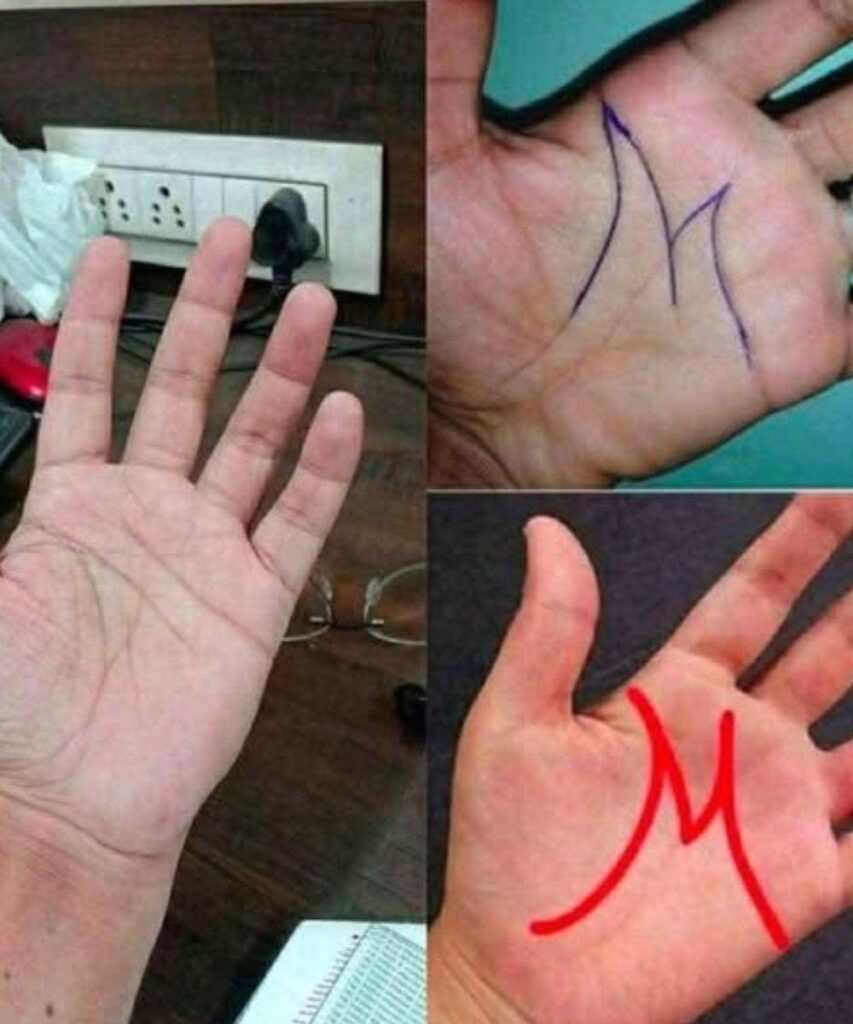
3. Loyalty Is Extremely Important to You
One of the most common interpretations associated with the “M” is loyalty.
In Relationships
You may be someone who:
- Keeps promises
- Values trust
- Supports loved ones during difficult times
- Takes commitment seriously
Once you invest emotionally, you’re often said to be deeply devoted.
The Downside
Because trust matters so much, betrayal may feel especially painful.
Some palmistry traditions suggest that people with an “M” remember emotional wounds for a long time.
4. You Balance Heart and Mind
The “M” forms through the interaction of several major palm lines, including those traditionally associated with emotions and logic.
As a result, palmists often interpret this marking as a sign of balance.
In Love
You may:
- Follow your feelings
- Consider practical realities
- Weigh decisions carefully
- Seek emotional and intellectual compatibility
Rather than being guided solely by passion, you’re thought to blend emotion with reason.
5. You May Be a Natural Protector
Many palmistry interpretations describe people with an “M” as protective and nurturing.
Possible Relationship Traits
You may naturally:
- Offer support during challenges
- Encourage personal growth
- Create emotional security
- Stand up for loved ones
This can make you a dependable partner and friend.
What If the “M” Appears on Both Hands?
Some palm readers place special significance on individuals who have a visible “M” on both palms.
Traditional interpretations suggest this may indicate:
- Strong intuition
- Consistent values
- Self-awareness
- Leadership qualities
Again, these ideas belong to palmistry traditions rather than scientific research.
Why People Find Palmistry Fascinating
Even without scientific validation, palmistry remains popular because it encourages people to think about:
- Personality traits
- Strengths and weaknesses
- Relationship patterns
- Personal growth
In many ways, the appeal comes less from prediction and more from reflection.
People often use these interpretations as conversation starters or tools for self-exploration.
What Science Says
From a scientific perspective, the lines on our palms develop before birth as part of normal fetal development.
Their appearance is influenced by:
- Genetics
- Growth patterns
- Natural skin folding
There is no scientific evidence that palm lines can predict:
- Romantic success
- Personality traits
- Future events
- Relationship outcomes
However, many people still enjoy the symbolic meanings associated with these markings.
A More Meaningful Question
Instead of asking:
“What does the M on my palm predict?”
You might ask:
“What qualities do I bring into my relationships?”
Healthy relationships are generally built on:
- Communication
- Respect
- Trust
- Empathy
- Shared values
These qualities matter far more than any line on a hand.
Fun Facts About Palm Lines
Everyone’s Palm Is Unique
Just like fingerprints, palm patterns vary from person to person.
Dominant vs. Non-Dominant Hand
Many palmists believe the dominant hand reflects current life experiences, while the non-dominant hand reflects innate traits.
The “M” Isn’t Extremely Rare
Although often described as unusual, many people can identify an “M”-like shape when several major palm lines intersect.
Interpretations vary depending on how clearly the pattern appears.
Final Thoughts
According to palmistry, the “M” on your palm may symbolize intuition, loyalty, emotional depth, and a desire for meaningful relationships. People who identify with these interpretations often see themselves as thoughtful partners who value honesty, commitment, and genuine connection.
While science does not support the idea that palm lines predict personality or romantic destiny, the symbolism can still serve as an interesting way to reflect on the qualities that matter most in relationships. Whether you have an “M” or not, the strongest indicators of lasting love remain trust, communication, kindness, and emotional maturity.
In the end, your choices shape your relationships far more than the lines in your hand ever could.



Leave a Reply