
Sleep is one of the most important pillars of good health. We spend nearly one-third of our lives sleeping, yet many people focus only on how long they sleep and rarely consider how they sleep. Surprisingly, the position you choose every night may influence digestion, breathing, circulation, and overall comfort.
Among the most common sleeping positions, side sleeping is often considered one of the healthiest. However, researchers and healthcare professionals have discovered that the side you choose may matter more than you think.
Many people naturally sleep on their right side because it feels comfortable and familiar. Others prefer the left side without giving it much thought. While right-side sleeping is not necessarily harmful for everyone, growing evidence suggests that sleeping exclusively on the right side may contribute to certain health issues in some individuals.
Before you panic and force yourself into a completely different sleeping position tonight, it’s important to understand the science, the myths, and the situations where sleep position truly matters.
Why Sleep Position Matters
When you lie down, gravity continues to affect every organ in your body. Your heart keeps pumping blood, your digestive system continues processing food, and your respiratory system keeps supplying oxygen.
Because your internal organs are not perfectly symmetrical, changing positions can alter how these systems function.
Most people think sleep position only affects:
- Back pain
- Neck pain
- Snoring
- Comfort
However, sleep posture can also influence:
- Acid reflux
- Digestion
- Pregnancy comfort
- Sleep apnea symptoms
- Circulation
- Pressure on joints
- Breathing efficiency
The effects are often subtle, but over months or years they can become significant for some people.
Understanding Your Body’s Anatomy
To understand why side sleeping matters, it helps to know where your organs sit.
Your stomach is positioned slightly toward the left side of your body.
The liver occupies much of the right side.
Your heart sits slightly left of center.
Large blood vessels run through the center of the chest and abdomen.
Because of this arrangement, gravity affects your organs differently depending on which side you’re lying on.
This doesn’t mean one side is universally “good” and the other is universally “bad.” Instead, certain positions may offer advantages for specific health conditions.
The Strongest Evidence: Acid Reflux and GERD
One of the most well-established findings regarding sleep position involves acid reflux.
Acid reflux occurs when stomach acid travels backward into the esophagus.
Common symptoms include:
- Burning chest pain
- Sour taste in the mouth
- Chronic cough
- Hoarseness
- Nighttime discomfort
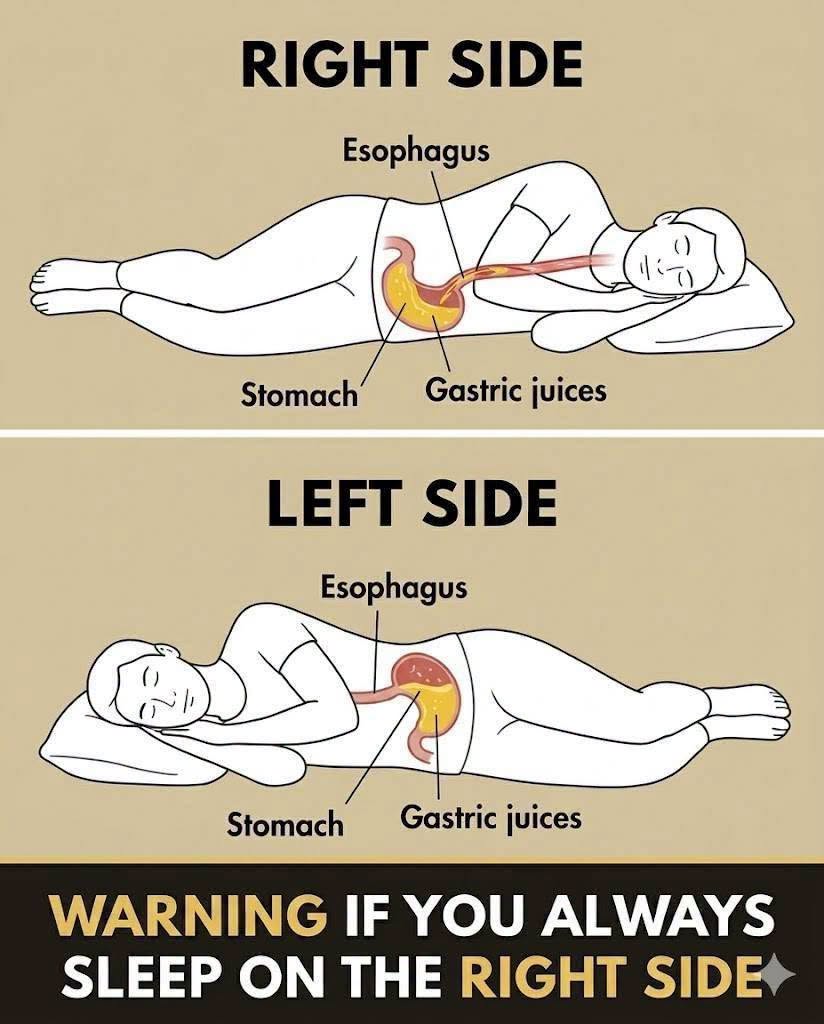
Studies consistently show that sleeping on the left side reduces reflux episodes.
Why?
When lying on the left side, the stomach sits below the esophagus. Gravity helps keep stomach contents where they belong.
When lying on the right side, the stomach sits in a position that can make it easier for acid to flow upward.
Many patients with GERD report dramatic improvements after switching to left-side sleeping.
Some people notice:
- Less nighttime heartburn
- Better sleep quality
- Reduced coughing
- Fewer awakenings
For anyone struggling with frequent reflux, changing sleep position may be one of the simplest lifestyle adjustments available.
What About Heart Health?
Claims about sleeping on the right side harming the heart have circulated online for years.
The reality is more complicated.
For healthy individuals, there is little evidence that right-side sleeping damages the heart.
However, researchers have investigated sleep position in people with existing heart conditions.
Some studies suggest that left-side sleeping may improve circulation in certain heart failure patients.
Others indicate that some cardiac patients actually feel more comfortable sleeping on their right side.
The takeaway is simple:
If you have a diagnosed heart condition, discuss sleep position with your healthcare provider.
If your heart is healthy, there is currently no strong evidence that sleeping on your right side is dangerous.
Sleep Position During Pregnancy
Pregnancy changes everything.
As the baby grows, pressure increases on internal organs and major blood vessels.
Healthcare providers often recommend left-side sleeping during the second and third trimesters.
Benefits may include:
- Improved blood flow to the baby
- Better kidney function
- Reduced swelling
- Less pressure on major veins
The inferior vena cava, a large vein that returns blood to the heart, can become compressed under certain positions.
Left-side sleeping may help reduce this pressure.
That said, pregnant individuals should not panic if they occasionally wake up on their backs or right side.
The most important goal is obtaining adequate, comfortable sleep.
Digestion and Overnight Processing
Digestion doesn’t stop when you fall asleep.
Your body continues processing food for several hours after dinner.
Some researchers believe left-side sleeping may support digestive efficiency.
Potential benefits include:
- Improved gastric emptying
- Reduced reflux
- Less nighttime indigestion
While evidence remains limited, many people with digestive complaints report feeling better when sleeping on their left side.
If you regularly wake up bloated, uncomfortable, or with a sour taste in your mouth, experimenting with sleep position may be worthwhile.
Sleep Apnea and Snoring
Millions of people suffer from snoring and obstructive sleep apnea.
These conditions occur when the airway becomes partially or completely blocked during sleep.
Sleeping on the back often worsens symptoms because gravity pulls soft tissues backward.
Side sleeping generally helps.
Interestingly, research has not found strong differences between left-side and right-side sleeping for sleep apnea.
The key benefit comes from avoiding back sleeping.
For many people, simply sleeping on either side can reduce:
- Snoring
- Airway collapse
- Sleep interruptions
The Lymphatic Drainage Theory
You may have heard claims that left-side sleeping enhances detoxification.
These claims usually refer to the lymphatic system.
The lymphatic system helps:
- Remove waste
- Transport immune cells
- Maintain fluid balance
Some proponents argue that because the thoracic duct drains on the left side, sleeping on the left improves lymphatic flow.
While the anatomy is real, scientific evidence supporting major health benefits from this position remains limited.
Your lymphatic system functions continuously regardless of which side you sleep on.
Factors that matter far more include:
- Exercise
- Hydration
- Nutrition
- Overall health
Why Some People Prefer the Right Side
Despite the discussion surrounding left-side sleeping, many individuals naturally gravitate toward the right side.
Reasons include:
Habit
People often develop sleeping patterns in childhood and never change them.
Shoulder Comfort
Existing injuries may make one side more comfortable.
Mattress Support
The way a mattress distributes pressure can influence preferred positions.
Pregnancy History
Some women continue sleeping on a preferred side long after pregnancy.
Individual Anatomy
Not everyone experiences the same physiological effects from sleep position.
Comfort remains a critical factor.
Poor sleep caused by discomfort may be more harmful than sleeping on the “wrong” side.
Signs Your Sleep Position Might Be Affecting You
Consider evaluating your sleep posture if you regularly experience:
- Nighttime heartburn
- Morning sore throat
- Chronic indigestion
- Frequent nighttime coughing
- Unexplained chest discomfort
- Poor sleep quality
- Repeated awakenings
These symptoms don’t automatically mean your position is the cause.
However, they may indicate that experimenting with different positions could help.
How to Switch to Left-Side Sleeping
Changing a lifelong habit isn’t easy.
Fortunately, there are practical strategies that can help.
Use a Body Pillow
A body pillow provides support and discourages rolling.
Place a Pillow Between Your Knees
This reduces pressure on hips and lower back.
Support Your Back
Place a pillow behind you to prevent rolling onto your right side.
Start Gradually
Begin by falling asleep on your left side rather than forcing yourself to stay there all night.
Give It Time
Most people require several weeks to adjust.
Patience is important.
Sleep Quality Still Comes First
One of the biggest mistakes people make is becoming obsessed with sleep position.
Position matters.
But not as much as:
- Total sleep duration
- Consistent bedtime
- Sleep environment
- Stress levels
- Diet
- Exercise
A person sleeping comfortably for eight hours on their right side is often healthier than someone struggling through six restless hours on their left side.
Sleep quality remains the priority.
Common Myths About Right-Side Sleeping
Myth #1: Right-Side Sleeping Is Dangerous
False.
Most healthy adults can safely sleep on either side.
Myth #2: Left-Side Sleeping Fixes Every Health Problem
False.
It may help certain conditions, but it is not a cure-all.
Myth #3: You Must Stay in One Position All Night
False.
Most people naturally change positions multiple times.
Myth #4: Sleep Position Matters More Than Sleep Duration
False.
Getting enough sleep remains far more important.
Myth #5: Sleeping on the Right Side Damages Organs
False.
There is no evidence that normal right-side sleeping harms healthy organs.
The Bigger Picture
The discussion about sleep position highlights an important lesson.
Small habits matter.
Our bodies constantly respond to:
- Movement
- Gravity
- Environment
- Daily routines
Something as simple as changing sides during sleep may improve symptoms for certain people.
Yet health is never determined by one factor alone.
Good sleep depends on:
- A healthy diet
- Physical activity
- Stress management
- Medical care when needed
- Consistent sleep habits
Position is simply one piece of the puzzle.
Frequently Asked Questions
Is sleeping on the right side bad?
No. For most healthy individuals, sleeping on the right side is perfectly safe.
Why does left-side sleeping reduce reflux?
Gravity helps keep stomach contents away from the esophagus.
Should everyone switch to left-side sleeping?
No. Benefits are most noticeable in people with reflux, pregnancy-related discomfort, or specific medical conditions.
What if left-side sleeping hurts my shoulder?
Comfort should come first. Use supportive pillows or discuss options with your healthcare provider.
Can sleep position affect blood pressure?
Sleep position can slightly influence circulation, but long-term blood pressure is primarily affected by overall health, lifestyle, and medical conditions.
Do children need to sleep on their left side?
No. Children generally do not require specific side positioning unless advised by a healthcare professional.
How quickly can I notice benefits?
People with reflux sometimes notice improvements within days.
Final Thoughts
The idea that sleeping on your right side every night may affect your health contains a kernel of truth-but not in the dramatic way many headlines suggest.
For most healthy adults, right-side sleeping is not harmful.
However, people dealing with acid reflux, GERD, pregnancy-related discomfort, or certain medical conditions may benefit from trying left-side sleeping.
The most important takeaway is awareness.
Listen to your body.
Notice how you feel when you wake up.
Pay attention to symptoms.
Experiment thoughtfully.
Small changes can sometimes produce surprisingly meaningful results.
Most importantly, remember that good health is built from many habits working together. Sleep position matters, but restful, consistent, high-quality sleep matters even more.
Whether you sleep on your left side, right side, back, or move throughout the night, the goal remains the same: waking up refreshed, restored, and ready for a new day.



Leave a Reply