
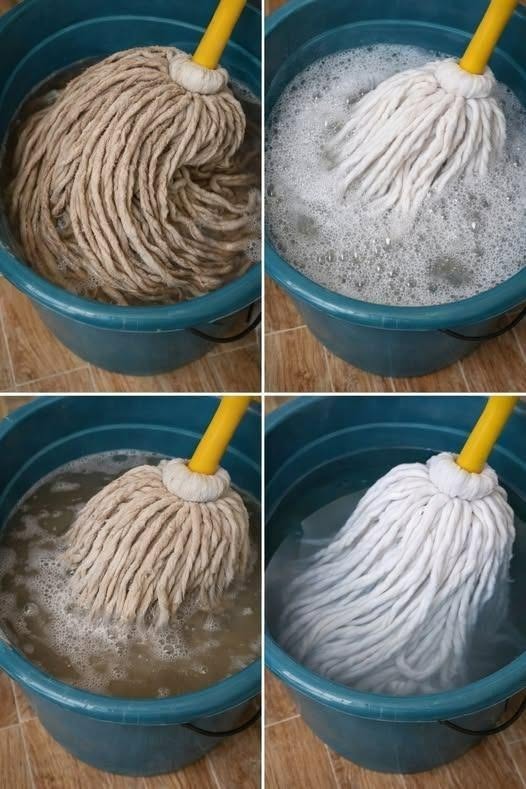
Why Mops Get So Disgusting (And Why You Should Care)
Every time you mop, the fibers collect:
- Dirt and dust
- Food residue
- Grease
- Pet hair
- Soap buildup
- Moisture
When the mop remains damp after use, bacteria and mildew can multiply quickly. That unpleasant odor many people notice isn’t coming from the mop material itself-it’s usually coming from microorganisms thriving inside the fibers.
A dirty mop can:
- Leave streaks on floors
- Spread odors throughout the home
- Reduce cleaning effectiveness
- Transfer old dirt back onto clean surfaces
That’s why regular mop maintenance matters just as much as cleaning the floor itself.
The One-Ingredient Cleaning Method
What You’ll Need
- 1 cup baking soda
- Hot water
- Large bucket or basin
Instructions
- Fill a bucket with enough hot water to completely cover the mop head.
- Add one cup of baking soda.
- Stir until dissolved.
- Submerge the mop completely.
- Let it soak for at least 6 hours, preferably overnight.
- Remove the mop and rinse thoroughly with clean water.
- Hang it in a well-ventilated area to dry completely.
You may be surprised by the color of the water the next morning. Years of trapped grime, soap residue, and dirt can loosen from the fibers during the soak.
Why Baking Soda Works
Baking soda is a remarkable household cleaner because it helps:
Neutralize Odors
Instead of masking smells, baking soda helps neutralize odor-causing compounds.
Break Down Residue
It loosens accumulated dirt and detergent buildup that become trapped in mop fibers.
Refresh Fibers
Mop strands often feel stiff because of residue. Baking soda helps restore softness and flexibility.
Gentle Cleaning Power
Unlike harsh chemicals, baking soda is generally gentle on most mop materials.
For Extra Dirty Mops
If your mop has years of buildup, try this enhanced method.
Deep-Clean Formula
- 1 cup baking soda
- 1 gallon hot water
- ½ cup white vinegar (added slowly)
Allow the fizzing reaction to settle before placing the mop inside.
Soak for several hours, rinse thoroughly, and dry completely.
Note: Always check manufacturer instructions before using cleaning solutions on specialty mop heads.
Signs It’s Time to Clean Your Mop
Many people wait until their mop looks dirty, but there are earlier warning signs.
Watch for:
- Musty odors
- Stiff fibers
- Discolored strands
- Floors that don’t feel clean after mopping
- Visible debris trapped in the mop head
A monthly deep clean can significantly extend the life of most mops.
How to Keep Your Mop Cleaner Longer
After each use:
Rinse Thoroughly
Remove as much dirt and cleaning solution as possible.
Wring Out Excess Water
Less moisture means less opportunity for bacteria and mildew growth.
Dry Completely
Never leave a wet mop sitting in a bucket.
Store Properly
Hang it up whenever possible to improve airflow.
These simple habits can dramatically reduce odors and buildup.
When to Replace a Mop
Even the best cleaning tricks have limits.
Consider replacing your mop if:
- Fibers are falling apart
- The head remains stained after repeated cleaning
- Persistent odors return immediately after washing
- The mop no longer absorbs water effectively
Most quality mop heads can last much longer than people expect when properly maintained.
Final Thoughts
Sometimes the simplest solutions are the most effective. Before spending money on a replacement mop, try giving your current one a second chance. A cup of baking soda, some hot water, and a little patience may restore it far better than you expect.
Not every cleaning problem requires an expensive product or a trip to the store. Sometimes the answer has been sitting in your pantry the whole time.
Your floors will be cleaner, your mop will smell fresher, and your wallet will thank you.



Leave a Reply