
Why Do They Form? Key Risk Factors
Not everyone develops tonsil stones, but certain factors can make them more likely.
Deep Tonsil Crypts
The tonsils naturally contain small folds and pockets called crypts.
Some people have deeper crypts than others, making it easier for debris to become trapped.
Chronic Tonsillitis
Repeated inflammation of the tonsils can enlarge crypts and create additional spaces where particles accumulate.
Poor Oral Hygiene
When bacteria and food particles remain in the mouth, they have more opportunities to collect in the tonsils.
Postnasal Drip
Excess mucus draining from the nose and sinuses can contribute to buildup within the tonsil crypts.
Dry Mouth
Saliva helps naturally cleanse the mouth and throat.
Reduced saliva production may increase the risk of debris accumulation.
Common Symptoms
Some tonsil stones are so small that they cause no symptoms at all.
Others can create noticeable discomfort.
Persistent Bad Breath
One of the most common signs.
The bacteria involved in tonsil stone formation can produce sulfur compounds that create an unpleasant odor.
Feeling Something Stuck in the Throat
Many people describe a sensation similar to having a crumb lodged in the back of the throat.
Sore Throat
Larger stones may irritate surrounding tissues.
Difficulty Swallowing
Although uncommon, bigger stones can sometimes make swallowing uncomfortable.
Ear Pain
The nerves in the throat and ears share connections, so irritation from a tonsil stone may occasionally be felt as ear discomfort.
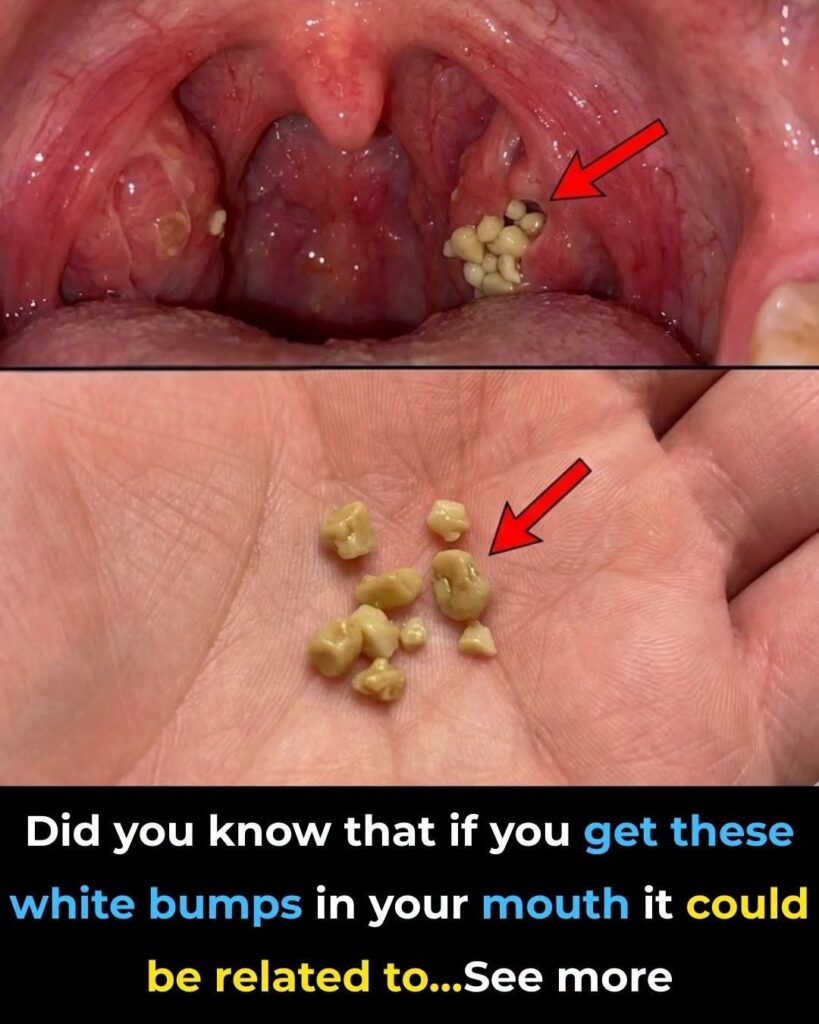
Visible White or Yellow Deposits
Some stones can be seen directly in the tonsil crypts when looking in a mirror.
What Do Tonsil Stones Look Like?
Tonsil stones often appear as:
- White lumps
- Yellowish pebbles
- Grayish deposits
- Small clusters resembling cottage cheese
Their texture can range from soft and crumbly to firm and calcified.
The odor associated with tonsil stones is often much more noticeable than their appearance.
How to Remove Tonsil Stones Safely
If a tonsil stone is visible and causing discomfort, there are several gentle methods that may help.
Gargle with Salt Water
One of the simplest and safest approaches.
Mix:
- ½ teaspoon salt
- 8 ounces warm water
Gargle vigorously for 15-30 seconds several times daily.
This may loosen smaller stones and reduce inflammation.
Gentle Coughing
Sometimes a firm cough is enough to dislodge a stone naturally.
Oral Irrigator on Low Pressure
Some people use a water flosser set to its lowest setting.
Extreme caution is important because excessive pressure can damage delicate tonsil tissue.
Cotton Swab
A soft cotton swab may occasionally help remove visible stones.
However, avoid aggressive poking or scraping.
If the stone does not come out easily, stop and try another method.
What Not to Do
Certain removal methods can cause more harm than good.
Avoid:
- Sharp objects
- Tweezers
- Toothpicks
- Excessive force
- Digging deeply into the tonsils
These approaches can lead to bleeding, infection, and tissue injury.
How to Prevent Tonsil Stones
While prevention isn’t always possible, several habits may reduce the likelihood of recurrence.
Practice Excellent Oral Hygiene
Brush at least twice daily.
Don’t forget to brush your tongue, where odor-causing bacteria often accumulate.
Floss Daily
Removing food particles helps reduce bacterial buildup.
Stay Hydrated
Adequate hydration supports healthy saliva production.
Use Alcohol-Free Mouthwash
Regular rinsing can help decrease bacteria in the mouth.
Manage Sinus and Allergy Issues
Reducing postnasal drip may help limit debris accumulation.
Regular Dental Visits
Routine cleanings support overall oral health and may reduce contributing factors.
When to See a Doctor
Most tonsil stones can be managed at home.
However, medical evaluation may be appropriate if you experience:
- Frequent recurring stones
- Severe bad breath despite good oral hygiene
- Persistent sore throat
- Difficulty swallowing
- Bleeding tonsils
- Significant pain
- Signs of infection
An ear, nose, and throat specialist can evaluate whether additional treatment is necessary.
Medical Treatments
For individuals with persistent or severe tonsil stones, doctors may recommend additional options.
Professional Removal
An ENT specialist can safely remove larger stones.
Cryptolysis
Some procedures use lasers or radiofrequency energy to smooth tonsil crypts and reduce future buildup.
Tonsillectomy
In severe cases with ongoing symptoms, surgical removal of the tonsils may be considered.
This is usually reserved for chronic, troublesome cases.
Can Tonsil Stones Be Dangerous?
In most situations, no.
Tonsil stones are generally considered a nuisance rather than a serious health threat.
Complications are uncommon.
The biggest concerns tend to be:
- Bad breath
- Discomfort
- Throat irritation
- Recurrence
The Bottom Line
Tonsil stones are small accumulations of debris, bacteria, and minerals that become trapped within the natural folds of the tonsils.
Although they can cause unpleasant symptoms such as bad breath, throat irritation, and the sensation of something being stuck in the throat, they are usually harmless.
Good oral hygiene, regular hydration, and gentle removal techniques can help manage most cases. For people who experience frequent recurrences or significant discomfort, medical treatments are available.
Understanding what tonsil stones are-and what they are not-can take much of the worry out of an otherwise frustrating condition and help you keep your mouth and throat feeling healthy and comfortable.



Leave a Reply