
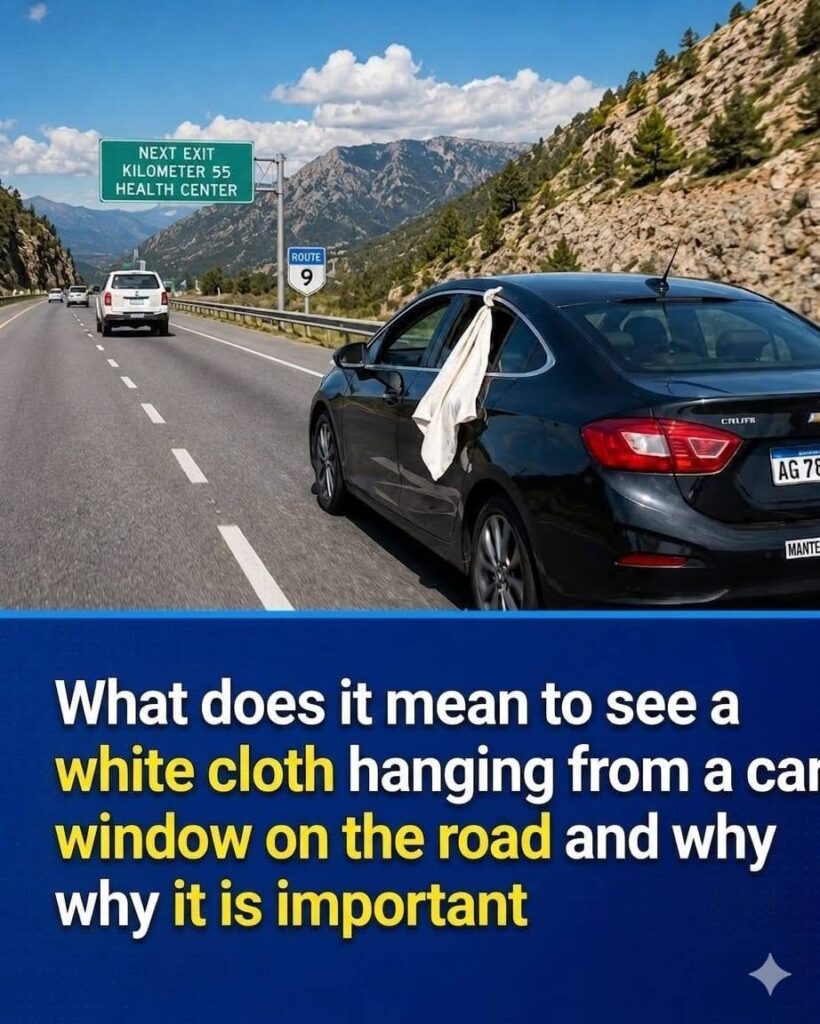
The Forgotten Car Wash Towel
Anyone who has washed a car at home knows how easily cleaning supplies end up scattered around the vehicle.
A towel used to dry the car may accidentally get trapped in a window or door.
What appears mysterious from a distance may simply be a forgotten microfiber cloth left behind after cleaning.
No secret code.
No hidden message.
Just a busy person finishing a chore.
A Traditional Distress Signal
Historically, a white cloth attached to a vehicle could indicate that a driver needed assistance.
Before mobile phones became common, motorists sometimes used visible markers to communicate that they were experiencing trouble.
A cloth, handkerchief, or rag could signal:
- Mechanical breakdown
- Flat tire
- Need for assistance
- Temporary abandonment of the vehicle
In some situations, this practice still occurs today.
Far from being threatening, it may actually mean someone needs help.
Winter Weather and Practical Uses
In colder climates, cloths sometimes serve practical purposes.
Drivers may place cloths or towels near windows and doors to:
- Prevent ice buildup
- Protect rubber seals
- Absorb moisture
- Mark a vehicle during snowstorms
Again, the explanation is usually far less dramatic than internet rumors suggest.
Why Fear-Based Posts Spread So Quickly
Psychologists have long understood that people pay more attention to potential threats than ordinary information.
This tendency helped our ancestors survive.
However, in the age of social media, it can also lead to misinformation spreading rapidly.
Fear-based posts often succeed because they:
- Create urgency
- Trigger emotional reactions
- Encourage sharing
- Appeal to protective instincts
Unfortunately, many of these posts lack reliable evidence.
The Cost of Unnecessary Fear
Constant exposure to alarming rumors can have unintended consequences.
Increased Anxiety
People may begin viewing everyday situations as suspicious.
Reduced Community Trust
Neighbors and strangers become sources of concern rather than connection.
Ignoring Real Safety Information
When every warning is treated as a crisis, genuine safety messages can become harder to recognize.
Maintaining a healthy balance between awareness and fear is important.
What Should You Do If You See a White Cloth?
The answer is surprisingly simple.
Stay Calm
There is no reason to assume criminal activity.
Observe the Situation
Look for obvious explanations such as:
- Vehicle maintenance
- Cleaning supplies
- Weather-related uses
- Signs of mechanical trouble
Use Common Sense
If a situation genuinely seems unusual or concerning, trust your judgment and prioritize your safety.
Help If Appropriate
If the vehicle appears disabled and assistance is needed, you might choose to notify local roadside services or authorities.
The Bigger Lesson
The white cloth myth highlights a broader challenge of modern life.
Information travels faster than ever before.
Unfortunately, misinformation travels just as quickly.
Learning to pause, verify claims, and seek evidence helps us make better decisions and avoid unnecessary worry.
Most everyday mysteries turn out to have remarkably ordinary explanations.
The Bottom Line
Despite viral social media warnings, a white cloth hanging from a car window is not a recognized signal used by criminals.
In most cases, it represents something entirely innocent:
- A personal reminder
- A forgotten cleaning cloth
- A distress signal from a motorist
- A practical solution for weather or maintenance
The next time you see a white rag sticking out of a car window, you can probably skip the panic.
The world is usually much less mysterious than the internet would have us believe.
More often than not, it’s simply someone trying to remember something, solve a problem, or get through their day-just like the rest of us.



Leave a Reply