
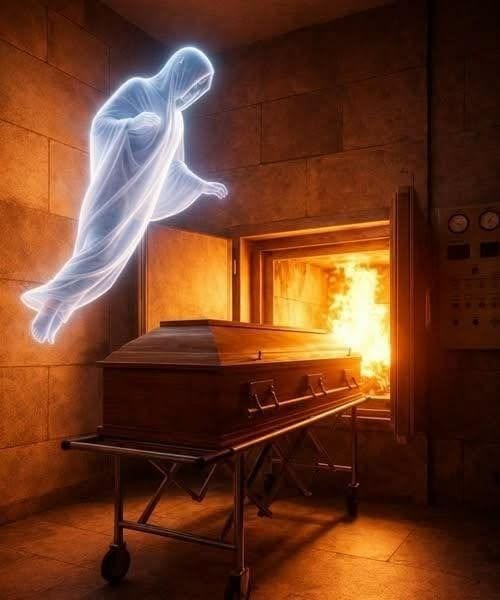
References to Cremation in Scripture
Although burial was more common, the Bible does contain references to bodies being burned.
One example appears in 1 Samuel 31 after the deaths of King Saul and his sons. Their bodies were recovered from enemy territory, burned, and then their bones were buried.
The text records the event without explicitly condemning the action.
Another example occurs in Joshua 7, where Achan and his possessions were burned as part of a unique act of divine judgment. However, this situation involved punishment and should not be viewed as a general teaching regarding funeral practices.
These passages demonstrate that cremation itself is mentioned in Scripture, but none clearly state that cremation is inherently sinful.
The Resurrection Question
One reason some Christians have historically preferred burial is its symbolic connection to the future resurrection of the dead.
The Apostle Paul teaches that believers will one day receive resurrected bodies through God’s power. Some people worry that cremation might somehow interfere with this promise.
However, Scripture consistently emphasizes God’s unlimited power.
Throughout history, people have died under countless circumstances. Some were buried, some were lost at sea, some were consumed by fire, and others returned to dust through natural processes.
The Christian doctrine of resurrection does not depend upon the preservation of physical remains.
If God can create life from dust, He can certainly raise believers regardless of how their earthly bodies were laid to rest.
What Matters Most
The central message of Christianity focuses on faith, salvation, and the hope found in Jesus Christ.
The New Testament places great importance on spiritual transformation and eternal life. It does not establish detailed rules concerning burial or cremation.
Because of this, many Christian leaders view funeral decisions as matters of personal conscience, family preference, culture, and practical circumstances.
Factors such as cost, available cemetery space, family traditions, and personal wishes often influence these decisions.
Different Christian Perspectives
Various Christian denominations approach cremation differently.
Some traditions strongly prefer burial because of historical practice and symbolism.
Others explicitly permit cremation and consider it a personal choice.
In recent decades, cremation has become increasingly accepted among many Christian communities around the world.
While differences of opinion remain, most mainstream Christian groups do not teach that cremation prevents salvation or separates a person from God.
Honoring the Body
Regardless of whether a family chooses burial or cremation, many believers emphasize treating the body with dignity and respect.
Christian teaching views the human body as part of God’s creation and worthy of honor.
Funeral services, memorial gatherings, prayers, and acts of remembrance often matter far more than the specific method chosen for handling remains.
The focus is typically placed on honoring the life of the deceased and remembering the hope of eternal life.
A Matter of Conscience
Romans 14 teaches an important principle about matters not directly commanded or forbidden in Scripture. Christians are encouraged to act according to their convictions while showing grace toward others who may reach different conclusions.
For many believers, cremation falls into this category.
Some families choose burial because it aligns with tradition and personal preference. Others choose cremation because of financial, practical, or cultural considerations.
Both decisions can be made thoughtfully and respectfully.
Conclusion
The Bible does not explicitly teach that cremation is a sin. While burial was the customary practice in biblical times and remains meaningful for many Christians today, Scripture does not establish burial as a requirement for salvation or faithful living.
The Christian hope rests not in the condition of the physical body after death but in the power of God and the promise of resurrection through Jesus Christ.
For most believers, the choice between burial and cremation is ultimately a personal decision made with prayer, conviction, and respect for the deceased.
What matters most is not the method of disposition but the faith, hope, and trust placed in God.



Leave a Reply