
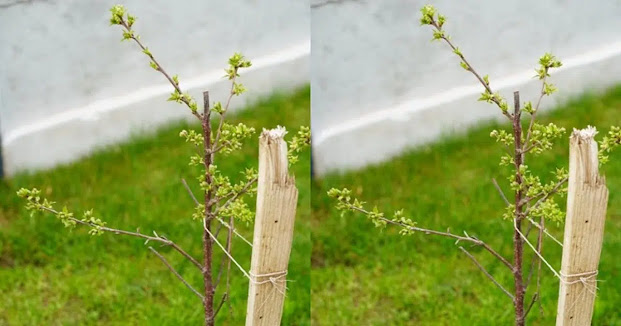
When you see a young tree tied to wooden stakes, it is easy to assume the stakes are like training wheels. They seem to be there to hold the tree straight until it is strong enough to stand on its own.
That idea sounds logical, but it is only partly true.
Tree stakes can help a newly planted tree during its early establishment period, especially when the roots are not yet secure in the soil. However, staking is not meant to hold a tree perfectly still. In fact, too much support can actually make a young tree weaker over time.
A tree needs movement.
A little swaying in the wind helps the trunk develop strength, thickness, and natural taper. When a tree is tied too tightly or left staked for too long, it may become dependent on the support. Once the stakes are removed, the trunk may be less prepared to handle wind on its own.
That is why proper staking is temporary, flexible, and used only when necessary.
Why Young Trees Are Sometimes Staked
Newly planted trees often have small or disturbed root systems.
When a tree is grown in a nursery, dug up, transported, and planted in a new location, its roots need time to adjust. Even container-grown trees can take time to anchor themselves into the surrounding soil.
During this period, strong wind can rock the tree back and forth. If the root ball moves too much, delicate new roots can break before they establish.
Staking helps prevent that root movement.
The goal is not to freeze the trunk in place. The goal is to keep the root ball stable while still allowing the upper trunk to move naturally.
The Main Reasons for Staking
A tree may need staking if it is:
- Newly planted in a windy location
- Planted in loose or sandy soil
- Top-heavy with a large canopy
- Bare-root with limited root support
- Leaning severely after planting
- At risk of being bumped by people, pets, or vehicles
In these cases, stakes provide temporary protection.
They give the tree time to grow roots into the surrounding soil.
Why Not Every Tree Needs Stakes
One of the biggest mistakes homeowners make is assuming every newly planted tree must be staked.
Many young trees do better without stakes.
If the tree has a strong trunk, a stable root ball, and is planted in a sheltered location, it may not need any extra support.
Unnecessary staking can interfere with natural development.
A tree that is allowed to move slightly will often develop a stronger trunk than one held rigidly upright.
Why Trees Need to Sway
Trees respond to movement.
When wind pushes against a young tree, the bending motion sends signals through the trunk and branches. In response, the tree produces stronger wood and develops a thicker trunk base.
This natural process helps the tree prepare for future storms.
A tree that never moves may grow taller but weaker.
It may look straight and supported at first, but the trunk may not develop the strength needed to stand independently.
That is why flexible staking is better than rigid staking.
The Problem With Tying Trees Too Tightly
Tight staking can cause several problems.
First, it prevents natural trunk movement.
Second, it can damage the bark.
Third, it may restrict growth as the trunk expands.
If a narrow rope, wire, or plastic tie is wrapped tightly around the trunk, it can cut into the bark. Over time, the growing trunk may begin to grow around the tie. This can block the movement of water and nutrients inside the tree.
This type of damage is called girdling.
Girdling can seriously weaken or even kill a tree.
How to Stake a Tree Correctly
If a tree truly needs staking, use the least amount of support required.
The tree should remain upright, but it should still be able to move slightly.
Place stakes outside the root ball so you do not damage the roots. Use soft, wide materials for ties, such as tree straps, canvas webbing, rubber ties, or soft cloth.
Avoid bare wire, thin string, or anything that can cut into bark.
The ties should be loose enough to allow movement but secure enough to prevent the root ball from shifting.
Where to Attach the Ties
Many people tie trees too high.
This is a mistake.
Ties should generally be placed low enough to stabilize the tree while allowing the upper portion to sway.
A useful approach is to attach the tie around the lower third of the trunk, or at the lowest point where the tree can remain upright.
The upper trunk should still move in the wind.
That movement is what helps the tree build strength.
One Stake, Two Stakes, or Three?
The number of stakes depends on the tree and location.
A small tree may need only one stake.
A tree in a windy area may need two stakes placed opposite each other.
In very exposed locations, three stakes may be used for extra stability.
The important thing is not the number of stakes but how they are used.
They should stabilize the roots without immobilizing the entire tree.
When to Remove Tree Stakes
Stakes should not stay on forever.
In most cases, they should be removed after one growing season.
For many trees, this means about six months to one year.
If the tree is still unstable after a year, check whether the root system is establishing properly.
Leaving stakes on for too long can create dependency and cause trunk damage.
As a general rule, stakes should rarely remain longer than two years.
The Push Test
A simple way to check whether a tree is ready is the push test.
Gently push the trunk.
If the trunk moves slightly but the root ball stays firm in the ground, the tree is likely establishing well.
If the entire root ball shifts, lifts, or rocks, the tree may need more time.
The goal is a stable root system, not a perfectly rigid trunk.
Signs Stakes Are Hurting the Tree
Check your staked tree regularly.
Warning signs include:
- Ties cutting into the bark
- The trunk rubbing against the stake
- The tree unable to move at all
- Bark wounds
- Swelling around ties
- Leaning despite the stakes
- Stakes left in place for more than a year
If you notice these signs, adjust or remove the staking system.
What If the Tree Is Leaning?
A slight lean is not always a problem.
Young trees often adjust their growth over time.
However, a severe lean may need correction, especially if the root ball is unstable.
If the tree is newly planted and leaning strongly, it can often be gently repositioned and loosely staked.
Do not force a tree upright if doing so damages the roots or trunk.
For large or valuable trees, consider asking an arborist for help.
What Materials Should You Use?
Good staking materials include:
- Wooden stakes
- Metal stakes
- Soft tree straps
- Canvas webbing
- Rubber ties
- Wide flexible bands
Avoid:
- Bare wire
- Fishing line
- Thin rope
- Zip ties directly against bark
- Tight plastic bands
The tie should support the tree without injuring it.
Common Tree Staking Mistakes
Staking Every Tree Automatically
Not all trees need support.
Only stake when there is a real stability issue.
Tying Too High
High ties prevent trunk movement and weaken natural development.
Tying Too Tight
Tight ties can damage bark and restrict growth.
Leaving Stakes Too Long
Support should be temporary.
Using Harsh Materials
Thin or sharp materials can cut into the tree.
Why Less Support Can Be Better
It may seem kind to give a tree extra help, but too much help can create weakness.
A young tree needs the chance to respond to its environment.
Wind, movement, and mild stress encourage strength.
The best staking system gives just enough support to protect the roots while allowing the tree to develop naturally.
In other words, support the tree without controlling it.
Final Thoughts
Young trees are sometimes tied to stakes for a good reason: their roots need time to anchor into the soil.
But stakes are not meant to be permanent training wheels.
They are temporary tools.
Used correctly, they protect a newly planted tree during its most vulnerable stage.
Used incorrectly, they can weaken the trunk, damage the bark, and slow healthy development.
The best approach is simple:
Stake only when necessary.
Tie loosely.
Use soft materials.
Allow movement.
Remove stakes as soon as the tree is stable.
A tree grows stronger when it can sway, adjust, and respond to the world around it.
Give it support when it needs it - then give it the freedom to stand on its own.


Leave a Reply