
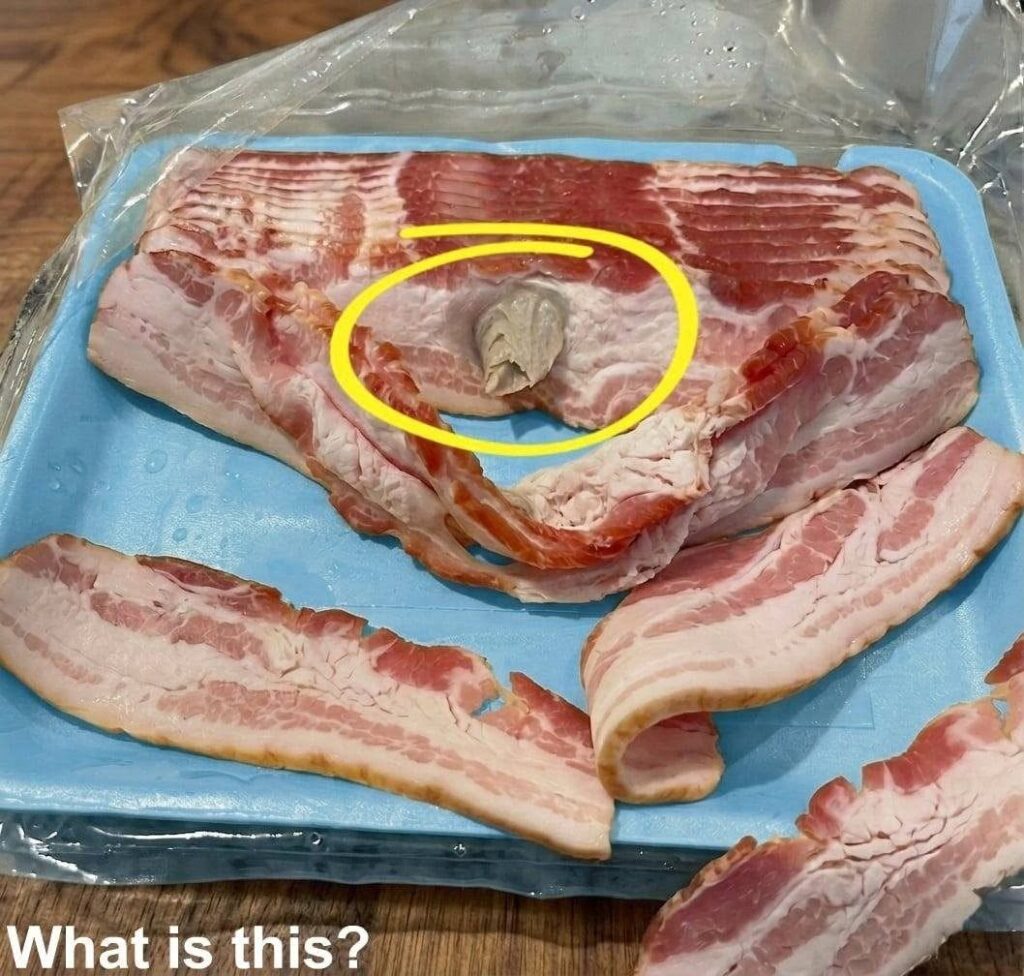
Why Bacon Isn’t Always Uniform
Many people assume bacon should look identical from slice to slice.
In reality, bacon comes from pork belly, which naturally contains varying amounts of:
- Fat
- Muscle
- Connective tissue
- Collagen
- Skin remnants
Just as no two steaks look exactly alike, bacon slices can vary considerably.
Commercial packaging often creates the impression that meat is perfectly standardized, but natural biological variation still exists.
What Happens During Bacon Processing?
To understand these odd-looking areas, it helps to know how bacon is made.
Step 1: Curing
Pork belly is cured using:
- Salt
- Sugar
- Seasonings
- Preservatives (depending on product)
Step 2: Resting
The curing mixture penetrates the meat and helps develop flavor.
Step 3: Smoking (Optional)
Many bacon varieties are smoked to enhance taste and aroma.
Step 4: Slicing and Packaging
The pork belly is chilled, sliced, and packaged.
During this process:
- Fat pockets become more visible
- Connective tissue firms up
- Natural seams may appear more prominent
These structures can sometimes look unusual when viewed through packaging.
Common Bacon Features That Surprise People
Fat Nodules
Small concentrated pockets of fat may appear as pale lumps.
When cooked, they typically soften and render.
Connective Tissue
Collagen-rich tissue can feel firmer or more rubbery than surrounding meat.
This tissue is naturally present in pork belly.
Skin Fragments
Some bacon styles retain small portions of skin or rind.
These areas may appear smoother and lighter in color.
Processing Seams
Occasionally, areas where muscle layers meet create visual patterns that appear unusual but are harmless.
When Should You Throw Bacon Away?
Regardless of appearance, discard bacon if you notice:
Strong Unpleasant Odor
Fresh bacon should smell:
- Mild
- Smoky
- Slightly salty
A sour, rancid, or rotten smell is a warning sign.
Slimy Texture
A sticky or slimy coating often indicates spoilage.
Significant Color Changes
Watch for:
- Green patches
- Gray discoloration throughout the meat
- Mold growth
Expired Storage Time
Even refrigerated bacon has a limited shelf life.
Always follow storage recommendations and use-by dates.
What If You’re Still Unsure?
If something about the bacon concerns you and you cannot confidently identify it as a normal variation, it’s reasonable to err on the side of caution.
You can:
- Contact the manufacturer
- Review packaging information
- Return the product if appropriate
Food safety should always come first.
Does Cooking Change These Lumps?
Often, yes.
Many pale or rubbery-looking areas contain:
- Fat
- Collagen
- Connective tissue
As bacon cooks:
- Fat renders
- Collagen softens
- Textures become less noticeable
What looked strange when raw may become virtually unnoticeable after cooking.
The Psychology of “Food Surprise”
Part of the discomfort comes from expectations.
Modern food packaging often presents products in a highly uniform way.
When we encounter something unexpected, our brains quickly interpret it as a potential threat.
This reaction is normal.
Humans evolved to be cautious about unfamiliar foods.
However, unusual appearance does not automatically indicate danger.
A Helpful Rule of Thumb
Ask yourself:
Does this look like a natural part of the meat, or does it look like spoilage?
Natural variations tend to be:
- Firm
- Consistent in color
- Integrated into the meat structure
Spoilage tends to involve:
- Odors
- Slime
- Unusual discoloration
- Widespread changes
The difference is often easier to recognize once you know what to look for.
Final Thoughts
That strange pale lump in your bacon is often nothing more than a fold of connective tissue, a concentrated pocket of fat, a small section of skin, or a natural processing seam. While it may look surprising, these variations are typically harmless and reflect the fact that bacon comes from a natural animal product rather than a perfectly uniform manufactured material.
As always, rely on common food safety principles: check for unusual odors, sliminess, mold, or widespread discoloration. If those warning signs aren’t present, the mystery lump is likely just another example of the natural variations that occur in real food.
Sometimes the scariest-looking discoveries in the kitchen turn out to be the least concerning.



Leave a Reply