
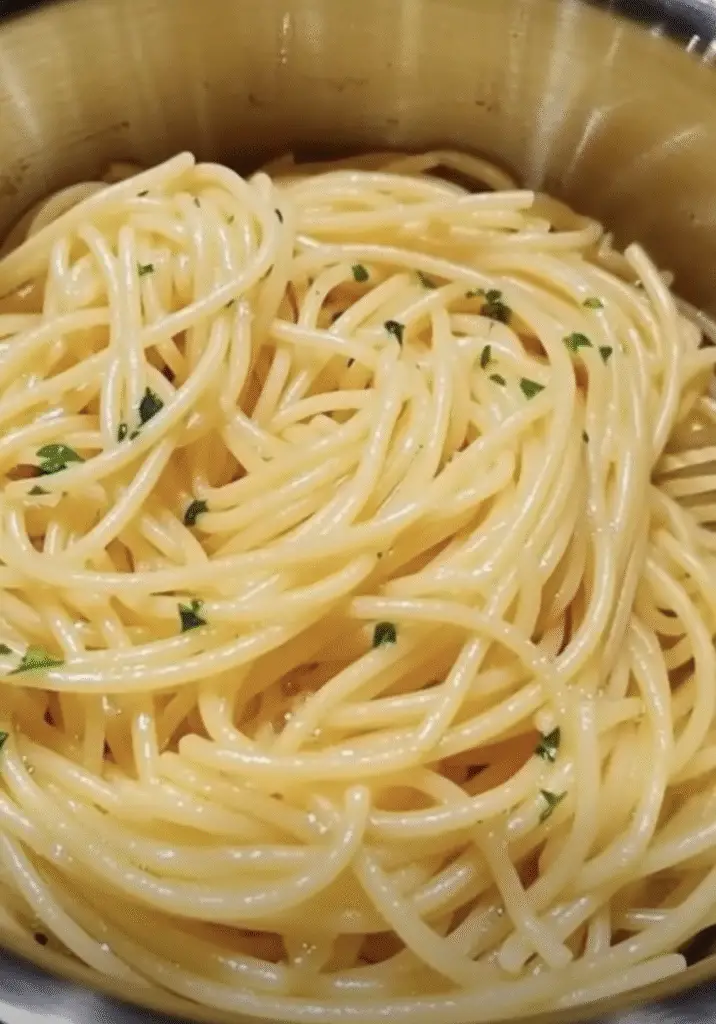
Spaghetti Aglio e Olio stands as a timeless Italian classic that proves simple food can deliver extraordinary flavor. This dish relies on just a handful of pantry staples, yet it creates a deeply satisfying meal when prepared with care. Because Spaghetti Aglio e Olio focuses on technique rather than complexity, it rewards attention to detail and respect for ingredients.
At its heart, Spaghetti Aglio e Olio celebrates balance. Garlic infuses olive oil with warmth, red pepper flakes add gentle heat, and pasta water transforms oil into a silky sauce that clings to every strand. When done correctly, Spaghetti Aglio e Olio tastes rich, comforting, and elegant all at once.
The Soul of Spaghetti Aglio e Olio
Why Simplicity Defines This Dish
Spaghetti Aglio e Olio proves that restraint often leads to the best results. Instead of hiding behind heavy sauces, this recipe lets each ingredient shine. Because there are so few components, every step matters. Heat control, timing, and quality ingredients shape the final flavor.
Olive oil plays a starring role. Since it forms the base of the sauce, its flavor carries through the entire dish. Garlic adds aroma and depth, while red pepper flakes offer subtle heat without overpowering the palate. Together, these elements create harmony rather than competition.
A Staple of Italian Home Cooking
Spaghetti Aglio e Olio has long served as a go-to meal in Italian households. It requires no special shopping, no long prep, and no complicated equipment. Because of that, it often appears late at night, after long days, or whenever comfort is needed quickly.
Despite its humble roots, this dish never feels plain. Instead, it reflects the Italian belief that good food depends more on care than complexity. That philosophy continues to make Spaghetti Aglio e Olio beloved worldwide.
Ingredients That Make the Difference
Choosing the Right Pasta and Oil
Spaghetti Aglio e Olio traditionally uses spaghetti, though other long pastas can work. Spaghetti holds the sauce well, allowing the oil and garlic to coat each strand evenly. Cooking the pasta until just al dente ensures the best texture.
Olive oil deserves careful selection. A good-quality extra virgin olive oil brings fruitiness and depth. Since the sauce contains so few ingredients, poor oil quickly becomes noticeable. For that reason, choosing a reliable olive oil transforms the dish.
Garlic, Heat, and Fresh Herbs
Garlic defines the flavor of Spaghetti Aglio e Olio. Thinly sliced or gently minced garlic releases sweetness when cooked slowly. However, high heat causes bitterness, so patience remains essential.
Red pepper flakes add gentle warmth rather than intense spice. Adding them briefly at the right moment blooms their flavor without burning. Fresh parsley finishes the dish with brightness, cutting through the richness of the oil.
How Spaghetti Aglio e Olio Comes Together
Mastering Timing and Heat
Spaghetti Aglio e Olio depends on synchronized steps. While the pasta cooks, the garlic infuses the oil. Low heat prevents browning and bitterness. Stirring often keeps the garlic evenly cooked.
Reserving pasta water becomes essential. The starchy water helps emulsify the oil, creating a glossy sauce instead of a greasy finish. When the spaghetti meets the pan, the transformation happens quickly.
Tossing for the Perfect Emulsion
Once the pasta enters the pan, tossing vigorously matters. Adding pasta water gradually allows the oil and starch to bind. As a result, the sauce coats the spaghetti evenly rather than pooling at the bottom.
Finishing with parsley and a final drizzle of olive oil enhances aroma and texture. Serving immediately ensures the dish stays silky and warm.
A Personal Story Behind This Classic
Spaghetti Aglio e Olio reminds me of evenings when the kitchen felt quiet, yet comforting. I first learned to make it on a night when the fridge looked nearly empty, but the pantry still held spaghetti, garlic, and olive oil. As the garlic warmed gently in the pan, the smell filled the space and turned a simple moment into something special. Since then, Spaghetti Aglio e Olio became my reliable answer to busy days, late nights, and moments when I wanted food that felt honest and grounding. Each time I make it, I remember how simplicity often brings the most satisfaction.
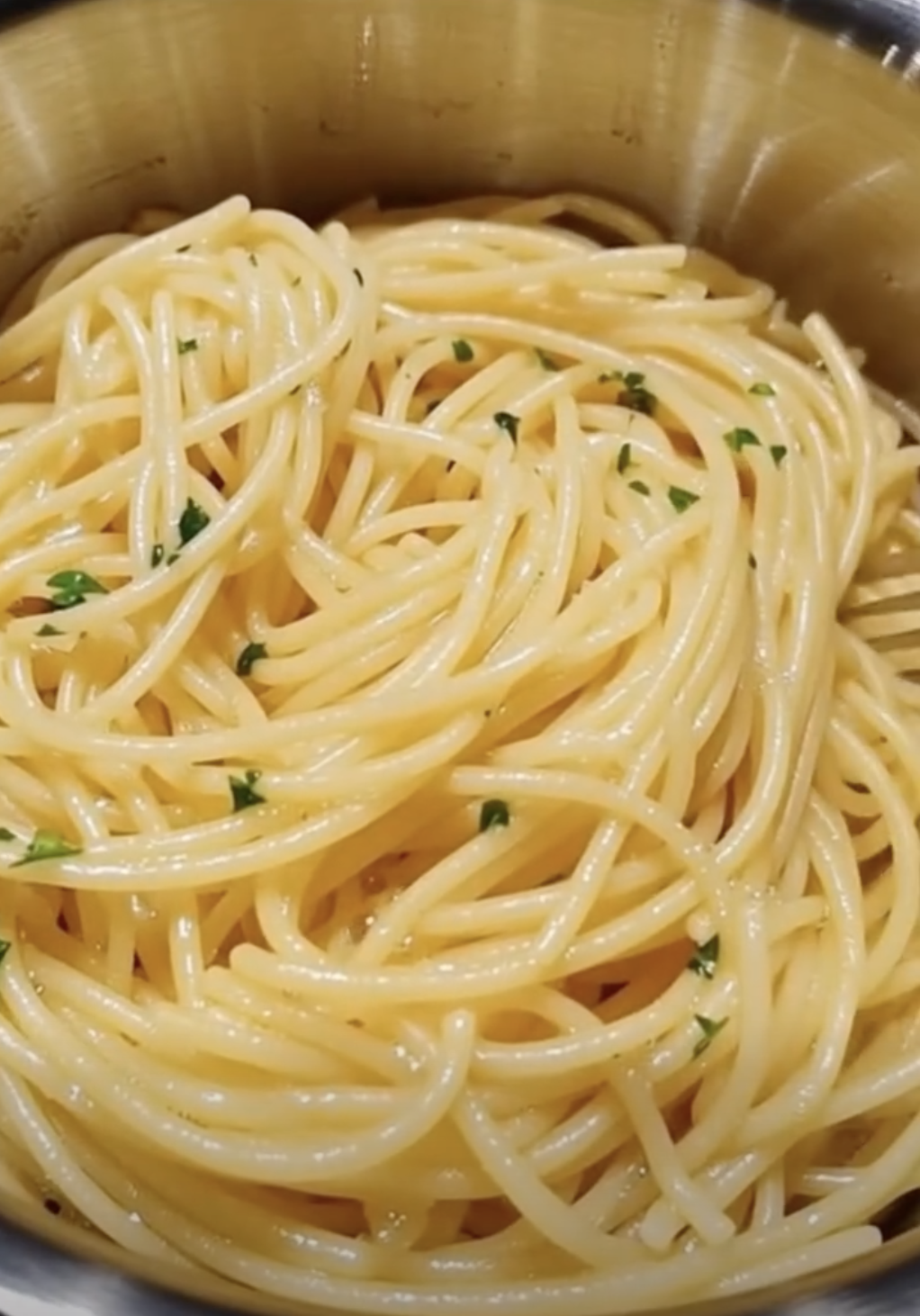
Equipment
- large pot
- wide skillet
- tongs
Ingredients
- 12 oz spaghetti
- 1/3 cup extra virgin olive oil
- 4 cloves garlic, thinly sliced
- 1/2 tsp red pepper flakes
- 1/4 cup fresh parsley, chopped
- 1 tsp salt
Instructions
- Cook spaghetti in well-salted water until al dente. Reserve pasta water before draining.
- Heat olive oil over low heat and gently sauté garlic until fragrant and lightly golden.
- Add red pepper flakes and stir briefly to release flavor.
- Add drained spaghetti to the pan and toss with a splash of pasta water to emulsify.
- Stir in parsley, adjust seasoning, and drizzle with olive oil before serving.
Notes
Nutrition
Variations That Respect Tradition
Adding Protein or Texture
While classic Spaghetti Aglio e Olio stands on its own, subtle additions can enhance it. Sautéed shrimp adds richness without overpowering the base. Anchovies melt into the oil, deepening umami flavor. Toasted breadcrumbs add crunch and contrast.
These additions work best when used sparingly. The goal remains balance, not distraction. When chosen thoughtfully, they complement rather than replace the core flavors.
Keeping It Plant-Based and Flexible
Spaghetti Aglio e Olio naturally fits vegan and plant-based diets. Without cheese or butter, it relies entirely on plant ingredients. This quality makes it both inclusive and versatile.
For extra depth, lemon zest or a squeeze of juice adds brightness. However, restraint ensures the dish stays true to its roots.
Tips for Perfect Spaghetti Aglio e Olio Every Time
Common Mistakes to Avoid
Burning garlic remains the most common error. Low heat and patience prevent bitterness. Overcooking pasta also dulls texture, so timing matters.
Skipping pasta water leads to oily results. That starchy liquid transforms the sauce into something cohesive and luxurious.
Serving and Storing
Spaghetti Aglio e Olio tastes best fresh. Because the sauce relies on emulsion, reheating can break it. If leftovers remain, reheating gently with a splash of water helps restore texture, though freshness always wins.
FAQ
Is Spaghetti Aglio e Olio spicy?
It has gentle heat, but you can adjust red pepper flakes to taste.
Can I use other pasta shapes?
Long pasta works best, though linguine or fettuccine can substitute.
Do I need fresh garlic?
Fresh garlic works best for flavor and aroma.
Is cheese traditional in this dish?
No, classic Spaghetti Aglio e Olio does not include cheese.
Can I make it gluten-free?
Yes, gluten-free spaghetti works with the same method.
Conclusion
Spaghetti Aglio e Olio proves that thoughtful technique transforms simple ingredients into something extraordinary. With garlic, olive oil, pasta, and care, this dish delivers comfort, elegance, and satisfaction in every bite. Because it values simplicity over excess, Spaghetti Aglio e Olio remains timeless. Whether made on a busy weeknight or served as a refined meal, it continues to remind us that less truly can be more.



Leave a Reply