
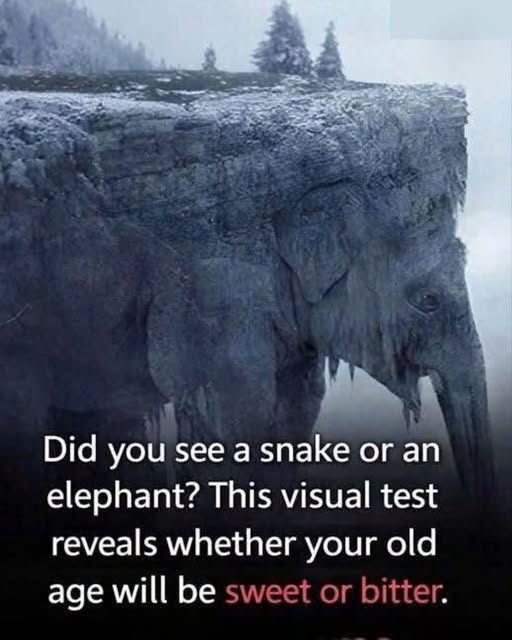
Why Optical Illusions Work
Optical illusions occur because the brain is constantly interpreting incomplete visual information.
Rather than processing every detail individually, the brain uses shortcuts to quickly make sense of what it sees.
These mental shortcuts help us navigate the world efficiently, but they can also cause us to perceive images differently from other people.
Factors that influence perception include:
- Previous experiences
- Expectations
- Attention patterns
- Visual focus
- Context
As a result, two people can look at the exact same image and notice entirely different features first.
What Seeing the Snake Might Suggest
Many personality quizzes associated with this illusion claim that people who first notice the snake tend to focus on details and subtle patterns.
According to these interpretations, snake-first viewers may be:
- Observant
- Analytical
- Strategic
- Careful decision-makers
They often enjoy gathering information before reaching conclusions and may prefer thoughtful planning over impulsive action.
Some versions of the test also suggest that these individuals are skilled at noticing opportunities and risks that others overlook.
Of course, these descriptions are intended for entertainment rather than scientific assessment.
What Seeing the Elephant Might Suggest
People who first notice the elephant are often described as big-picture thinkers.
These interpretations suggest they may be:
- Vision-oriented
- Creative
- Confident
- Future-focused
Rather than concentrating on small details immediately, they may naturally focus on overall patterns and broader possibilities.
Some personality quizzes associate the elephant with wisdom, stability, and leadership, suggesting that elephant-first viewers often feel comfortable taking responsibility and guiding others.
Again, these interpretations are playful observations rather than proven psychological conclusions.
Can an Optical Illusion Predict Your Future?
Many viral posts claim that what you see first reveals how you will age, whether you’ll become successful, or how your future will unfold.
There is no scientific evidence supporting such claims.
While perception differences are real and well documented, they cannot accurately predict future events, relationships, finances, or life outcomes.
The image may reveal something about how your attention works in a particular moment, but it cannot forecast what lies ahead.
Why Personality Illusions Are So Popular
Despite their limitations, personality-based optical illusions remain incredibly popular.
They offer something many people enjoy:
- Self-reflection
- Conversation starters
- Friendly debates
- A chance to compare perspectives
These tests also remind us that perception is highly personal. What seems obvious to one person may remain invisible to someone else until it is pointed out.
That realization alone can be fascinating.
The Psychology Behind First Impressions
Psychologists study perception because it helps reveal how humans process information.
When viewing a complex image, the brain quickly decides which elements deserve attention.
This process happens so rapidly that most people are unaware of it.
Although an illusion cannot provide a complete personality profile, it can highlight how attention and interpretation vary from person to person.
That diversity in perception is one reason optical illusions continue to captivate audiences around the world.
Looking Beyond the Illusion
The most interesting part of these images may not be the result itself.
Instead, it is the moment when someone points out the alternative image and suddenly you can see both.
Once the snake becomes visible, it is difficult to ignore. The same happens with the elephant.
The image has not changed. Only your perception has.
This simple shift demonstrates one of the most remarkable abilities of the human brain: the capacity to reinterpret information from a completely different perspective.
Final Thoughts
Whether you spotted the snake first or immediately saw the elephant, your answer says less about your destiny and more about the fascinating way your mind processes visual information.
Optical illusions remind us that perception is not always straightforward. Different people can look at the same scene and come away with entirely different impressions.
And perhaps that’s the real lesson behind these viral images.
Sometimes what we see depends not only on what is in front of us, but also on how we choose to look at it.



Leave a Reply