
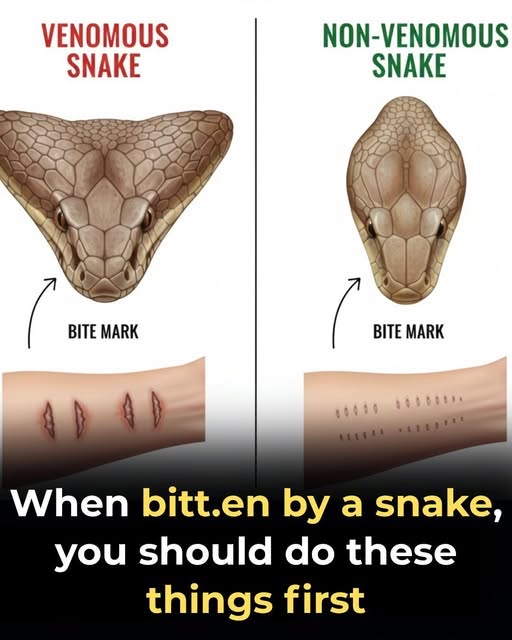
Why Snake Bites Are So Dangerous
Venomous snakes inject toxins that can affect the body in different ways depending on the species.
Some venoms attack the nervous system, while others damage tissue, disrupt blood clotting, or affect vital organs.
Common symptoms may include:
- Pain at the bite site
- Swelling
- Nausea
- Dizziness
- Difficulty breathing
- Blurred vision
- Weakness
- Excessive bleeding
- Paralysis in severe cases
Not every snake bite injects venom, and some bites may initially appear mild. However, symptoms can develop over time, which is why every suspected venomous snake bite should be treated as a medical emergency.
Dangerous Snake Bite Myths That Can Make Things Worse
Many traditional remedies continue to circulate despite being disproven by medical experts.
Myth 1: Cut the Bite and Let the Venom Drain Out
This practice can:
- Increase bleeding
- Cause infection
- Damage healthy tissue
- Delay proper treatment
Studies show that cutting the wound does not remove a meaningful amount of venom.
Myth 2: Suck Out the Venom
This popular movie scene has no scientific support.
Attempting to suck out venom:
- Removes virtually none of the toxin
- Can damage tissue further
- May expose the rescuer to venom through mouth sores
Medical professionals strongly advise against this practice.
Myth 3: Apply Ice or Cold Packs
Many people assume cold will stop venom from spreading.
In reality, ice can:
- Reduce blood flow excessively
- Increase tissue damage
- Worsen local injury
Cooling the area does not neutralize venom.
Myth 4: Use a Tourniquet
Tourniquets were once commonly recommended.
Today, experts know they can:
- Completely block circulation
- Cause severe tissue damage
- Increase the risk of limb loss
- Create dangerous complications when released
Modern treatment focuses on slowing lymphatic flow rather than stopping blood circulation.
Myth 5: Chase or Kill the Snake
After a bite, people sometimes try to catch or kill the snake for identification.
This is extremely dangerous.
Many secondary bites occur while attempting to capture or handle the animal.
Your priority should always be getting medical help-not pursuing the snake.
What To Do Immediately After a Snake Bite
Step 1: Call Emergency Services
Seek emergency medical assistance immediately.
Emergency numbers include:
- United States: 911
- Australia: 000
- United Kingdom: 999
- European Union: 112
If you’re in another country, know the local emergency number before outdoor activities.
Hospital treatment is essential because antivenom can only be administered by trained medical professionals.
Step 2: Move Away From the Snake
Ensure the area is safe before providing aid.
Do not approach the snake.
Do not attempt to capture it.
Simply note any identifying features from a safe distance if possible.
Step 3: Keep the Victim Calm
Panic increases heart rate and muscle activity, which may speed the movement of venom through the lymphatic system.
Reassure the victim.
Encourage slow breathing.
Keep them as still as possible.
Remaining calm can help slow venom spread.
Step 4: Remove Tight Items
Before swelling develops, remove:
- Rings
- Watches
- Bracelets
- Tight clothing
- Anklets
These items can become dangerous if swelling increases significantly.
Step 5: Immobilize the Affected Limb
Movement is one of the biggest factors that can accelerate venom spread.
Keep the affected limb:
- Straight
- Supported
- Motionless
Use a splint, stick, folded newspaper, or other rigid object if available.
Secure it gently without restricting circulation.
Understanding Pressure Immobilization
Pressure immobilization is recommended in some regions and for certain venomous snake species, particularly those whose venom primarily affects the nervous system.
The Goal
The objective is not to stop blood flow.
Instead, pressure immobilization helps slow lymphatic movement, which is one pathway venom may use to travel through the body.
General Principles
A broad elastic bandage is applied firmly over the bitten area and extended along the entire limb.
The limb is then splinted to minimize movement.
Important Note
Pressure immobilization techniques vary depending on:
- Geographic location
- Snake species
- Local medical guidelines
Emergency dispatchers or healthcare professionals can provide region-specific instructions when available.
What To Tell Emergency Responders
Provide as much information as possible, including:
- Time of the bite
- Location of the bite
- Symptoms observed
- Description of the snake if safely seen
- Any first aid already performed
Do not waste time trying to obtain a photograph if doing so places anyone at risk.
Symptoms That Require Immediate Attention
While every snake bite requires medical evaluation, certain symptoms indicate a particularly urgent situation.
Watch for:
- Difficulty breathing
- Chest pain
- Severe swelling
- Fainting
- Confusion
- Slurred speech
- Vision changes
- Weakness or paralysis
- Uncontrolled bleeding
Report these symptoms immediately to emergency personnel.
What Happens at the Hospital?
Treatment depends on the type of snake, the severity of symptoms, and the patient’s condition.
Medical professionals may:
- Monitor vital signs
- Perform blood tests
- Manage pain
- Treat allergic reactions
- Provide intravenous fluids
- Administer antivenom when appropriate
Not every snake bite requires antivenom, but only trained healthcare providers can make that determination safely.
Special Considerations for Children
Children face higher risks because they receive a larger venom dose relative to their body size.
If a child is bitten:
- Call emergency services immediately
- Keep the child calm and still
- Follow the same immobilization principles
- Avoid home remedies
Rapid professional treatment is especially important.
Snake Bite Prevention Tips
Prevention remains the best protection.
When outdoors:
Wear Protective Clothing
Choose:
- Long pants
- Thick socks
- Sturdy boots
Stay on Marked Trails
Avoid tall grass, brush, and areas where visibility is limited.
Watch Where You Step
Never place hands or feet where you cannot clearly see.
Use a Flashlight at Night
Many snakes are more active after dark.
Leave Snakes Alone
Most snakes bite only when threatened or handled.
Maintaining a safe distance dramatically reduces risk.
The Bottom Line
A snake bite is a genuine medical emergency that requires immediate professional care. While myths such as cutting the wound, sucking out venom, applying ice, or using tourniquets continue to circulate, modern medical guidance strongly discourages these practices.
The safest response is simple:
- Call emergency services immediately
- Move away from the snake
- Keep the victim calm
- Immobilize the affected limb
- Follow local emergency instructions
- Seek hospital care as quickly as possible
Quick action, proper first aid, and prompt medical treatment offer the best chance of a full recovery. When it comes to snake bites, staying calm and following evidence-based guidance can make all the difference.


Leave a Reply