
The Glass Test: A Helpful First Check
Healthcare professionals sometimes use a simple technique called the blanching test.
How It Works
Press a clear glass or transparent object firmly against the red spot.
Observe what happens.
If the Spot Fades (Blanches)
This usually means blood remains inside the blood vessels.
Common causes include:
- Cherry angiomas
- Heat rash
- Insect bites
- Mild skin irritation
These conditions are often less urgent.
If the Spot Does Not Fade
This may indicate blood has leaked outside the blood vessels into surrounding tissues.
Possible causes include:
- Petechiae
- Purpura
- Vasculitis
- Certain infections
- Blood-clotting disorders
Non-blanching spots deserve prompt medical attention, particularly if accompanied by other symptoms.
Causes That May Require Prompt Medical Evaluation
1. Petechiae
Petechiae are tiny red, purple, or brown dots caused by bleeding from very small blood vessels called capillaries.
Common Features
- Pinpoint size
- Flat appearance
- Do not fade with pressure
- Often appear in clusters
Possible Causes
- Viral infections
- Bacterial infections
- Low platelet counts
- Medication reactions
- Blood disorders
When to Seek Care
Immediate medical evaluation is important if petechiae occur alongside:
- Fever
- Fatigue
- Easy bruising
- Bleeding
- Severe illness
2. Viral Rashes
Many viral infections produce red spots or widespread rashes.
Examples Include
- Measles
- Chickenpox
- Hand-foot-and-mouth disease
- Certain respiratory viruses
Common Symptoms
- Fever
- Fatigue
- Body aches
- Spreading rash
Because some viral illnesses are highly contagious, medical guidance is recommended.
3. Leukocytoclastic Vasculitis
This condition involves inflammation of small blood vessels.
What It May Look Like
- Red or purple dots
- Non-blanching spots
- Clusters on the lower legs
- Tender or painful areas
Possible Triggers
- Infections
- Autoimmune diseases
- Certain medications
A healthcare provider should evaluate suspected vasculitis promptly.
4. Scabies
Scabies results from microscopic mites that burrow into the skin.
Typical Symptoms
- Intense itching
- Worse at night
- Small red bumps
- Thin burrow-like lines
Common Locations
- Wrists
- Fingers
- Waistline
- Groin area
Prescription treatment is necessary because the condition is highly contagious.
Common Causes That Are Usually Less Serious
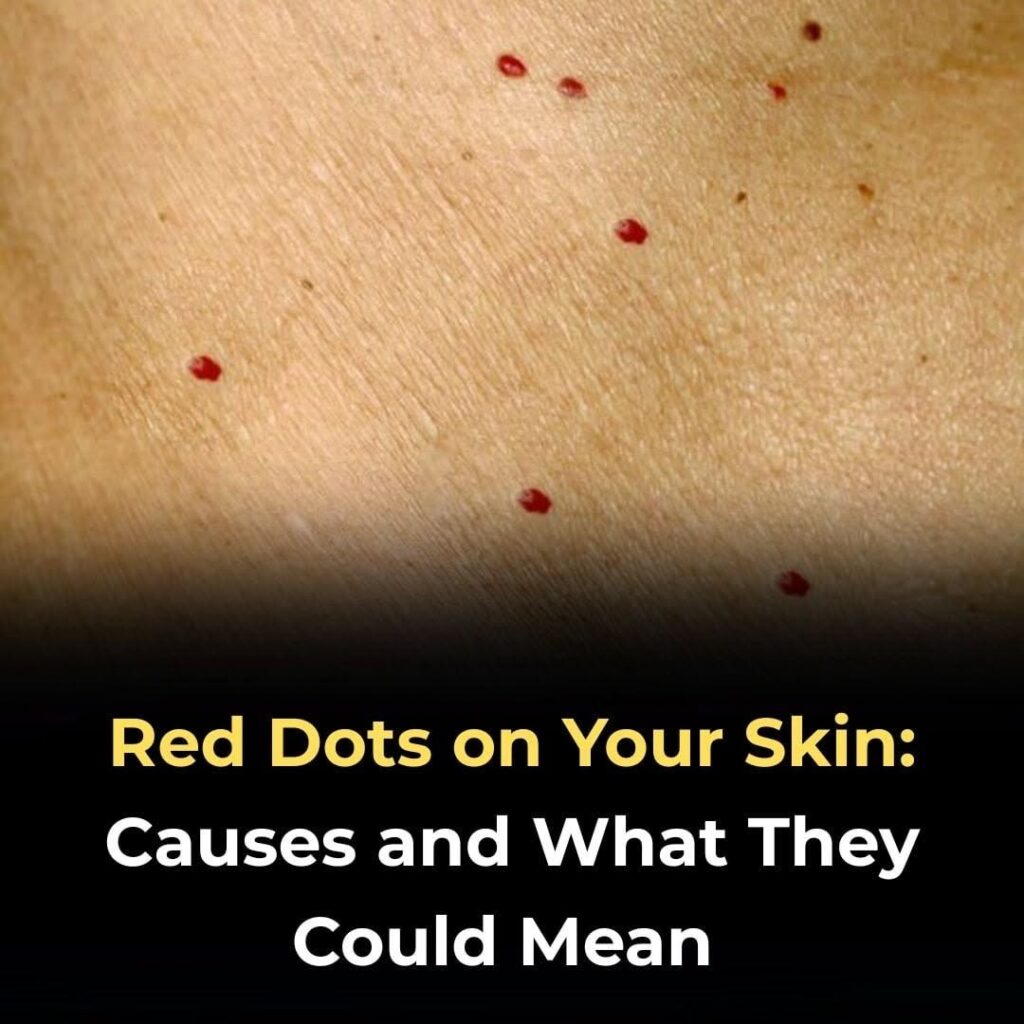
5. Cherry Angiomas
Cherry angiomas are one of the most common benign skin growths.
Appearance
- Bright red
- Small and round
- Slightly raised
- Smooth surface
Why They Occur
These growths result from clusters of tiny blood vessels.
They become increasingly common with age.
Should You Worry?
In most cases, no.
Cherry angiomas are harmless and usually require no treatment unless they bleed or become bothersome.
6. Heat Rash
Heat rash develops when sweat becomes trapped beneath the skin.
Common Triggers
- Hot weather
- Humid environments
- Tight clothing
- Excessive sweating
Symptoms
- Tiny red bumps
- Mild itching
- Burning sensation
Most cases improve once the skin cools and remains dry.
7. Keratosis Pilaris
Often called “chicken skin,” keratosis pilaris is a very common condition.
Appearance
- Tiny rough bumps
- Red or flesh-colored spots
- Usually on upper arms, thighs, or cheeks
Cause
Keratin builds up inside hair follicles.
Treatment
While harmless, moisturizing creams and gentle exfoliation may improve appearance.
8. Allergic Reactions
Skin allergies can produce red spots, bumps, or patches.
Common Triggers
- Detergents
- Soaps
- Cosmetics
- Plants
- Medications
- Foods
Symptoms
- Itching
- Redness
- Swelling
- Rash
Identifying and avoiding the trigger is often the most important step.
9. Folliculitis
Folliculitis occurs when hair follicles become inflamed.
What It Looks Like
- Small red bumps
- Pimples around hair follicles
- Mild tenderness
Common Causes
- Friction
- Shaving
- Sweating
- Bacterial infection
Many mild cases resolve with proper hygiene and skin care.
10. Insect Bites
Mosquitoes, fleas, bedbugs, and other insects commonly leave red spots behind.
Clues
- Itching
- Small clusters
- Recent outdoor exposure
- Bites appearing overnight
Most bites improve within days.
However, seek care if symptoms become severe or signs of infection develop.
11. Contact Dermatitis
Contact dermatitis occurs when the skin reacts to an irritating substance.
Potential Triggers
- Fragrances
- Cleaning products
- Metals
- Plants
- Personal care products
Symptoms
- Redness
- Itching
- Small bumps
- Dry or irritated skin
Avoiding the irritant usually allows the skin to heal.
Warning Signs That Require Immediate Medical Attention
Regardless of the cause, certain symptoms should never be ignored.
Seek Urgent Care If Red Dots Are Accompanied By:
- Fever
- Difficulty breathing
- Severe fatigue
- Rapid spreading
- Easy bruising
- Unexplained bleeding
- Confusion
- Severe pain
- Swelling of the face or throat
These symptoms may indicate a more serious underlying condition.
What Your Doctor May Ask
If you seek medical evaluation, expect questions such as:
Recent Illness
Have you had:
- Fever?
- Cold symptoms?
- Infections?
New Medications
Some drugs can trigger skin reactions.
Recent Travel
Travel history can sometimes provide important clues.
Exposure History
Your provider may ask about:
- Insect bites
- New products
- Allergens
- Sick contacts
These details help narrow the list of possible causes.
How Skin Conditions Are Diagnosed
Diagnosis often involves a combination of:
Physical Examination
The appearance and distribution of spots provide valuable information.
Medical History
Your symptoms and recent experiences offer important clues.
Laboratory Testing
Depending on the situation, doctors may order:
- Blood tests
- Allergy testing
- Skin cultures
- Biopsies
Most cases can be accurately diagnosed through a careful evaluation.
Preventing Common Causes of Red Spots
While not all causes are preventable, several healthy habits may reduce risk.
Skin Care Tips
- Use gentle skincare products
- Avoid excessive heat exposure
- Wear breathable clothing
- Practice good hygiene
- Stay hydrated
Reduce Irritation
Choose products designed for sensitive skin when possible.
Monitor Changes
Pay attention to new or changing spots, particularly if they persist or worsen.
The Bottom Line
Red dots on the skin can result from many different causes, ranging from harmless conditions such as cherry angiomas and heat rash to more serious issues like petechiae, vasculitis, or certain infections.
One useful clue is whether the spots fade under pressure. Blanching spots are often less concerning, while non-blanching spots may require prompt medical evaluation.
Most importantly, pay attention to the bigger picture. Symptoms such as fever, bruising, fatigue, difficulty breathing, or rapidly spreading rashes deserve immediate medical attention.
When in doubt, trust your instincts and consult a healthcare professional. A quick evaluation can provide reassurance-or identify a condition that benefits from early treatment.



Leave a Reply