
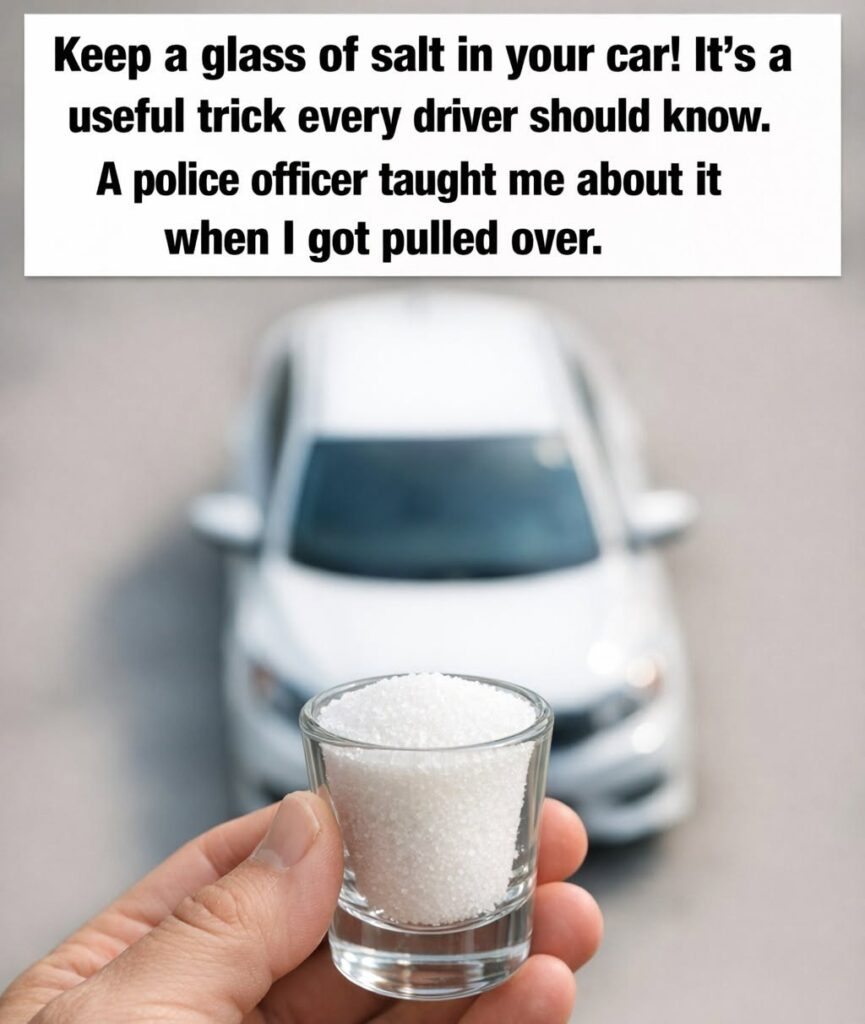
2. Absorb Small Amounts of Moisture
Salt is hygroscopic, meaning it attracts moisture from the air.
What It Can Do
A container of salt may help reduce moisture in small enclosed spaces such as:
- Storage compartments
- Toolboxes
- Trunks
What It Cannot Do
A single glass of salt will not significantly dehumidify an entire vehicle cabin.
If your windows constantly fog, the underlying causes may include:
- Wet floor mats
- Water leaks
- Poor ventilation
Addressing those issues is usually more effective.
3. Emergency Ice-Melting Supply
Keeping a sealed container of salt in your vehicle can provide a backup option if you’re caught in unexpected icy conditions.
Potential Uses
You might use small amounts to:
- Loosen frozen door areas
- Treat small icy patches around tires
- Improve footing near the vehicle
Be careful not to overuse salt near vehicle surfaces, as excessive exposure may contribute to corrosion over time.
4. Help Prevent Moisture-Related Odors
Because salt absorbs some moisture, it may help reduce damp conditions that contribute to musty smells.
Better Alternatives
For long-term moisture control, many drivers prefer:
- Silica gel packs
- Commercial moisture absorbers
- Activated charcoal products
These options are generally more efficient and less messy.
Winter Emergency Kit Essentials
If you drive in cold climates, a container of salt should be viewed as a supplement-not the main tool.
A well-prepared winter emergency kit may include:
Safety Items
- Flashlight
- Batteries
- Reflective triangles
- First-aid kit
Warmth
- Blankets
- Gloves
- Hats
- Hand warmers
Vehicle Recovery Supplies
- Ice scraper
- Snow brush
- Traction mats
- Small shovel
Food and Water
- Bottled water
- Non-perishable snacks
Preparation matters far more than any single hack.
Common Misconceptions About Salt in Cars
Myth: Salt Will Stop All Window Fogging
Reality:
Window fogging occurs when warm, moist air contacts cold glass. Proper use of the vehicle’s defroster and ventilation system remains the most effective solution.
Myth: Salt Prevents All Ice Formation
Reality:
Salt can help melt existing ice under certain conditions, but it cannot completely prevent freezing in all weather.
Myth: Salt Heats the Interior
Reality:
While moisture absorption produces a tiny amount of heat, it is nowhere near enough to warm a vehicle.
Myth: Salt Improves Fuel Efficiency
Reality:
There is no scientific basis for this claim.
The Downsides of Keeping Loose Salt in a Vehicle
Salt is useful, but it should be stored properly.
Potential Problems
- Spills can create a mess
- Moisture absorption can cause clumping
- Salt exposure may contribute to corrosion if it contacts metal surfaces repeatedly
Best Practice
Store salt in:
- A sealed plastic container
- A waterproof bag
- An airtight storage tub
This prevents accidental spills and keeps it usable when needed.
Better Alternatives for Most Drivers
Depending on the goal, other products may work better than salt.
| Goal | Better Option |
|---|---|
| Moisture control | Silica gel or moisture absorbers |
| Window defogging | Vehicle defroster system |
| Tire traction | Sand or traction mats |
| Ice removal | Commercial de-icer |
| Emergency warmth | Blankets and hand warmers |
Salt remains helpful, but it isn’t always the best tool for the job.
Why This Hack Became So Popular
Simple solutions tend to spread quickly online.
The idea that an inexpensive household item can solve multiple car problems is appealing.
However, viral posts often exaggerate benefits while overlooking limitations.
Understanding the science behind the claim helps separate practical advice from wishful thinking.
Final Thoughts
Keeping a small container of salt in your vehicle isn’t a bad idea, especially if you live in an area that experiences winter weather. Salt can provide limited help with traction, moisture absorption, and minor ice-related situations. However, it won’t warm your car, eliminate dangerous gases, prevent all window fogging, or replace proper winter preparedness.
The most effective approach is to view salt as one small tool in a larger emergency kit rather than a miracle solution. A little knowledge-and realistic expectations-can go a long way toward staying safe on the road.



Leave a Reply