
Reliable Food Source
Cassava roots can remain underground for months after reaching maturity.
Farmers can harvest them when needed rather than all at once.
This provides a living food reserve during difficult times.
High Energy Content
Cassava is rich in carbohydrates, making it an important source of calories for millions of households.
Versatility
Cassava can be transformed into:
- Flour
- Starch
- Tapioca pearls
- Bread products
- Porridges
- Snacks
Its adaptability has helped make it a cornerstone of many traditional cuisines.
🔬 How Cassava Becomes Safe to Eat
The good news is that proper preparation dramatically reduces the risk.
Traditional communities have developed effective processing methods over generations.
Common Safety Techniques
Peeling
The outer layers often contain higher concentrations of cyanogenic compounds.
Removing the peel is an important first step.
Soaking
Many traditional methods involve soaking cassava for extended periods.
This helps reduce potentially harmful compounds.
Fermentation
Fermentation can further break down cyanogenic substances and improve safety.
Drying
Sun-drying or other drying methods help lower toxin levels.
Thorough Cooking
Proper cooking significantly reduces residual cyanide compounds.
These steps are often combined for maximum safety.
⚠️ What Happens When Cassava Is Improperly Prepared?
Consuming large amounts of inadequately processed cassava can lead to cyanide poisoning.
Symptoms may include:
- Headache
- Dizziness
- Nausea
- Vomiting
- Difficulty breathing
- Weakness
Severe poisoning can become life-threatening and requires immediate medical attention.
A Chronic Health Concern: Konzo
In some regions where cassava is heavily relied upon during food shortages, long-term exposure to poorly processed cassava has been linked to a neurological condition called:
Konzo
Konzo can cause:
- Permanent leg weakness
- Difficulty walking
- Mobility impairments
The condition is most commonly associated with severe food insecurity and limited access to proper processing methods.
🍠 Sweet Cassava vs. Bitter Cassava
Not all cassava varieties contain the same amount of cyanogenic compounds.
Sweet Cassava
- Lower toxin levels
- Requires less intensive processing
- Commonly sold in many markets
Bitter Cassava
- Higher cyanogenic content
- Requires more extensive preparation
- Often preferred for certain traditional foods
Both types can be consumed safely when handled correctly.
Cassava’s Importance to Global Food Security
Cassava is among the world’s most important staple crops.
It plays a major role in food systems across:
Africa,
Asia, and
South America.
In some communities, cassava provides a significant portion of daily caloric intake.
For many families, especially in rural regions, it offers a dependable source of nutrition when other crops fail.
The Role of Education
Public health organizations continue working to reduce cassava-related illnesses through education.
Important efforts include:
- Teaching safe processing techniques
- Promoting improved cassava varieties
- Supporting food security programs
- Increasing access to agricultural resources
These initiatives have helped reduce risks in many regions.
🌍 A Reminder About Food and Risk
Cassava is not unique in requiring careful preparation.
Many commonly consumed foods contain naturally occurring compounds that must be managed through proper handling or cooking.
Examples include:
- Certain wild mushrooms
- Kidney beans
- Some seafood species
- Various nuts and seeds
What matters is understanding the food and preparing it appropriately.
Final Thoughts
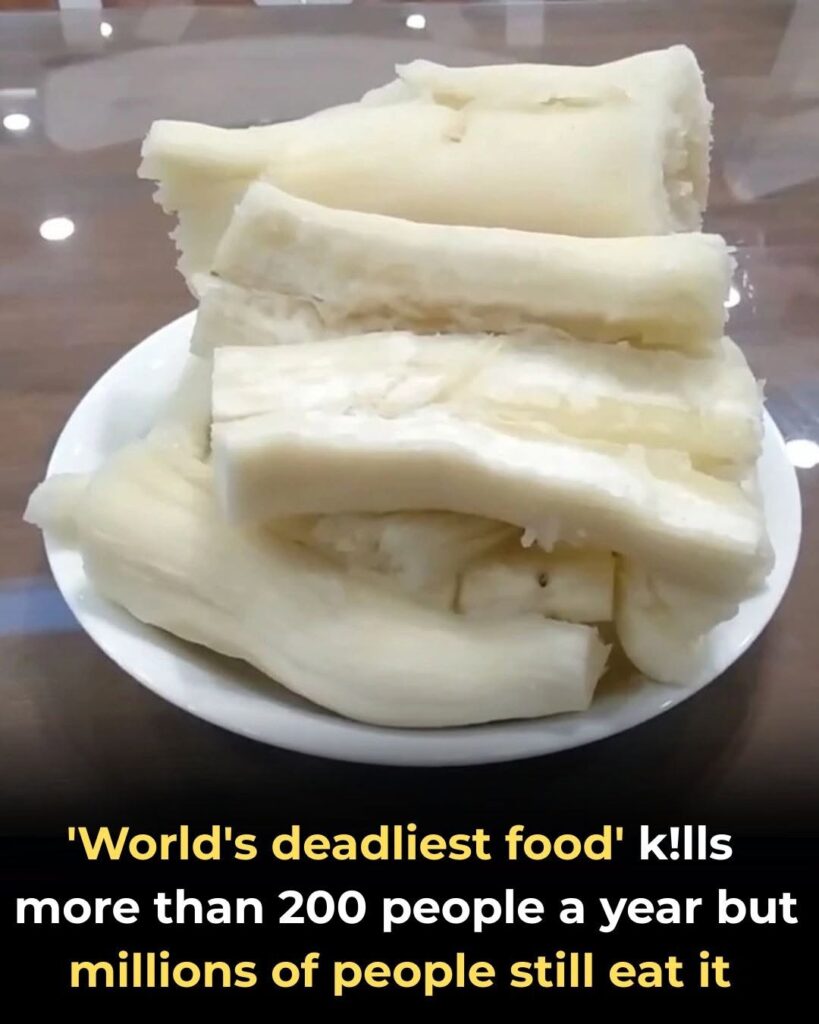
Cassava’s reputation as the “world’s deadliest food” makes for a dramatic headline, but the reality is more nuanced. While improperly prepared cassava can release dangerous levels of cyanide and contributes to hundreds of deaths each year, properly processed cassava is a safe, nutritious, and critically important food source for nearly half a billion people worldwide.
Rather than being a food to fear, cassava is a powerful example of how traditional knowledge, agricultural innovation, and proper preparation can transform a potentially hazardous plant into one of humanity’s most valuable staple crops.



Leave a Reply