
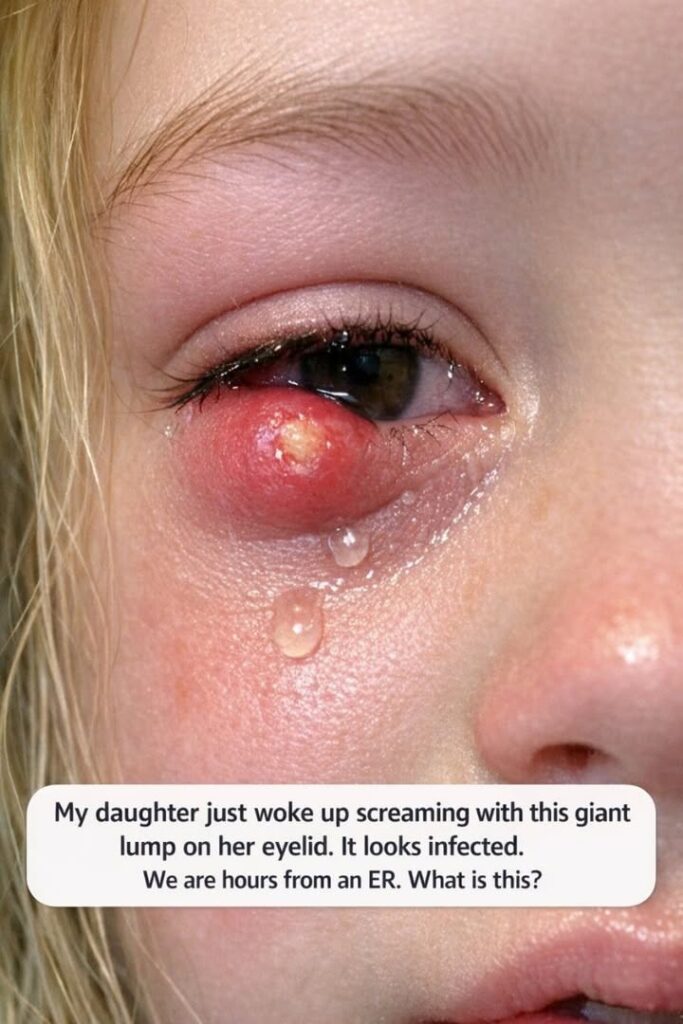
Few experiences are more frightening for a parent than being awakened by a child’s cries in the middle of the night. The panic can intensify when you discover a swollen, red lump on your child’s eyelid that seemed to appear out of nowhere. While these situations often look alarming, many eyelid lumps in children turn out to be common and manageable conditions.
My Child Woke Up Screaming With a Giant Eyelid Lump: A Parent’s Guide to Styes, Infections, and When to Seek Help provides clear, evidence-informed information to help parents understand what may be happening, what steps are generally considered safe, and which warning signs require prompt medical attention.
One night, a parent I knew was startled awake by their young child’s cries. When they turned on the light, they saw that one eyelid had become swollen and red, with a noticeable lump near the edge of the eyelid. Living several hours from the nearest urgent care clinic made the situation feel even more overwhelming. After contacting a healthcare professional the next morning, they learned it was a common eyelid condition that often responds well to simple home care. The experience highlighted how knowledge can help transform panic into calm, informed action.
Understanding Common Eyelid Lumps in Children
What Is a Stye?
A stye, also called a hordeolum, is one of the most common causes of a sudden eyelid lump in children.
A stye develops when an oil gland along the eyelid becomes blocked and infected, most often by bacteria that normally live on the skin.
Common symptoms include:
- A red, painful lump
- Localized swelling
- Tenderness to touch
- Mild tearing
- Eyelid redness
- A sensation that something is in the eye
Styes can develop quickly, sometimes becoming noticeable overnight.
Although they often look dramatic, most styes improve with conservative care and do not cause long-term problems.
Other Conditions That Can Cause Eyelid Swelling
Not every eyelid lump is a stye.
Other possible causes include:
- Chalazion (a blocked oil gland without active infection)
- Allergic reactions
- Insect bites
- Eyelid cysts
- Minor trauma
- Skin infections
- Preseptal cellulitis
Because several conditions can appear similar at first glance, professional evaluation may be necessary when symptoms are severe, persistent, or worsening.
Safe Steps Parents Can Take at Home
Warm Compresses and Comfort Measures
For many uncomplicated styes, warm compresses are commonly recommended.
A warm compress may help:
- Improve comfort
- Encourage drainage
- Reduce blockage of the gland
- Support natural healing
To apply a warm compress:
- Wash your hands thoroughly.
- Use a clean washcloth soaked in warm (not hot) water.
- Place it gently over the closed eyelid.
- Hold for approximately 10 to 15 minutes.
- Repeat several times daily if advised by a healthcare professional.
Children may need reassurance and supervision during this process.
Additionally, encourage them to avoid rubbing their eyes.
What Not to Do
When a child’s eyelid is swollen, parents often feel tempted to intervene aggressively.
However, certain actions can worsen the situation.
Avoid:
- Squeezing the lump
- Popping the bump
- Using sharp objects
- Applying unapproved medications
- Sharing towels
- Allowing excessive eye rubbing
These measures can increase irritation and potentially spread infection.
Instead, focus on cleanliness, comfort, and monitoring symptoms.
Warning Signs That Need Medical Attention




Leave a Reply