
2. Food Sources
Silverfish aren’t interested in your leftovers.
Instead, they feed on materials containing:
- Starch
- Cellulose
- Sugars
- Proteins
That includes surprising household items such as:
- Books
- Wallpaper glue
- Cardboard boxes
- Paper documents
- Photographs
- Fabrics
- Pet food
- Dry pantry goods
To a silverfish, your bookshelf can look like a buffet.
3. Shelter
Silverfish prefer dark, undisturbed places.
They hide in:
- Cracks and crevices
- Baseboards
- Attics
- Closets
- Storage boxes
- Behind appliances
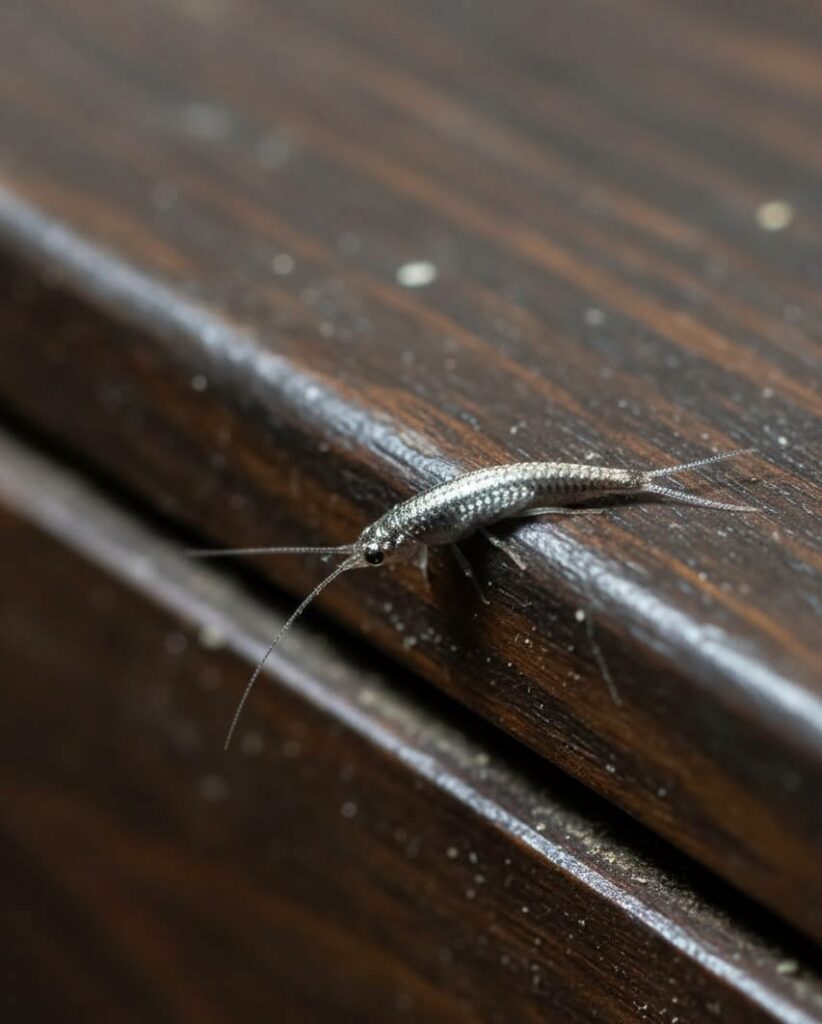
Most homeowners never realize they have silverfish until one accidentally wanders into the open.
Are Silverfish Dangerous?
Thankfully, silverfish pose very little risk to humans.
They:
✅ Don’t bite
✅ Don’t sting
✅ Don’t spread diseases
✅ Aren’t poisonous
Unlike some household pests, silverfish aren’t interested in people.
In fact, they’re usually terrified of us.
The moment you switch on a light, they’ll often dart away seeking darkness.
The Real Problem: Property Damage
While silverfish aren’t dangerous, they can become destructive.
Large populations may damage:
- Important documents
- Family photographs
- Wallpaper
- Books
- Clothing
- Stored papers
- Dry food products
Most damage appears as:
- Small irregular holes
- Scraped surfaces
- Yellow stains
- Tiny black droppings
If you’ve ever opened an old storage box and noticed mysterious paper damage, silverfish could be the culprit.
Signs You May Have More Than One
Spotting a single silverfish isn’t always cause for alarm.
However, repeated sightings may indicate a larger population.
Watch for:
- Multiple insects appearing at night
- Yellowish stains on paper
- Tiny pepper-like droppings
- Damaged books or cardboard
- Shed insect skins
- Activity in damp areas
Silverfish are nocturnal.
If you see them during daylight hours, their hiding places may be overcrowded.
How to Get Rid of Silverfish
The most effective strategy isn’t spraying chemicals everywhere.
It’s making your home less attractive to them.
Reduce Humidity
Since silverfish thrive in moisture, lowering humidity is often the most important step.
Try:
- Running bathroom exhaust fans
- Using a dehumidifier
- Repairing plumbing leaks
- Improving ventilation
- Drying wet areas promptly
Many silverfish problems disappear once moisture levels drop.
Remove Food Sources
Store vulnerable materials properly:
- Keep pantry goods in sealed containers
- Store important papers in plastic bins
- Avoid stacking cardboard boxes long-term
- Regularly clean crumbs and food debris
Seal Entry Points
Use caulk to close:
- Wall cracks
- Baseboard gaps
- Openings around pipes
- Foundation crevices
Fewer hiding places means fewer silverfish.
Vacuum Regularly
Vacuuming removes:
- Eggs
- Food particles
- Insects themselves
Pay special attention to corners, closets, and storage areas.
When Should You Call a Professional?
Most silverfish issues can be managed with moisture control and good housekeeping.
However, professional pest control may be helpful if:
- Sightings continue for months
- Damage becomes noticeable
- Large numbers appear regularly
- DIY methods aren’t working
Persistent infestations often indicate hidden moisture problems that require investigation.
A Surprisingly Helpful Warning Sign
As strange as it sounds, silverfish can actually serve as an early warning system.
Because they require humidity to thrive, their presence sometimes alerts homeowners to issues such as:
- Hidden leaks
- Poor ventilation
- Water intrusion
- Excess indoor moisture
In that sense, the insect isn’t always the problem.
Sometimes it’s simply revealing one.
The Bottom Line
Finding a silverfish in your home isn’t a reason to panic.
It doesn’t mean your house is dirty.
It doesn’t mean you’re dealing with a dangerous infestation.
More often than not, it simply means you’ve got a little extra moisture and a tiny ancient insect taking advantage of it.
While their sudden appearances can certainly be startling-especially at two in the morning-silverfish are generally more nuisance than threat.
Address the humidity, remove their food sources, seal up hiding spots, and you’ll usually see their numbers decline dramatically.
And if you happen to spot one darting across the bathroom floor tonight?
Take comfort in knowing that this strange little survivor has been roaming the Earth for hundreds of millions of years.
It may look alarming.
But it’s mostly just looking for a dark, damp place to hide.



Leave a Reply