
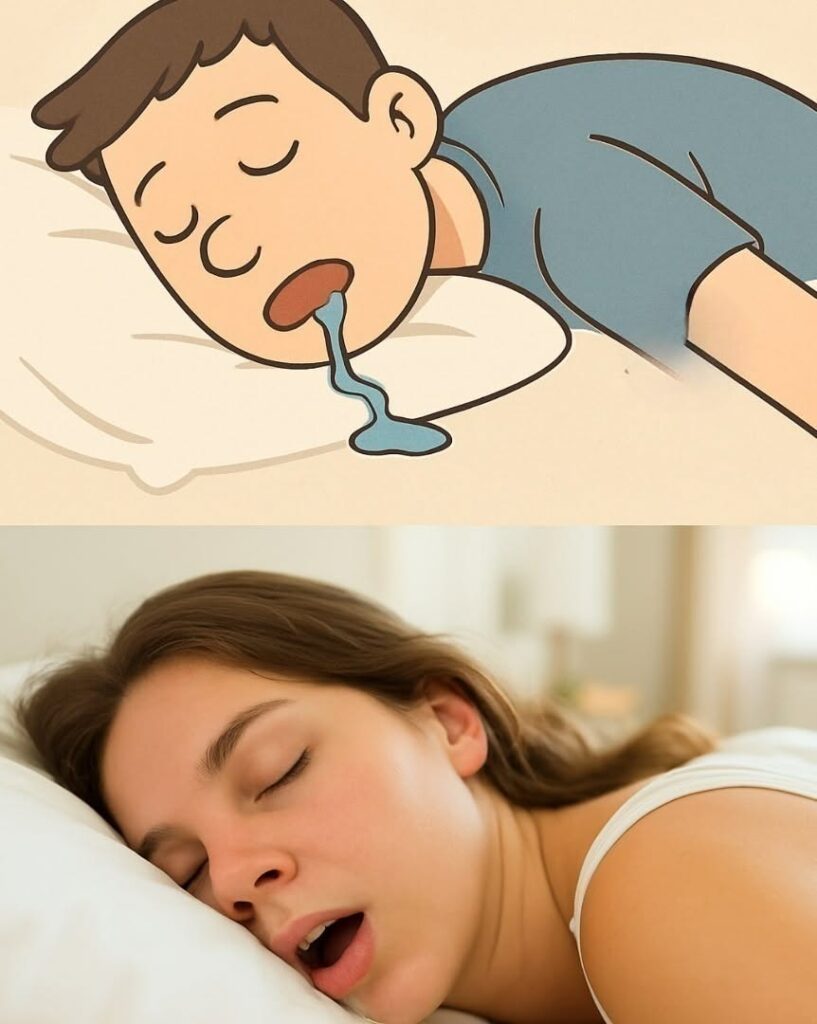
Why Do We Drool During Sleep?
Drooling, also called sialorrhea, occurs when saliva escapes from the mouth during sleep.
During the day, people automatically swallow saliva hundreds of times without thinking about it. While sleeping, swallowing becomes less frequent, making drooling more likely.
Common Harmless Causes
Occasional drooling is often completely normal and may result from:
- Sleeping on your side or stomach
- Deep sleep
- Nasal congestion
- Temporary allergies
- Certain sleeping positions
In these situations, drooling alone is usually not a cause for concern.
However, persistent or excessive drooling may sometimes warrant further evaluation.
1. Obstructive Sleep Apnea
One of the most commonly discussed medical conditions associated with nighttime drooling is obstructive sleep apnea.
What Happens?
Sleep apnea occurs when the airway repeatedly becomes partially or completely blocked during sleep.
Common symptoms include:
- Loud snoring
- Daytime fatigue
- Morning headaches
- Interrupted sleep
- Gasping or choking during sleep
Because breathing patterns are affected, people may sleep with their mouths open more frequently, increasing the likelihood of drooling.
2. Nasal Congestion and Chronic Allergies
When the nose becomes blocked, the body often compensates by breathing through the mouth.
Possible Causes
- Seasonal allergies
- Sinus infections
- Chronic congestion
- Deviated nasal septum
Mouth breathing can allow saliva to pool and escape during sleep.
If drooling appears alongside persistent nasal symptoms, addressing the underlying congestion may help.
3. Gastroesophageal Reflux Disease (GERD)
GERD occurs when stomach acid flows backward into the esophagus.
Symptoms May Include
- Heartburn
- Sour taste in the mouth
- Chronic cough
- Throat irritation
- Increased saliva production
In some individuals, reflux can stimulate extra saliva production, contributing to nighttime drooling.
4. Difficulty Swallowing (Dysphagia)
Drooling can occur when swallowing becomes less effective.
Potential Signs
- Food feeling stuck
- Frequent choking while eating
- Difficulty swallowing liquids
- Persistent throat discomfort
Various conditions can contribute to swallowing difficulties, making professional evaluation important if symptoms develop.
5. Certain Neurological Conditions
The nervous system plays an important role in controlling muscles involved in swallowing and saliva management.
Some neurological disorders may affect these functions.
Examples can include:
- Parkinson’s disease
- Stroke-related complications
- Multiple sclerosis
- Other neurological conditions
Drooling in these situations often occurs because swallowing frequency decreases rather than because the body produces too much saliva.
It’s important to note that drooling alone does not indicate a neurological condition.
6. Medication Side Effects
Some medications may increase saliva production or affect swallowing.
Examples may include certain:
- Sedatives
- Antipsychotic medications
- Medications used for neurological disorders
- Specific medications affecting the nervous system
If drooling begins after starting a new medication, discussing the issue with a healthcare provider may be helpful.
Never stop a prescribed medication without medical guidance.
Other Factors That May Contribute
Several additional factors can increase nighttime drooling:
Sleeping Position
Side sleeping often makes drooling more noticeable because gravity allows saliva to escape more easily.
Enlarged Tonsils
Large tonsils can affect airflow and encourage mouth breathing.
Dental Issues
Changes in bite alignment, oral anatomy, or dental appliances may occasionally contribute.
When Should You See a Doctor?
Occasional drooling is usually harmless.
However, consider discussing it with a healthcare professional if it occurs alongside:
- Loud snoring
- Daytime exhaustion
- Difficulty swallowing
- Frequent choking
- Persistent nasal obstruction
- Unexplained neurological symptoms
- Significant changes in sleep quality
A healthcare provider can determine whether additional evaluation is appropriate.
Tips That May Help Reduce Drooling
Depending on the cause, these strategies may be beneficial:
Improve Nasal Breathing
Managing allergies or congestion may reduce mouth breathing.
Adjust Sleep Position
Some people notice improvement when sleeping on their back, although this is not appropriate for everyone.
Stay Hydrated
Adequate hydration supports normal saliva consistency and oral health.
Maintain Good Oral Hygiene
Regular dental care may help address oral factors that contribute to excessive saliva accumulation.
Address Underlying Sleep Issues
Conditions such as sleep apnea often improve with appropriate medical treatment.
The Bottom Line
Drooling during sleep is common and often completely harmless. In many cases, it simply reflects sleeping position or normal nighttime physiology.
However, persistent drooling-especially when accompanied by symptoms such as loud snoring, fatigue, swallowing difficulties, or chronic congestion-may provide clues about underlying health concerns worth discussing with a healthcare professional.
Paying attention to small changes in your body can sometimes lead to important discoveries. While drooling itself may not be the problem, it can occasionally be a sign that your body is trying to tell you something worth hearing.



Leave a Reply