
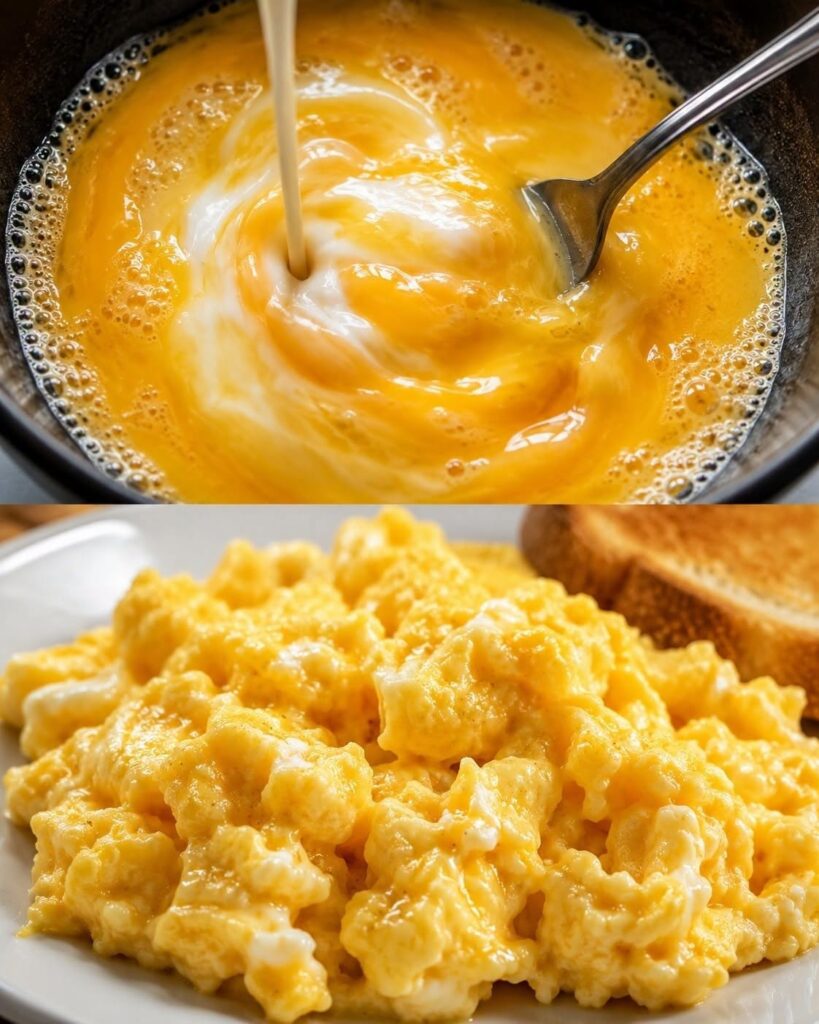
Why This Scrambled Egg Method Works
Low and Slow Creates Better Texture
One of the biggest mistakes people make when preparing scrambled eggs is using high heat.
Although high temperatures cook eggs quickly, they often force moisture out of the proteins, creating a dry and rubbery texture.
By contrast, low heat allows the eggs to cook gently.
Benefits of low-temperature cooking include:
- Creamier texture
- Better moisture retention
- Softer curds
- More even cooking
- Richer flavor
As a result, the eggs remain tender and velvety rather than tough.
Patience truly pays off when it comes to scrambled eggs.
Fresh Eggs Make a Difference
Fresh eggs offer superior flavor and texture.
Because the proteins remain more stable, fresh eggs create better structure and produce fluffier curds.
Fresh eggs also provide:
- Richer taste
- Brighter color
- Improved consistency
- Better moisture retention
Although older eggs are perfectly safe for scrambling, fresher eggs often deliver the most satisfying results.
Whenever possible, choose high-quality eggs for the best flavor experience.
Ingredients for Perfect Scrambled Eggs
Basic Ingredients
The beauty of scrambled eggs lies in their simplicity.
For two servings, you will need:
- 4 large eggs
- 1 tablespoon butter
- Salt, to taste
- Freshly ground black pepper, to taste
These four ingredients are enough to create incredibly delicious scrambled eggs.
The butter adds richness while helping prevent sticking.
Salt enhances flavor, while black pepper provides a subtle contrast to the creamy eggs.
Optional Additions
Once you master the basic technique, you can easily customize your eggs.
Popular additions include:
- Shredded cheddar cheese
- Chopped chives
- Fresh parsley
- Green onions
- Crumbled bacon
- Diced tomatoes
- Spinach
- Smoked salmon
However, many chefs prefer enjoying scrambled eggs in their simplest form because the creamy texture becomes the star of the dish.
Step-by-Step Instructions
Preparing the Eggs
Crack the eggs into a medium bowl.
Whisk thoroughly until the yolks and whites become completely combined.
A fully blended mixture creates a more uniform texture.
Meanwhile, place a nonstick skillet over low heat.
Add the butter and allow it to melt slowly.
Avoid browning the butter. The goal is gentle heat rather than intense cooking.
Once the butter has melted, pour in the whisked eggs.
Cooking the Eggs Properly
Allow the eggs to sit undisturbed for a few seconds.
Then begin stirring gently with a silicone spatula.
Move the eggs slowly across the pan using broad sweeping motions.
As soft curds begin forming, continue stirring while scraping the bottom of the skillet.
The key is constant but gentle movement.
Continue cooking until the eggs appear mostly set but still slightly glossy.
At this point, remove the skillet from the heat immediately.
The residual heat will finish cooking the eggs through carryover cooking.
Season with salt and pepper before serving.
Common Mistakes and How to Avoid Them
Overcooking the Eggs
Overcooking is the most common reason scrambled eggs become dry.
Remember that eggs continue cooking after leaving the heat source.
For best results:
- Remove eggs while slightly underdone
- Avoid high temperatures
- Watch carefully during the final minute
Soft, moist eggs often become perfect within moments after leaving the stove.
This small adjustment dramatically improves texture.
Using Too Much Heat
Many cooks assume higher heat means faster and better cooking.
Unfortunately, eggs are extremely delicate.
Excessive heat causes:
- Tough curds
- Dry texture
- Loss of moisture
- Uneven cooking
Instead, keep the burner low and allow the eggs to develop slowly.
The process may take a few extra minutes, but the improvement in quality is remarkable.
Serving Ideas and Variations
Delicious Ways to Serve Scrambled Eggs
Perfect scrambled eggs pair beautifully with many breakfast favorites.
Consider serving them with:
- Toast
- English muffins
- Fresh fruit
- Avocado slices
- Roasted potatoes
- Bacon
- Sausage
- Smoked salmon
These combinations create balanced and satisfying meals suitable for both busy mornings and relaxed weekend breakfasts.
Creative Flavor Variations
After mastering the classic recipe, try experimenting with flavors.
Popular variations include:
Cheesy Scrambled Eggs
Stir in shredded cheese during the final minute of cooking.
Herb Scrambled Eggs
Add fresh chives, parsley, or dill before serving.
Mediterranean Style
Mix in spinach, tomatoes, and crumbled feta cheese.
Protein-Packed Breakfast
Serve alongside lean meats and vegetables for a more substantial meal.
The versatility of scrambled eggs makes them one of the easiest dishes to customize.
Frequently Asked Questions
Why are my scrambled eggs rubbery?
Rubbery eggs usually result from cooking at excessively high temperatures or cooking for too long.
Should I add milk to scrambled eggs?
You can, but it is not necessary. Many chefs prefer eggs without milk because the texture remains richer and creamier.
When should I season scrambled eggs?
Salt and pepper can be added before cooking or immediately afterward. Many cooks prefer seasoning near the end for better texture control.
What type of pan works best?
A quality nonstick skillet provides the easiest cooking experience and helps prevent sticking.
How do restaurants make scrambled eggs so creamy?
Restaurants often use low heat, constant stirring, and remove eggs before they appear fully cooked to allow carryover cooking.
Conclusion
How to Make Perfect Scrambled Eggs Every Time? comes down to a handful of simple principles: use fresh ingredients, cook over low heat, stir gently, and remove the eggs before they seem completely finished. These small adjustments create a dramatic difference in flavor and texture.
With just a few minutes of patience, ordinary eggs transform into a rich, creamy breakfast worthy of any restaurant menu. Once you master this technique, you’ll never settle for dry, overcooked scrambled eggs again.



Leave a Reply