
Signs of Overwatering
- Yellow leaves
- Mushy stems
- Persistent soggy soil
Healthy roots are essential for bloom production.
3. Increase Humidity
Peace lilies originate from tropical environments where humidity levels are naturally high.
Ways to Increase Humidity
- Use a humidifier
- Group plants together
- Place the pot on a pebble tray filled with water
- Keep the plant in naturally humid rooms
Many peace lilies respond positively when humidity rises above typical indoor levels.
4. Maintain Consistent Temperatures
Peace lilies prefer warm, stable conditions.
Ideal Temperature Range
Approximately:
- 65-85°F (18-29°C)
Avoid
- Cold drafts
- Air-conditioning vents
- Sudden temperature swings
- Drafty windows during winter
Temperature stress can slow growth and reduce flowering.
5. Feed Your Plant Regularly
Flower production requires energy.
If your peace lily has remained in the same soil for months, nutrients may become depleted.
Fertilizing Tips
Use a balanced houseplant fertilizer:
- Every 6-8 weeks during active growth
- At half strength if you’re uncertain
Avoid overfertilizing, which can damage roots and cause brown leaf tips.
Nutrients Important for Blooms
- Nitrogen supports foliage growth
- Phosphorus supports flower development
- Potassium supports overall plant health
Balanced nutrition helps encourage blooming cycles.
6. Repot When Necessary
While peace lilies tolerate being slightly rootbound, severely crowded roots can limit growth and flowering.
Signs It’s Time to Repot
- Roots growing through drainage holes
- Water running straight through the pot
- Frequent wilting despite watering
- Slowed growth
Choosing a New Pot
Move up only one pot size larger.
A pot that’s too large may encourage root growth at the expense of flowers.
7. Keep Leaves Clean
Dust can accumulate on large peace lily leaves over time.
Why It Matters
Leaves absorb light through photosynthesis.
A layer of dust can reduce efficiency and limit the energy available for flower production.
Simple Maintenance
Every few weeks:
- Wipe leaves gently with a damp cloth
- Remove yellow or damaged foliage
- Inspect for pests
Clean leaves help maximize light absorption.
How Long Does It Take for a Peace Lily to Bloom?
Patience is important.
After improving conditions, flowering may take:
- Several weeks
- A few months
- One growing season
Factors such as plant age, variety, and overall health influence bloom timing.
Young plants often need additional maturity before producing flowers consistently.
Common Blooming Mistakes
Too Little Light
The most common reason for a lack of blooms.
Overwatering
Constantly wet soil can stress roots and reduce flowering.
Ignoring Fertilization
Plants eventually exhaust nutrients in potting soil.
Expecting Constant Flowers
Peace lilies bloom in cycles rather than continuously year-round.
Periods of leaf growth between flowering cycles are completely normal.
What Healthy Peace Lily Flowers Look Like
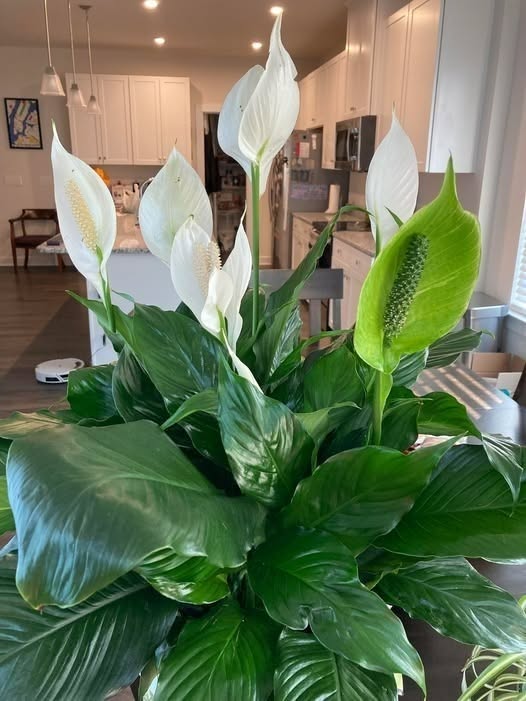
The classic peace lily bloom consists of:
- A white spathe (the leaf-like structure)
- A central spadix (the upright flowering spike)
New blooms typically emerge bright white and gradually turn green as they age.
This color change is natural and does not indicate a problem.
Bonus Tip: Choose a Mature Plant
Some peace lilies sold in stores are still relatively young.
Even with excellent care, immature plants may not bloom immediately.
A mature, established plant generally flowers more reliably than a newly propagated one.
Final Thoughts
Peace lilies have earned their reputation as easy-care houseplants, but flowering requires more than simple survival. Bright indirect light, proper watering, adequate humidity, balanced nutrition, and stable temperatures all play important roles in encouraging blooms.
If your peace lily has become a leafy green companion without flowers, a few small adjustments may be all it needs. Focus especially on improving light conditions, as this is often the biggest factor separating a healthy foliage plant from one covered in elegant white blooms.
With patience and consistent care, your peace lily can reward you with the graceful flowers that make this beloved houseplant so popular.



Leave a Reply