
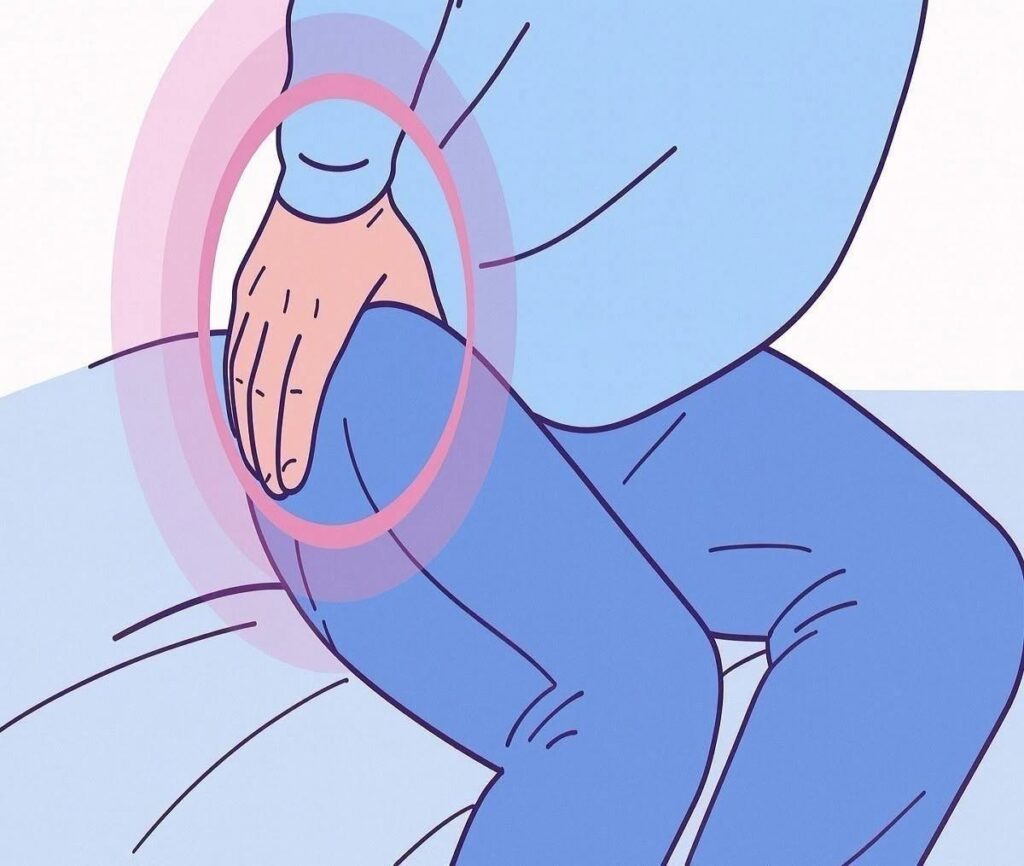
Understanding Where the Pain Is Located
The location of your discomfort often provides valuable clues.
Front of the Hip or Groin
Pain in the groin area frequently originates from the hip joint itself.
Possible causes include:
- Osteoarthritis
- Labral tears
- Hip impingement
- Stress fractures
Outer Hip
Pain along the side of the hip often points toward:
- Trochanteric bursitis
- Tendon inflammation
- Muscle strain
This type of pain commonly worsens when lying on the affected side.
Back of the Hip or Buttock
Pain in the buttock region is often related to:
- Sciatica
- Lower back conditions
- Piriformis syndrome
- Sacroiliac joint dysfunction
Pain That Travels Down the Leg
Radiating pain may indicate nerve involvement, especially if accompanied by tingling or numbness.
Risk Factors That Increase Hip Problems
Several factors can make hip pain more likely.
Age
Natural wear and tear increase the risk of arthritis and joint degeneration.
Repetitive Activities
Running, jumping, or repetitive physical work may place additional stress on the hip.
Previous Injuries
Past injuries can alter joint mechanics and contribute to future pain.
Excess Body Weight
Additional weight places greater stress on weight-bearing joints.
Poor Flexibility
Tight muscles can affect hip movement and increase strain.
Certain Medical Conditions
Conditions such as rheumatoid arthritis, osteoporosis, and diabetes can influence joint health.
Self-Care Strategies That May Help
Many mild hip conditions improve with conservative treatment.
Rest
Avoid activities that aggravate symptoms while remaining as active as comfortably possible.
Ice
Applying ice for 15-20 minutes several times daily may help reduce inflammation.
Gentle Stretching
Appropriate stretching can improve flexibility and reduce muscle tightness.
Supportive Footwear
Proper shoes help maintain alignment and reduce stress on the hips.
Gradual Exercise
Low-impact activities such as walking, swimming, and cycling often support recovery.
Healthy Weight Management
Reducing excess body weight can significantly decrease joint stress.
Common Tests Your Doctor May Recommend
If hip pain persists, healthcare providers may use several tools to identify the cause.
Physical Examination
Movement tests help evaluate strength, flexibility, and joint function.
X-Rays
Useful for identifying arthritis, fractures, and structural abnormalities.
MRI Scans
Provide detailed images of cartilage, tendons, muscles, and soft tissues.
Ultrasound
Can help evaluate bursitis and tendon-related conditions.
Blood Tests
Sometimes used when inflammatory or infectious causes are suspected.
Treatment Options
Treatment depends on the underlying diagnosis.
Physical Therapy
One of the most effective treatments for many causes of hip pain.
Anti-Inflammatory Medications
May help relieve pain and reduce inflammation when appropriate.
Corticosteroid Injections
Sometimes used for bursitis or severe joint inflammation.
Assistive Devices
Canes or walkers may temporarily reduce pressure on the joint.
Surgical Treatment
In severe cases, procedures such as labral repair or hip replacement may be considered.
Protecting Your Hips for the Future
Simple habits can support long-term joint health.
- Stay physically active
- Maintain flexibility
- Strengthen core and leg muscles
- Use proper exercise technique
- Wear supportive footwear
- Address minor injuries early
- Avoid prolonged inactivity
Small preventive measures often make a significant difference over time.
The Bottom Line
Hip pain is not a diagnosis-it’s a symptom. The underlying cause can range from a simple muscle strain to arthritis, bursitis, nerve compression, or more serious conditions that require medical attention.
The good news is that many causes of hip pain respond well to early intervention. Paying attention to your symptoms, understanding where the pain originates, and seeking medical advice when needed can help preserve mobility, reduce discomfort, and improve quality of life.
Your body has a remarkable way of communicating when something needs attention. Hip pain is one of those signals. Listening to it early may be the key to staying active and comfortable for years to come.



Leave a Reply