
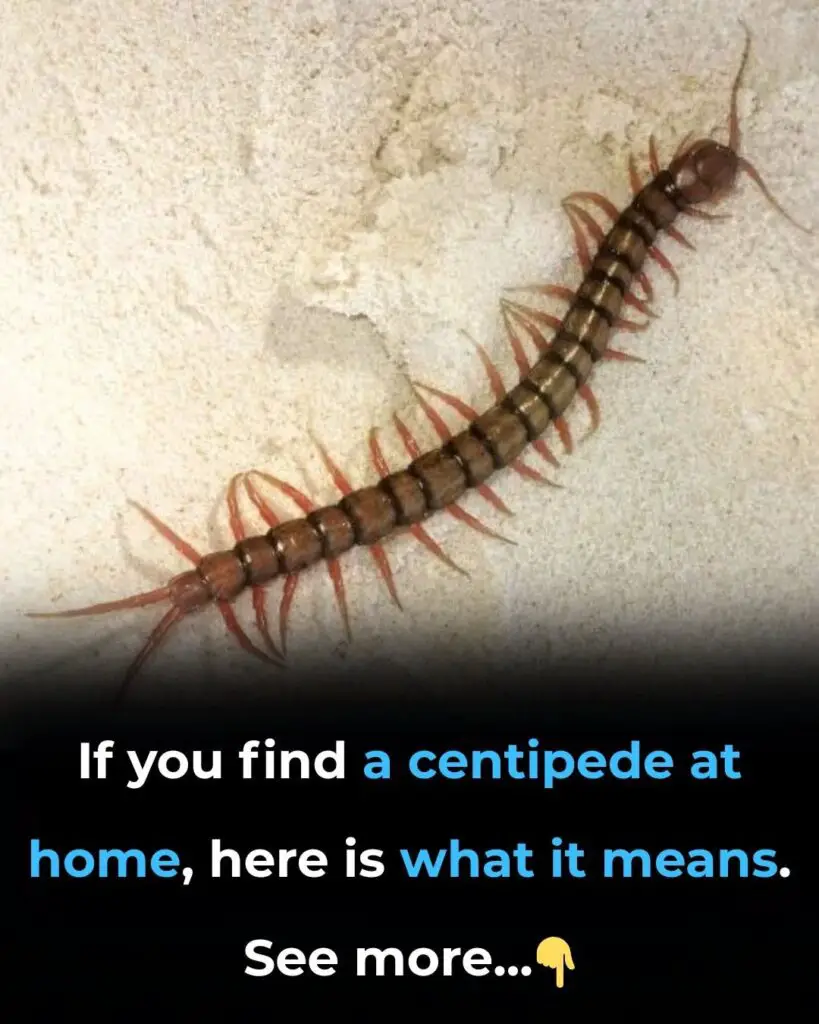
You spot it racing across the floor late at night-a fast-moving creature with dozens of legs that seems to appear out of nowhere. Your first reaction might be alarm. After all, few household visitors trigger discomfort quite like a centipede. However, before you panic, it’s worth understanding what finding a centipede at home actually means.
The truth is often far less frightening than people assume. In many cases, a house centipede isn’t a sign of a dirty home, a dangerous infestation, or a serious health risk. Instead, its presence can reveal useful information about your indoor environment and the other insects living there.
I remember spotting my first house centipede in a basement storage room. It moved so quickly that I barely had time to identify it before it disappeared behind a shelf. My immediate reaction was to assume something was wrong with the house. After learning more about these unusual creatures, though, I discovered they were actually hunting other pests. That experience completely changed my perspective. Rather than seeing centipedes as unwanted invaders, I began viewing them as indicators that nature often works in surprisingly helpful ways-even indoors.
Understanding House Centipedes
What Is a House Centipede?
The common house centipede, scientifically known as Scutigera coleoptrata, is an arthropod that has adapted remarkably well to indoor environments.
Unlike insects, centipedes belong to a different group of animals and possess many pairs of legs. House centipedes are easily recognized by their long antennae, striped bodies, and exceptionally long legs.
Although their appearance may seem intimidating, they are generally harmless to humans.
These creatures prefer:
- Dark areas
- Moist environments
- Basements
- Bathrooms
- Laundry rooms
- Crawl spaces
Because they are nocturnal hunters, most people only notice them occasionally.
Why They Enter Homes
Centipedes do not enter homes to bother people. Instead, they seek two things: shelter and food.
Indoor environments often provide:
- Stable temperatures
- Moisture
- Protection from predators
- Access to insects
As a result, homes can become attractive habitats for these natural hunters.
Importantly, seeing a centipede does not automatically indicate poor housekeeping. Even clean homes can support small populations if suitable prey is available.
The Surprising Benefits of House Centipedes



Leave a Reply