
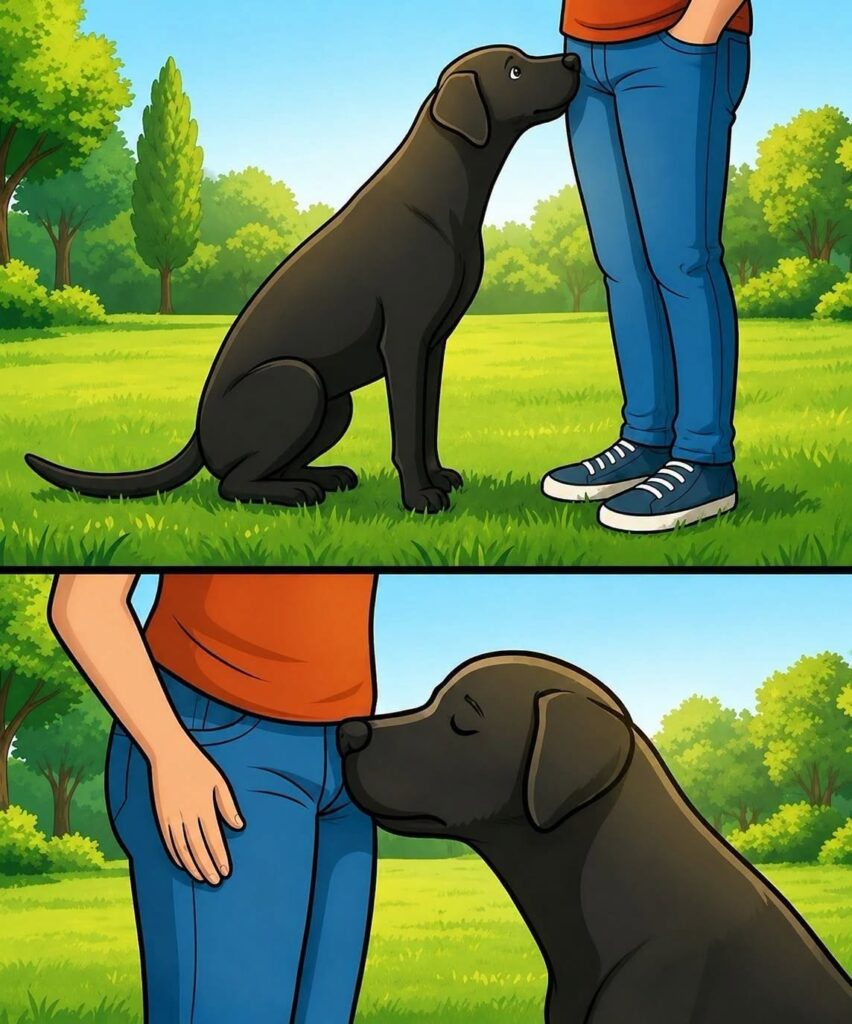
Anyone who has walked a dog knows the routine. You clip on the leash, step outside, and expect a smooth walk around the neighborhood. Then your dog stops suddenly. Their nose drops to the ground. Their body freezes with focus. A patch of grass, a mailbox post, a fence corner, or a single leaf has become the most important thing in the world.
To humans, this can feel frustrating. You may think, "It's just grass," or "We smelled this exact spot yesterday." But to your dog, sniffing is not wasted time. It is communication, discovery, memory, stress relief, and mental exercise all at once.
Dogs do not experience the world the same way humans do. People rely heavily on sight. Dogs rely heavily on smell. Their noses help them understand where they are, who has been there, what changed, whether another animal passed by, and even how people around them are feeling.
So when your dog sniffs, they are not being stubborn. They are gathering information.
Understanding dog sniffing can completely change the way you look at walks, greetings, training, and your relationship with your pet.
Why Dogs Sniff So Much
A Dog's Nose Is Built for Information
A dog's sense of smell is far more powerful than a human's. While people have only a few million scent receptors, dogs can have hundreds of millions depending on breed.
This means a dog can detect scent details that humans cannot even imagine.
When you smell a bowl of soup, you may notice chicken, garlic, or herbs.
Your dog may detect individual ingredients, the person who cooked it, the cutting board it touched, and how long it has been sitting out.
That level of detail helps explain why dogs spend so much time sniffing.
Smell Is Their Main Language
For dogs, scent works like a detailed message system.
Through smell, dogs can learn:
- Which animals passed by
- Whether another dog was stressed
- How long ago a scent was left
- What food someone ate
- Whether a person has been near other animals
- Whether an environment feels familiar or new
A simple sidewalk can contain layers of scent history.
To your dog, a walk is not just exercise. It is a daily information update.
What Dogs Learn from Sniffing
They Identify Other Dogs
When your dog sniffs a tree, hydrant, or patch of grass, they may be reading scent marks left by other dogs.
These scent marks can reveal details such as:
- Identity
- Sex
- Reproductive status
- Health signals
- Emotional state
- Recent presence
This is why dogs often return to the same sniffing spots again and again.
The information changes constantly.
They Understand Their Environment
Dogs use smell to build a mental map of the world.
A familiar route becomes familiar partly because of its scent profile.
If something changes, your dog may notice immediately.
For example, they may detect:
- A new animal nearby
- A person who walked through earlier
- Food dropped on the ground
- Rain changing old scent trails
- Another dog's recent visit
This helps dogs feel oriented and secure.
They Read People
Dogs also sniff humans to gather information.
When your dog sniffs your shoes, clothes, hands, or face, they may be learning where you have been and who you interacted with.
Your scent can carry traces of:
- Other pets
- Food
- Outdoor environments
- Stress hormones
- Sweat
- Cleaning products
- Workplace smells
This is one reason dogs often sniff intensely when you return home.
They are not just greeting you. They are catching up.
The "Pee-Mail" System
Why Dogs Sniff Urine Marks
One of the most common dog behaviors is sniffing places where other dogs have urinated.
While humans may find this unpleasant, dogs find it highly informative.
Urine contains chemical signals that can communicate a surprising amount of information.
To a dog, a urine mark can function like a social media update.
It tells them who passed by, when they were there, and sometimes how they were feeling.
Why Dogs Mark After Sniffing
After sniffing a spot, many dogs urinate on or near it.
This is scent marking.
The dog is adding their own information to the area.
It may communicate:
- "I was here."
- "This is part of my route."
- "I noticed your message."
- "Here is my update."
This behavior is normal for many dogs.
Why Dogs Sniff Each Other
A Normal Canine Greeting
Dogs often greet each other by sniffing.
They may sniff faces, bodies, and rear ends.
While this may seem awkward to humans, it is completely normal in dog communication.
A dog's rear area contains scent glands that provide information about identity and physical state.
For dogs, this greeting is similar to exchanging names and background details.
Sniffing Helps Reduce Uncertainty
When dogs meet, sniffing can help them decide how to behave.
They may learn whether the other dog seems calm, nervous, playful, or tense.
This information helps guide social interaction.
However, not all dogs enjoy being sniffed closely. Good introductions should allow space, calm movement, and supervision.
Why Your Dog Sniffs You
They Are Checking In
When your dog sniffs you, they may be checking your emotional and physical state.
Dogs can detect subtle scent changes related to sweat, hormones, and body chemistry.
This is why some dogs become especially attentive when their owner feels sad, anxious, sick, or stressed.
Your dog may not understand the situation the way a person would, but they can notice that something has changed.
They Smell Your Day
If your dog sniffs your clothes or shoes after you come home, they are likely gathering information about everywhere you have been.
They may detect:
- Another dog you touched
- A restaurant you visited
- Grass, pavement, or rain
- A friend's house
- A stressful environment
- A new location
To your dog, you bring home an entire scent story.
Sniffing and Dog Emotions
Sniffing Can Calm Dogs
Sniffing is not only informational. It can also be calming.
Many dogs use sniffing as a way to regulate their emotions.
When a dog feels uncertain or overstimulated, sniffing the ground may help them settle.
This is one reason sniffing walks can benefit anxious or reactive dogs.
It gives the dog something natural and focused to do.
Sniffing Provides Mental Exercise
A walk that includes sniffing can tire a dog mentally.
Physical exercise matters, but mental enrichment matters too.
Sniffing requires concentration, scent discrimination, memory, and decision-making.
For many dogs, a slow sniffing walk can be more satisfying than a fast walk with no time to explore.
Why You Should Let Your Dog Sniff on Walks
Walks Are for Dogs Too
Humans often view walks as exercise.
Dogs view walks as exploration.
When we rush dogs past every interesting scent, we may unintentionally remove one of the most rewarding parts of the experience.
Allowing sniff breaks can make walks more enjoyable and enriching.
Sniffing Builds Confidence
For shy dogs, sniffing can help build confidence.
Exploring through scent gives them control over their environment.
Instead of forcing constant interaction or movement, sniffing allows them to process the world at their own pace.
It Strengthens Your Bond
When you let your dog sniff, you show respect for their needs.
This can improve trust.
A dog who feels understood may become more relaxed and connected during walks.
How to Give Your Dog a Better Sniffing Walk
Try a "Sniffari"
A "sniffari" is a walk where the main goal is sniffing, not distance.
Instead of focusing on steps or speed, you let your dog explore safe scents at their own pace.
A good sniffari may include:
- Slow walking
- Frequent stops
- Loose leash time
- Quiet areas
- Grass, trees, and natural surfaces
Even 15 or 20 minutes can provide excellent enrichment.
Use a Longer Leash When Safe
A longer leash can give your dog more freedom to explore.
Use it only in safe areas away from traffic and hazards.
A 10-foot or 15-foot leash can allow more natural movement while still keeping your dog secure.
Practice a Cue for Moving On
Letting your dog sniff does not mean they control every walk completely.
You can teach a gentle cue such as:
- "Let's go."
- "This way."
- "All done."
Reward your dog when they respond.
This creates balance between exploration and cooperation.
When Sniffing Becomes a Problem
Excessive Sniffing with Anxiety
Some dogs sniff constantly because they feel anxious or overwhelmed.
If your dog cannot relax, respond to cues, or move away from a scent, anxiety may play a role.
A trainer or veterinarian can help identify the cause.
Sniffing Dangerous Items
Dogs may sniff or try to eat unsafe objects.
Watch for:
- Spoiled food
- Chemicals
- Animal waste
- Sharp objects
- Toxic plants
- Unknown substances
Let your dog sniff safely, but stay alert.
Sudden Changes in Sniffing Behavior
If your dog suddenly sniffs obsessively, seems disoriented, or acts unusually, consider checking with a veterinarian.
Changes in behavior can sometimes reflect stress, pain, aging, or medical concerns.
Fun Indoor Sniffing Activities
Scatter Feeding
Instead of putting food in a bowl, scatter kibble in a safe area and let your dog search for it.
This turns mealtime into a scent game.
Snuffle Mats
A snuffle mat hides food between fabric strips.
Dogs use their noses to find each piece.
This can be especially useful on rainy days or when outdoor walks are limited.
Find-It Games
Hide treats around a room and encourage your dog to search.
Start easy, then gradually increase difficulty.
This builds confidence and mental focus.
Scent Trails
Drag a treat along the floor for a short distance, hide it, then let your dog follow the trail.
This taps into natural tracking instincts.
Frequently Asked Questions
Why does my dog sniff everything on walks?
Your dog is gathering information. Scents tell them who has been there, what changed, and whether the area feels familiar or new.
Should I let my dog sniff every walk?
Yes, at least for part of the walk. Sniffing provides mental enrichment and can help dogs feel calmer.
Why does my dog sniff me when I come home?
Your dog is learning where you were, who you met, and how you feel. Your scent carries details from your day.
Why do dogs sniff each other's rear ends?
Dogs gather chemical information from scent glands. This helps them identify each other and understand social signals.
Can dogs smell illness?
Dogs can detect certain chemical changes in the human body. Some trained dogs assist with medical alerts, such as changes in blood sugar or seizure warning signs.
Final Thoughts
Dog sniffing is not random, silly, or pointless. It is one of the most important ways your dog experiences life.
Every sniff gives your dog information. Every pause on a walk helps them understand their surroundings. Every intense investigation of a tree, shoe, or patch of grass may contain a story that humans simply cannot smell.
When you allow your dog time to sniff, you give them more than freedom. You give them enrichment, confidence, calm, and joy.
So the next time your dog stops during a walk and becomes deeply interested in something invisible to you, try not to rush them immediately.
Take a breath.
Look around.
Let them explore.
Because for your dog, that ordinary patch of grass may be filled with news, memories, messages, and meaning.
Sometimes the best walks are not the fastest ones.
They are the ones where your dog gets to follow their nose.


Leave a Reply