
4. Certain Medications
Some medications can influence hormone levels or stimulate hair growth.
Examples may include:
- Certain steroid medications
- Some hormone therapies
- Specific medications used to treat endometriosis
- Certain treatments that affect androgen levels
If increased facial hair appears after starting a new medication, it may be worth discussing with your healthcare provider.
Never stop prescribed medications without professional guidance.
5. Adrenal or Hormonal Disorders
Less commonly, excessive facial hair growth may be linked to disorders involving hormone-producing glands.
These can include:
- Adrenal gland disorders
- Rare ovarian conditions
- Hormonal imbalances affecting androgen production
These conditions are relatively uncommon but may be considered when facial hair appears suddenly or progresses rapidly.
When Is Chin Hair Considered Normal?
A few isolated chin hairs are extremely common.
In fact, many women develop occasional coarse facial hairs without any underlying medical problem.
Generally, isolated chin hairs are less concerning when:
- Menstrual cycles are regular
- Hair growth develops gradually
- No other hormonal symptoms are present
- The amount of hair remains relatively stable
For many women, a few stubborn chin hairs simply become another normal part of adulthood.
Signs That May Warrant Medical Evaluation
Although occasional chin hairs are common, it’s worth speaking with a healthcare professional if you notice:
Sudden Increase in Hair Growth
Rapid changes deserve attention, especially if the hair appears over weeks or months rather than years.
Irregular Menstrual Cycles
Changes in menstruation may suggest hormonal factors contributing to hair growth.
Persistent Acne
Adult acne combined with facial hair growth may indicate increased androgen activity.
Hair Thinning on the Scalp
A combination of scalp hair loss and increased facial hair can sometimes point toward hormonal changes.
Voice Changes or Increased Muscle Mass
These symptoms are uncommon and should be evaluated by a healthcare provider.
Common Ways Women Manage Chin Hair
There is no single “correct” approach.
The best method depends on personal preference, budget, and the amount of hair present.
Tweezing
Ideal for:
- Single hairs
- Small areas
- Occasional maintenance
Pros:
- Inexpensive
- Precise
- Easy to do at home
Shaving
Despite common myths, shaving does not cause hair to grow back thicker.
It simply cuts the hair at the surface, creating a blunt tip that may feel coarser.
Pros:
- Quick
- Painless
- Affordable
Waxing
Waxing removes hair from the root and can provide longer-lasting results.
Pros:
- Smooth finish
- Results last longer than shaving
Laser Hair Removal
Laser treatments target hair follicles and can significantly reduce growth over time.
Pros:
- Long-term reduction
- Effective for many people
Multiple sessions are usually required.
Electrolysis
Electrolysis uses electrical energy to destroy individual hair follicles.
Pros:
- Considered a permanent hair removal method
- Effective for various hair colors and skin tones
Emotional Impact Matters Too
Although chin hairs are medically harmless in many cases, their emotional impact can be significant.
Society often promotes unrealistic beauty standards that leave many women feeling self-conscious about completely normal features.
It’s important to remember:
- Facial hair does not make you less feminine.
- Facial hair does not reflect poor hygiene.
- Facial hair is extremely common.
- Many women experience the same concern.
You’re far from alone.
What Your Body May Be Telling You
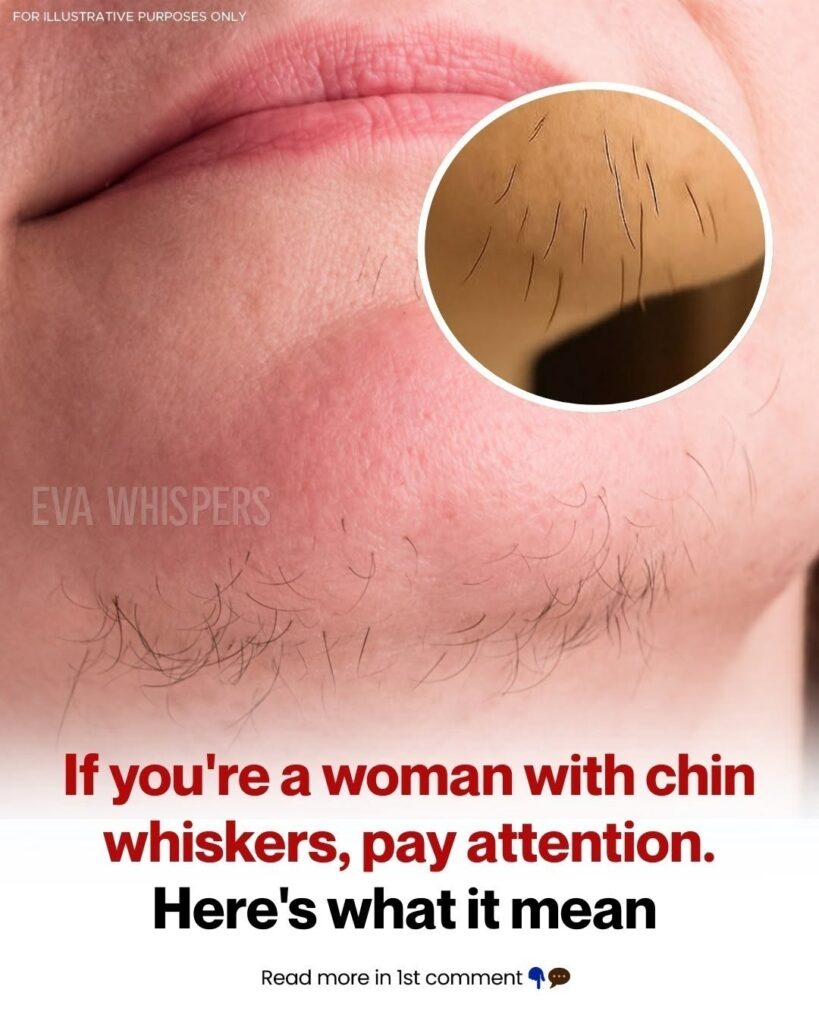
A chin whisker isn’t necessarily a warning sign.
Sometimes it’s simply genetics.
Sometimes it’s a reflection of natural aging.
Sometimes it points toward hormonal shifts that deserve a closer look.
The key is paying attention to the bigger picture rather than focusing on a single hair.
Final Thoughts
Finding an unexpected chin hair can be surprising, but it’s usually far more common and less alarming than many women assume. In many cases, chin whiskers result from normal hormonal changes, aging, genetics, or individual variations in hair growth.
However, when facial hair appears suddenly, increases significantly, or occurs alongside other symptoms such as irregular periods, acne, or scalp hair thinning, a conversation with a healthcare professional may provide helpful answers.
Most importantly, remember that a few chin hairs do not define your health, beauty, or femininity. They are simply one small part of the complex and fascinating ways our bodies change throughout life.


Leave a Reply