
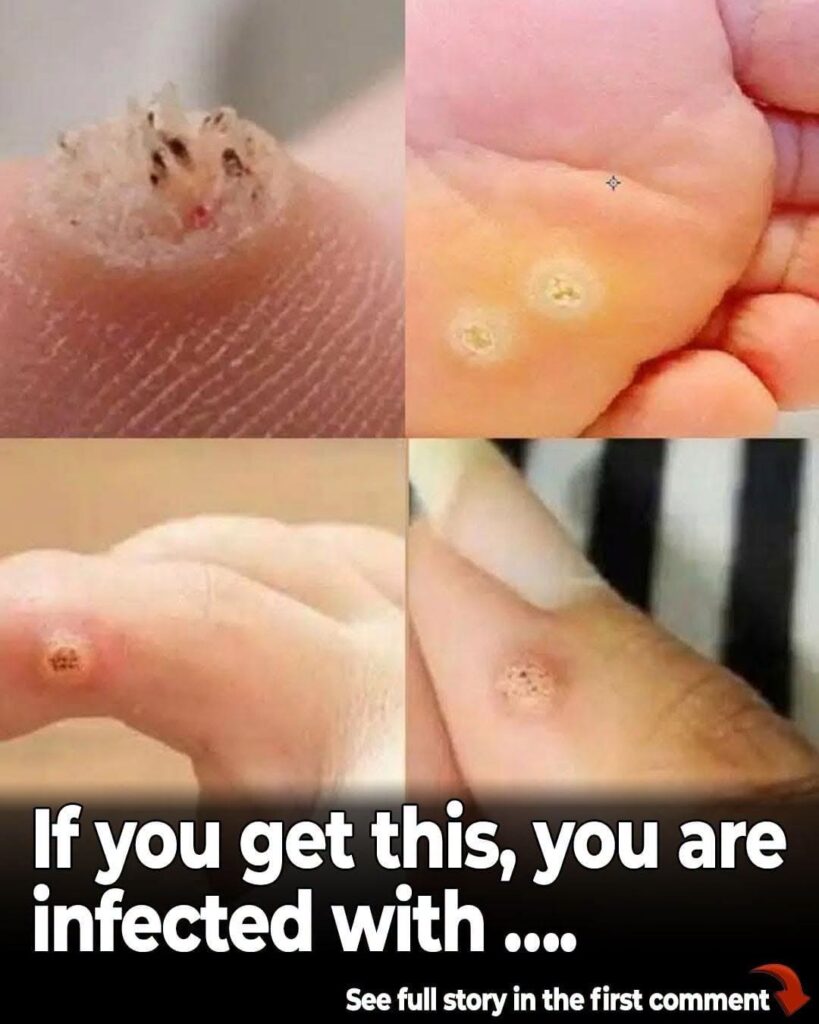
What They Look Like
Common warts are rough, raised growths with an uneven surface that often resembles a cauliflower.
Tiny black dots may be visible inside the wart. These are small clotted blood vessels rather than dirt.
Symptoms
- Rough texture
- Raised bump
- Usually painless
- May become irritated by friction
Home Care Options
Salicylic Acid
Over-the-counter salicylic acid treatments can gradually remove layers of the wart.
Duct Tape Method
Covering the wart for several days and periodically filing away dead skin may help stimulate the body’s immune response.
Keep Skin Dry
Dry skin is less hospitable to viral spread.
Medical Treatments
- Cryotherapy (freezing)
- Prescription-strength medications
- Laser therapy
- Minor surgical removal
2. Plantar Warts (Verruca Plantaris)
Where They Appear
- Soles of the feet
- Heels
- Balls of the feet
What They Look Like
Unlike common warts, plantar warts often grow inward because of pressure from walking and standing.
They may appear as thickened areas of skin with tiny black dots.
Symptoms
- Pain while walking
- Tenderness when pressure is applied
- Sensation of stepping on a pebble
Home Care Options
- Salicylic acid treatments
- Foot soaks
- Gentle filing with a pumice stone
- Cushioning pads to reduce pressure
Medical Treatments
Persistent plantar warts often respond well to cryotherapy or other in-office procedures.
3. Flat Warts (Verruca Plana)
Where They Appear
- Face
- Forehead
- Hands
- Arms
- Legs
What They Look Like
Flat warts are:
- Small
- Smooth
- Slightly raised
- Often flesh-colored, pink, or light brown
Symptoms
Most flat warts cause little or no discomfort.
However, they frequently appear in clusters.
Who Gets Them?
Children, teenagers, and young adults develop flat warts more often than older adults.
Home Care Options
Because facial skin is sensitive, professional evaluation is often safest before attempting treatment.
Medical Treatments
- Topical prescription creams
- Cryotherapy
- Chemical peels
- Laser treatment
4. Filiform Warts
Where They Appear
- Around the mouth
- Eyelids
- Nose
- Neck
What They Look Like
Filiform warts are distinctive because they:
- Grow rapidly
- Appear thread-like
- Resemble tiny skin-colored projections
Symptoms
Most are painless but may become irritating depending on location.
Important Warning
Do not attempt to cut or remove facial warts at home.
Medical Treatments
Healthcare providers can safely remove filiform warts using:
- Cryotherapy
- Electrosurgery
- Minor excision
5. Periungual Warts
Where They Appear
- Around fingernails
- Around toenails
What They Look Like
These warts often begin as small rough bumps and gradually enlarge.
Symptoms
- Pain around the nail
- Nail deformities
- Difficulty trimming nails
Risk Factors
People who:
- Bite their nails
- Pick at cuticles
- Frequently injure nail beds
are more susceptible.
Treatment Options
Periungual warts can be stubborn and often require professional treatment.
6. Genital Warts
Where They Appear
Genital warts may occur in the genital or anal region.
What They Look Like
They often appear as:
- Small flesh-colored bumps
- Clusters resembling cauliflower
Symptoms
Some people experience:
- Itching
- Irritation
- Discomfort
Others may have no symptoms at all.
Important Note
Genital warts require medical evaluation.
Do not attempt self-treatment using products intended for hand or foot warts.
Medical Treatments
Treatment may include:
- Prescription topical medications
- Cryotherapy
- Surgical removal
- Laser therapy
How Warts Spread
HPV spreads through direct contact with infected skin or contaminated surfaces.
Common transmission routes include:
- Sharing razors
- Walking barefoot in public locker rooms
- Picking at existing warts
- Sharing towels
The virus can enter through tiny cuts or breaks in the skin.
Prevention Tips
Although preventing every wart is impossible, these habits can reduce risk:
Wash Hands Regularly
Good hygiene limits viral spread.
Avoid Picking Warts
Picking increases the risk of spreading the virus.
Wear Foot Protection
Use sandals in public showers, pools, and locker rooms.
Don’t Share Personal Items
Avoid sharing:
- Towels
- Nail clippers
- Razors
Keep Skin Healthy
Healthy, intact skin provides a stronger barrier against infection.
When to See a Doctor
Seek medical attention if a wart:
- Changes color
- Bleeds frequently
- Causes significant pain
- Spreads rapidly
- Appears on the face or genitals
- Persists despite treatment
- Creates uncertainty about the diagnosis
Not every skin growth is a wart, and professional evaluation may be necessary.
The Bottom Line
Warts are common, usually harmless skin growths caused by HPV. While many eventually disappear without treatment, understanding the different types can help you manage symptoms and prevent spread.
Common, plantar, flat, filiform, periungual, and genital warts each have unique characteristics and treatment considerations. In many cases, over-the-counter remedies can be effective, but persistent or sensitive-area warts deserve professional attention.
The good news is that most warts can be successfully treated, and with proper care, many people are able to prevent future outbreaks and maintain healthy skin.


Leave a Reply