
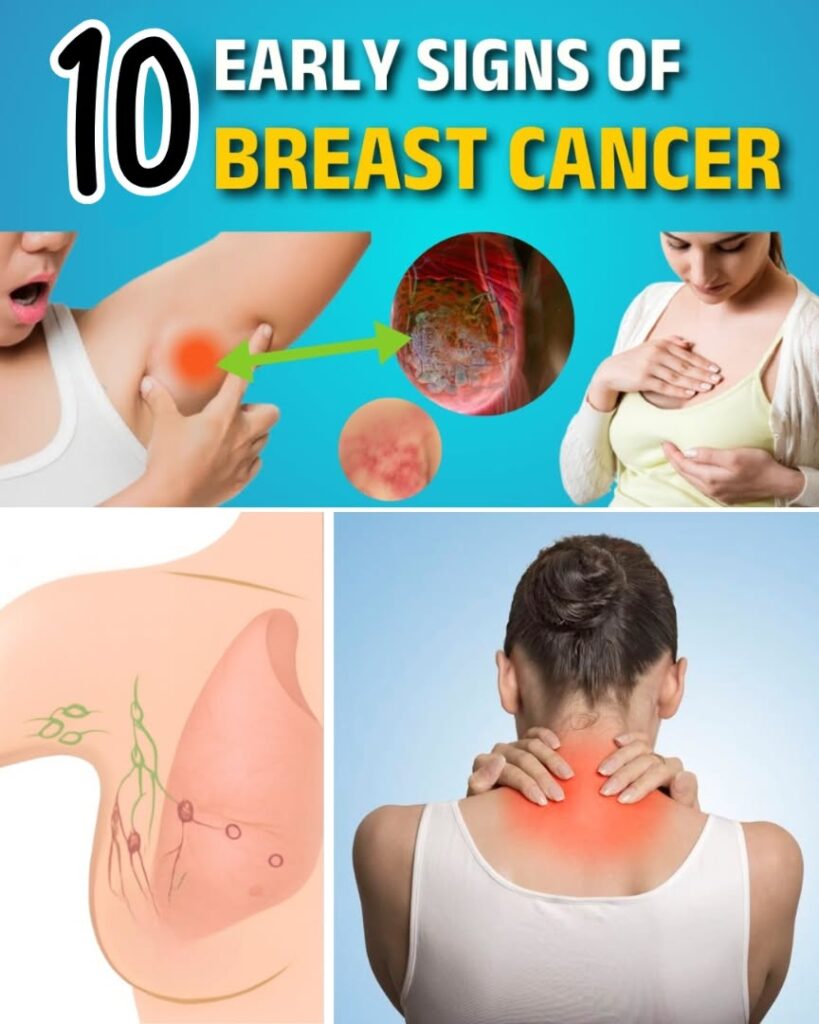
Why Early Detection Matters
Breast cancer often develops gradually and may not cause pain or obvious symptoms in its earliest stages.
When detected early and treated before spreading, survival rates are significantly higher. Regular screening, routine self-awareness, and prompt medical evaluation of unusual changes all contribute to earlier diagnosis.
Awareness is not about fear-it’s about recognizing changes and acting quickly when needed.
10. Unexplained Changes in Breast Size or Shape
One breast suddenly appearing larger, swollen, misshapen, or noticeably different from the other can be an important warning sign.
While minor asymmetry is completely normal, a sudden or unexplained change deserves medical evaluation.
Pay attention to:
- New swelling
- Distortion of breast shape
- Unusual fullness
- Visible changes that persist
9. A New Lump or Thickened Area
A lump is one of the most widely recognized signs of breast cancer.
Not all lumps are cancerous. In fact, many breast lumps are benign.
However, a lump that feels:
- Hard
- Irregular
- Fixed in place
- Different from surrounding tissue
should be assessed by a healthcare provider.
Any new lump warrants professional evaluation regardless of discomfort.
8. Skin Dimpling or Puckering
Sometimes breast cancer affects tissues beneath the skin, creating a dimpled appearance.
This change is often compared to the texture of an orange peel.
Look for:
- Indentations
- Puckering
- Wrinkling
- Areas that appear pulled inward
These changes may occur even without a detectable lump.
7. Nipple Changes
Changes involving the nipple can sometimes indicate underlying breast cancer.
Warning signs include:
- New nipple inversion
- A nipple turning inward
- Changes in position
- Distortion of normal appearance
Although some people naturally have inverted nipples, a newly developed inversion should be evaluated.
6. Unusual Nipple Discharge
Nipple discharge is not always cause for concern.
However, discharge that occurs spontaneously-particularly from only one breast-should be discussed with a healthcare professional.
Medical attention is especially important if the discharge is:
- Bloody
- Clear
- Persistent
- Occurring without squeezing
5. Persistent Breast Pain
Most breast pain is not caused by cancer.
Hormonal changes, cysts, and other benign conditions are much more common causes.
Nevertheless, persistent pain that:
- Occurs in one specific area
- Does not improve
- Has no obvious explanation
should be evaluated.
Pain alone is rarely the only symptom, but it should not be ignored.
4. Redness or Skin Irritation
Breast cancer can occasionally cause visible skin changes.
Watch for:
- Persistent redness
- Rash-like areas
- Thickened skin
- Irritation that does not heal
Inflammatory breast cancer, although less common, may present with these symptoms and often progresses quickly.
Prompt medical evaluation is important.
3. Swelling in the Armpit or Collarbone Area
Breast cancer can spread to nearby lymph nodes before a breast lump becomes noticeable.
As a result, swelling may develop in:
- The armpit
- Above the collarbone
- Around nearby lymph nodes
Any unexplained swelling in these regions should be examined by a healthcare professional.
2. Changes in Breast Skin Texture
The skin covering the breast should generally appear smooth and consistent.
Seek evaluation for:
- Thickening
- Scaling
- Persistent roughness
- Orange-peel texture
These changes may indicate an underlying condition requiring medical assessment.
1. A Change That Doesn’t Go Away
Perhaps the most important warning sign is any breast change that persists.
Many benign conditions resolve naturally within days or weeks.
However, if you notice a change that remains present or worsens over time, it is worth discussing with a healthcare provider.
Trust your instincts.
You know your body better than anyone else.
Risk Factors to Be Aware Of
While breast cancer can affect anyone, certain factors may increase risk:
- Increasing age
- Family history of breast cancer
- Genetic mutations such as BRCA1 or BRCA2
- Personal history of breast cancer
- Hormonal factors
- Obesity
- Alcohol consumption
Having risk factors does not guarantee cancer, just as lacking them does not eliminate risk.
How to Protect Your Breast Health
Several steps can support early detection:
Stay Familiar with Your Breasts
Regular awareness helps you recognize unusual changes more quickly.
Follow Screening Recommendations
Discuss mammograms and screening schedules with your healthcare provider based on your age and personal risk factors.
Seek Medical Advice Promptly
Do not wait for symptoms to worsen before seeking evaluation.
Early consultation often provides peace of mind and, when necessary, earlier treatment.
Frequently Asked Questions
Does every breast lump mean cancer?
No. Many breast lumps are benign, but every new lump should be evaluated by a healthcare professional.
Can men develop breast cancer?
Yes. Although less common, men can develop breast cancer and should be aware of symptoms.
Is breast pain usually cancer?
No. Most breast pain has non-cancerous causes, but persistent unexplained pain should be discussed with a doctor.
What should I do if I notice a symptom?
Schedule an appointment with a healthcare professional for proper evaluation.
How often should I get screened?
Screening recommendations vary based on age and risk factors. Discuss a personalized plan with your healthcare provider.
Final Thoughts
Breast cancer awareness is not about assuming the worst. It is about recognizing potential warning signs and understanding when medical evaluation is appropriate. Many breast changes have harmless explanations, but persistent or unusual symptoms deserve attention.
Early detection remains one of the most effective tools in improving outcomes. By staying informed, paying attention to changes, and seeking professional guidance when needed, individuals can take an active role in protecting their health.
If you ever notice a concerning change, don’t ignore it. A timely conversation with a healthcare provider can make all the difference.



Leave a Reply