
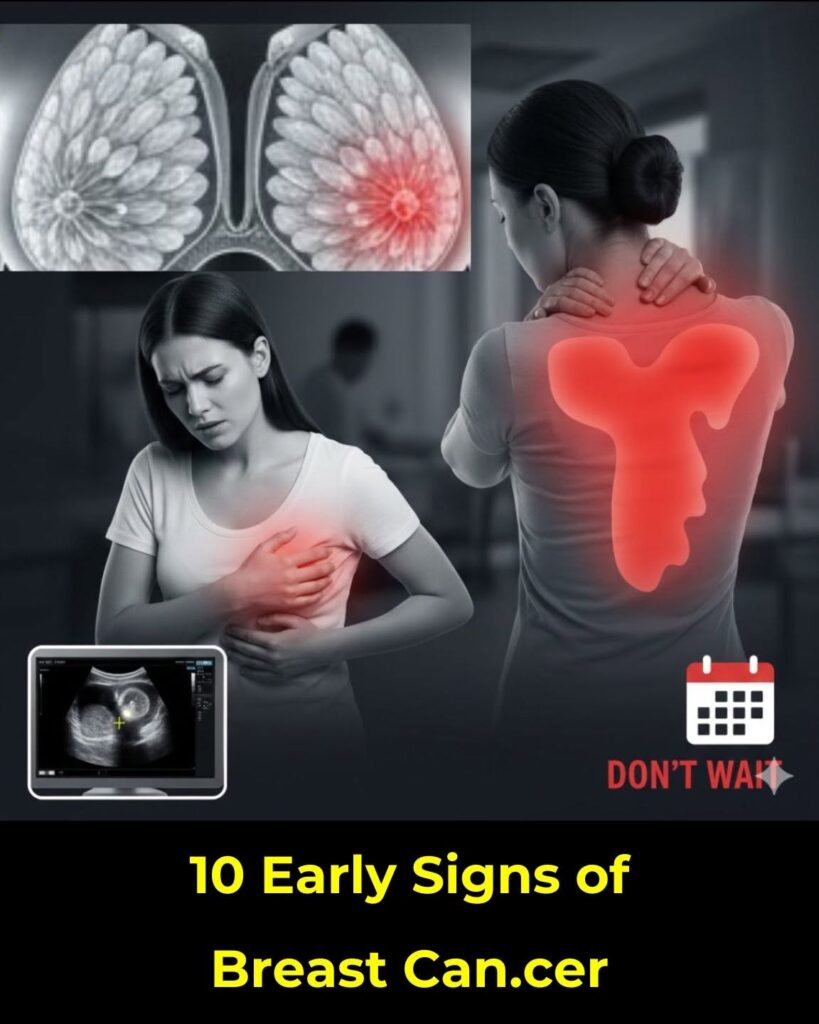
Don’t Ignore Thickening
Not all abnormalities appear as distinct lumps.
Sometimes the tissue feels thicker or denser in one area compared to the surrounding breast tissue.
Any new lump or persistent thickening deserves medical evaluation.
2. Changes in Breast Size or Shape
Breasts naturally vary in size, and mild asymmetry is normal.
However, sudden or unexplained changes should not be ignored.
Watch For
- One breast becoming noticeably larger
- Unexplained swelling
- A change in contour
- Visible distortion of the breast shape
Changes that persist and cannot be explained by hormonal fluctuations should be assessed by a healthcare provider.
3. Skin Dimpling or Puckering
Changes in the appearance of the skin can sometimes indicate underlying problems.
What It Looks Like
The skin may appear:
- Dimpled
- Puckered
- Indented
- Uneven
Some people describe the appearance as similar to the surface of an orange.
Why It Happens
In some cases, underlying tissue changes can pull on the skin, creating visible dimples or irregularities.
Any new skin changes should be examined by a healthcare professional.
4. Nipple Changes
The nipple can sometimes provide important clues about breast health.
Symptoms to Watch For
- New nipple inversion
- Nipple pulling inward
- Persistent redness
- Scaling or crusting
- Thickening of the nipple skin
A nipple that has always been inverted is generally less concerning than one that suddenly changes position.
Any new nipple changes warrant evaluation.
5. Unusual Nipple Discharge
Nipple discharge can occur for many reasons, many of which are benign.
However, certain types deserve prompt medical attention.
Concerning Features Include
- Bloody discharge
- Clear discharge from one breast
- Spontaneous discharge without squeezing
- Persistent discharge from a single duct
Although many causes are non-cancerous, unexplained discharge should always be discussed with a healthcare provider.
6. Persistent Breast Pain
Most breast pain is not caused by cancer.
Hormonal fluctuations, cysts, muscle strain, and other conditions frequently contribute to discomfort.
When Pain Deserves Attention
Seek evaluation if pain is:
- Persistent
- Localized to one area
- Unrelated to menstrual cycles
- Accompanied by other symptoms
Pain alone rarely indicates breast cancer, but it should not be ignored if it continues or worsens.
7. Swelling in the Breast or Underarm
The lymphatic system plays an important role in breast health.
Sometimes swelling appears before a lump can be detected.
Signs to Notice
- Swelling of all or part of the breast
- Puffiness under the arm
- Enlargement of nearby lymph nodes
- Persistent fullness
Changes involving the underarm area may be particularly important because lymph nodes are located there.
8. Redness or Skin Irritation
Persistent redness is another symptom that should not be overlooked.
Potential Warning Signs
- Red patches
- Warmth
- Thickened skin
- Ongoing irritation
- Areas resembling a rash
While infections and skin conditions can also cause these symptoms, persistent redness requires medical assessment.
Inflammatory Breast Cancer
A rare but aggressive form of breast cancer called inflammatory breast cancer may present with redness, swelling, and skin changes rather than a distinct lump.
Prompt evaluation is essential.
9. Changes in Breast Texture
Pay attention to how your breasts normally look and feel.
Texture Changes May Include
- Unusual firmness
- Thickened skin
- Areas that feel different
- New ridges or irregularities
These changes may occur gradually and are sometimes easier to notice when performing regular self-awareness checks.
10. Enlarged Lymph Nodes
Lymph nodes help filter fluids and support immune function.
Areas to Monitor
Lymph nodes near the:
- Underarm
- Collarbone
- Neck
may become enlarged in certain conditions.
What They May Feel Like
Swollen lymph nodes often appear as:
- Small lumps
- Firm areas
- Tender or non-tender swellings
Because lymph node enlargement can have many causes, professional evaluation is necessary to determine the reason.
What About Breast Self-Exams?
Healthcare recommendations regarding breast self-exams have evolved over time.
Rather than focusing solely on formal monthly examinations, many experts encourage breast self-awareness.
What Is Breast Self-Awareness?
This means becoming familiar with:
- Your normal breast appearance
- Usual breast texture
- Typical monthly changes
When you know what is normal for your body, unusual changes are often easier to recognize.
Who Is at Risk?
Breast cancer can affect anyone, although certain factors increase risk.
Common Risk Factors
- Increasing age
- Family history
- Certain genetic mutations
- Personal history of breast conditions
- Hormonal factors
- Lifestyle influences
Importantly, many individuals diagnosed with breast cancer have no obvious risk factors.
This is why awareness remains important for everyone.
When Should You Contact a Healthcare Provider?
Schedule an appointment if you notice:
- A new lump
- Persistent swelling
- Skin changes
- Nipple changes
- Unexplained discharge
- Ongoing pain
- Enlarged lymph nodes
Do not wait to see whether symptoms disappear on their own if they continue or worsen.
Most breast changes turn out to be non-cancerous, but only proper medical evaluation can determine the cause.
Screening Saves Lives
Regular screening remains one of the most effective tools for early detection.
Depending on age, risk factors, and medical history, healthcare providers may recommend:
- Mammograms
- Clinical breast exams
- Ultrasound imaging
- Breast MRI
Following recommended screening schedules can help identify abnormalities before symptoms develop.
Reducing Your Risk
While no strategy can completely eliminate breast cancer risk, healthy habits may contribute to overall wellness.
Helpful Lifestyle Practices
- Maintain a healthy weight
- Stay physically active
- Limit alcohol intake
- Avoid smoking
- Eat a balanced diet
- Attend recommended screenings
These habits support overall health and may help reduce risk.
The Bottom Line
Breast cancer does not always announce itself with a dramatic symptom. Sometimes the earliest signs are subtle changes in how the breast looks, feels, or behaves. New lumps, persistent swelling, skin dimpling, nipple changes, unusual discharge, and enlarged lymph nodes are among the warning signs that deserve attention.
Most breast changes are not cancer. However, early detection remains one of the most powerful tools for improving outcomes. Knowing your body, paying attention to changes, and seeking medical evaluation when something feels different can make a significant difference.
Awareness is not about fear-it’s about taking an active role in protecting your health. The sooner a potential problem is identified, the more options are often available for treatment and recovery.



Leave a Reply