
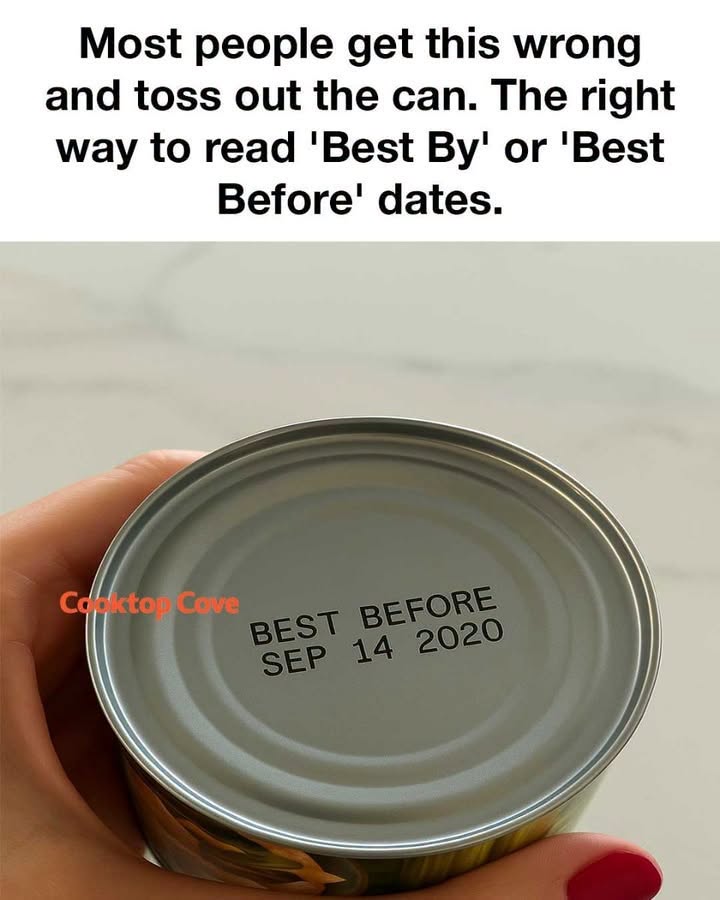
The Date on Your Food Might Not Mean What You Think It Means
Have you ever opened your pantry, spotted a can of soup or vegetables a few months past its printed date, and immediately thrown it away?
If so, you’re far from alone.
Millions of people discard perfectly good food every year because they misunderstand the dates printed on packaging. Many consumers believe that a “Best By” or “Best Before” date is the same thing as an expiration date. As a result, enormous amounts of safe, edible food end up in garbage bins rather than on dinner tables.
The surprising truth is that most date labels are not primarily about food safety.
Instead, they are often indicators of quality, freshness, flavor, and texture.
Understanding the difference could save you money, reduce food waste, and help you make smarter decisions in your kitchen.
Let’s explore what these labels really mean, why canned foods last so long, and how to determine whether food is actually safe to eat.
The Confusing World of Food Date Labels
One reason consumers become confused is that food manufacturers use several different date labels.
You may see:
- Best By
- Best Before
- Use By
- Sell By
- Enjoy By
- Freeze By
At first glance, these phrases seem similar.
However, they often serve completely different purposes.
Many shoppers assume every date represents a strict safety deadline.
In reality, most labels were created to help manufacturers and retailers manage product quality and inventory.
This distinction is important because misunderstanding it leads to unnecessary waste.
What "Best By" Really Means
A “Best By” date generally refers to the period during which the manufacturer believes the product will maintain its highest quality.
This includes:
- Flavor
- Texture
- Color
- Aroma
- Nutritional quality
After this date passes, the product may gradually lose some of these characteristics.
However, that doesn’t automatically mean it’s unsafe.
For example:
A can of corn that is six months past its Best By date may still be perfectly edible.
The kernels might be slightly softer.
The flavor might not be quite as vibrant.
But the food itself could remain safe if stored properly.
The key word is best.
The manufacturer is indicating peak quality, not necessarily safety.
Understanding "Best Before" Dates
Best Before dates serve a similar purpose.
These labels communicate when the product is expected to deliver optimal quality.
After the listed date, manufacturers cannot guarantee the same experience they intended when packaging the food.
That doesn’t mean the product suddenly becomes harmful overnight.
Food doesn’t operate like a timer that reaches zero at midnight.
Instead, quality gradually changes over time.
A package of crackers may become less crisp.
Coffee may lose aroma.
Cereal may become slightly stale.
Yet these changes don’t automatically create safety concerns.
Why Canned Foods Last So Long
The Science Behind Canning
Canned foods are among the most durable products found in supermarkets.
The reason lies in the preservation process.
During canning:
- Food is sealed in an airtight container.
- Heat is applied to destroy microorganisms.
- Oxygen is removed or minimized.
- The container prevents recontamination.
This process creates an environment where bacteria struggle to survive.
As a result, canned foods can remain stable for years.
Protection From Environmental Threats
Cans provide excellent protection against:
- Light exposure
- Air exposure
- Moisture
- Physical contamination
These factors normally contribute to food spoilage.
By eliminating them, manufacturers significantly extend shelf life.
This is why emergency preparedness experts often recommend canned foods for long-term storage.
Why Manufacturers Still Use Dates
If canned food can last so long, why include dates at all?
The answer is quality control.
Manufacturers want consumers to experience products as intended.
Over time:
- Colors may fade
- Textures may soften
- Vitamins may slowly degrade
- Flavors may become less vibrant
The printed date represents the period during which the company expects the product to perform at its best.
It does not necessarily indicate the point where food becomes dangerous.
The Difference Between Quality and Safety
This distinction causes more confusion than any other aspect of food labeling.
Quality
Quality refers to:
- Taste
- Appearance
- Freshness
- Texture
- Aroma
A decline in quality may make food less enjoyable.
However, it does not automatically make food unsafe.
Safety
Safety refers to whether food can cause illness.
Food safety concerns involve:
- Harmful bacteria
- Toxins
- Mold contamination
- Packaging failure
A product can lose quality while remaining safe.
Likewise, a product can become unsafe even before its Best By date if it has been improperly stored.
When You Should Throw a Can Away
Although many canned foods remain safe beyond their printed dates, there are situations where disposal is absolutely necessary.
Bulging Cans
A swollen or bulging can is one of the biggest warning signs.
Bulging may indicate gas production caused by bacterial growth.
Never open or consume food from a swollen can.
Leaking Containers
Any leakage suggests the seal may have been compromised.
Once the airtight barrier fails, contamination becomes possible.
Severe Rust
Minor surface rust is usually not a problem.
However, deep rust can weaken the can and create tiny holes.
If rust appears severe, discard the product.
Dents Near Seams
Large dents around seams or lids can compromise the seal.
When in doubt, throw it out.
Unusual Odors
If the food smells bad when opened, do not taste it.
Trust your senses.
An unpleasant odor often signals spoilage.
Foam or Liquid Spurting
Unexpected foaming or liquid spraying when opening a can can indicate contamination.
Dispose of the product immediately.
Understanding Botulism Risks
One reason experts take damaged cans seriously is the risk of botulism.
Botulism is a rare but serious illness caused by toxins produced by Clostridium botulinum bacteria.
While properly canned foods are generally safe, damaged containers can create conditions that allow these bacteria to grow.
Warning signs include:
- Swollen cans
- Leaks
- Strange odors
- Spurting liquid
Because botulism can be extremely dangerous, suspicious canned foods should never be tasted.
Common Food Date Myths
Myth #1: Food Expires the Day After the Date
Many people believe food instantly becomes unsafe once the printed date passes.
This is false for most shelf-stable products.
Food quality changes gradually, not instantly.
Myth #2: All Dates Mean the Same Thing
Different labels have different purposes.
Best By, Use By, and Sell By often communicate different information.
Myth #3: Canned Food Only Lasts a Few Months
Properly stored canned goods can remain usable for years.
Many retain acceptable quality long after their printed dates.
Myth #4: You Can Always Trust the Date More Than Your Senses
Dates are useful guides.
However, visible damage, odors, and spoilage signs remain extremely important.
How Proper Storage Extends Shelf Life
Storage conditions matter enormously.
To maximize shelf life:
Keep Cans Cool
Heat accelerates quality loss.
Store canned foods in a cool environment whenever possible.
Avoid Moisture
Excess moisture encourages rust.
A dry pantry is ideal.
Protect From Temperature Swings
Frequent temperature fluctuations can affect product quality.
Stable conditions help preserve food longer.
Rotate Inventory
Use older products first.
Many people follow the “first in, first out” approach.
How Much Food Gets Wasted Because of Date Confusion?
Food waste has become a major issue worldwide.
Research consistently shows that misunderstanding date labels contributes significantly to unnecessary waste.
Many households discard food solely because the printed date has passed.
In reality, much of that food remains perfectly usable.
Reducing this waste can:
- Save money
- Reduce environmental impact
- Conserve resources
- Improve food security
Learning to interpret labels correctly is a simple but meaningful step.
Frequently Asked Questions
Is a Best By date an expiration date?
Usually not.
Best By dates generally indicate peak quality rather than safety.
Can canned food last beyond the printed date?
Yes.
Many canned foods remain safe after the printed date if the packaging remains intact and storage conditions are good.
What is the difference between Best By and Use By?
Best By usually refers to quality.
Use By may be more closely associated with safety, especially for highly perishable foods.
Should I eat food from a bulging can?
No.
Discard it immediately.
Is rust always dangerous?
Minor surface rust often isn’t a problem.
However, severe rust that compromises the container requires disposal.
What if the food looks and smells normal?
An intact can with normal appearance and odor is generally a positive sign, though consumers should always use good judgment.
The Bottom Line
The date printed on your canned food is often misunderstood.
For most products, “Best By” and “Best Before” dates indicate quality rather than safety.
A can doesn’t automatically become dangerous when the calendar reaches a certain day.
Instead, quality may gradually decline over time.
What truly matters is the condition of the package.
If the can remains:
- Intact
- Properly sealed
- Free of major rust
- Free of leaks
- Free of swelling
the contents may still be perfectly usable beyond the printed date.
The next time you reach into your pantry and find a can that’s a little past its Best By date, don’t automatically toss it.
Take a closer look.
You might discover that what you thought was expired is actually still perfectly good.
Understanding the difference between quality dates and safety warnings could save money, reduce waste, and help you make more informed decisions every day.
Sometimes the most important thing on a food label isn’t the date itself-it’s knowing what that date actually means.

Leave a Reply