
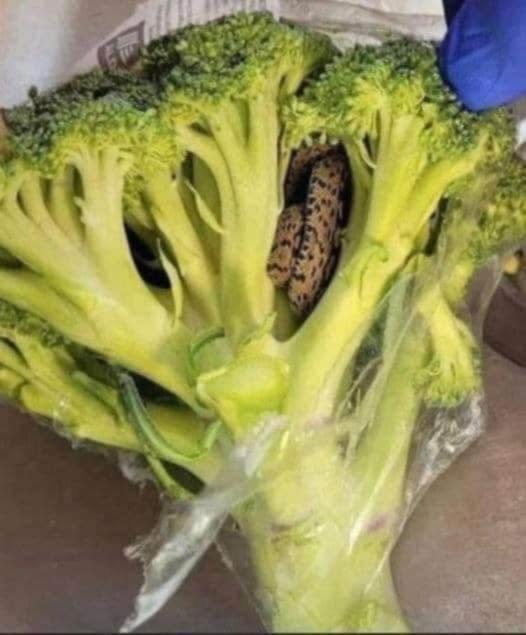
Few internet headlines are more effective than the classic:
“Horrified Man Finds Something Unbelievable in a Bag of Broccoli He Purchased…”
The title immediately sparks curiosity. What did he find? Was it dangerous? Was it alive? Could it happen to anyone?
Before readers even know what was discovered, thousands are already clicking, sharing, and commenting.
The reality, however, is often far less dramatic than the headline suggests.
In many viral produce stories, the shocking discovery turns out to be something surprisingly ordinary: a caterpillar hidden among the florets, a small snail, a harmless frog, a lizard, or another tiny creature accidentally collected during harvesting.
While finding an unexpected guest in your vegetables can certainly be unpleasant, it usually says more about how produce is grown than about food safety failures.
Let’s take a closer look at why these discoveries happen, what they actually mean, and what consumers should do if they encounter something unusual in their fresh produce.
Why Stories Like This Go Viral
Curiosity Is Powerful
Humans are naturally curious, especially when something appears unusual or unexpected.
A headline promising an unbelievable discovery creates a powerful information gap. Readers immediately want to know what was found.
Questions begin forming instantly:
- Was it dangerous?
- Was it alive?
- Was it poisonous?
- Did the store make a mistake?
- Could this happen to me?
The uncertainty drives clicks.
The Reality Is Usually Less Dramatic
Interestingly, many viral produce stories follow the same pattern.
The headline suggests something shocking.
The actual discovery often turns out to be:
- A caterpillar
- A beetle
- A grasshopper
- A snail
- A small frog
- A harmless reptile
- Plant debris
While these discoveries are certainly surprising, they rarely represent the catastrophic scenarios implied by the headline.
How Broccoli Is Grown
Broccoli Comes From Nature
It’s easy to forget that broccoli does not originate in a factory.
Broccoli grows outdoors in fields where it interacts with the natural environment every day.
During its growing cycle, broccoli may encounter:
- Insects
- Birds
- Frogs
- Lizards
- Snails
- Worms
- Beneficial pollinators
These interactions are completely normal.
Unlike packaged foods produced in controlled indoor environments, fresh vegetables spend weeks or months exposed to nature.
The Structure of Broccoli Creates Hiding Places
Broccoli has a dense, branching structure.
Its tightly packed florets create countless small spaces where insects can hide.
Even careful harvesting and cleaning procedures may occasionally miss a tiny creature concealed deep within the plant.
This doesn’t necessarily indicate poor quality control.
It reflects the challenge of processing large quantities of produce that originate outdoors.
Common Unexpected Discoveries in Produce
Caterpillars
Perhaps the most common surprise found in broccoli is the caterpillar.
Many species naturally feed on cruciferous vegetables, including:
- Broccoli
- Cauliflower
- Cabbage
- Brussels sprouts
- Kale
These insects are attracted to the same plants humans enjoy eating.
As a result, they occasionally hitch a ride through harvesting and packaging systems.
Snails and Slugs
Snails and slugs thrive in moist agricultural environments.
Because they move slowly and often blend into plant material, they can sometimes remain unnoticed until produce reaches consumers.
Although unpleasant to discover, their presence is usually accidental.
Frogs and Small Reptiles
Occasionally, small frogs, lizards, or geckos are found in produce shipments.
These animals may seek shelter among vegetation and inadvertently become trapped during harvesting.
Such cases often receive widespread media attention because the animals are larger and more dramatic than insects.
However, they remain relatively rare.
Plant Material Mistaken for Something Else
Not every shocking discovery involves an animal.
Sometimes unusual plant structures trigger concern.
Examples include:
- Root fragments
- Seed clusters
- Stem growths
- Naturally occurring deformities
Without botanical knowledge, these features can appear strange or alarming.
Does Finding an Insect Mean the Food Is Unsafe?
Not Necessarily
One of the biggest misconceptions surrounding these stories is the assumption that finding an insect automatically means the food is contaminated.
In reality, insects are part of natural agricultural ecosystems.
Their presence alone does not necessarily indicate:
- Disease
- Spoilage
- Dangerous contamination
- Unsafe growing practices
In fact, some consumers view occasional insect encounters as evidence that produce was grown in a relatively natural environment.
Context Matters
The key question is not whether an insect existed.
The important question is whether the produce remains fresh and safe to consume.
Food safety concerns typically involve issues such as:
- Mold
- Bacterial contamination
- Chemical contamination
- Spoilage
An isolated insect is generally a quality issue rather than a major safety issue.
Modern Quality Control Measures
Produce Undergoes Multiple Steps
Before reaching grocery stores, broccoli often passes through several stages:
- Harvesting
- Sorting
- Washing
- Inspection
- Packaging
- Transportation
- Retail handling
Each stage reduces the likelihood that foreign material remains in the final product.
No System Is Perfect
Despite sophisticated processing systems, perfection is difficult to achieve.
Millions of pounds of produce move through supply chains every year.
Given the scale of production, occasional anomalies are inevitable.
A rare discovery does not necessarily indicate widespread problems throughout the industry.
What To Do If You Find Something Unexpected
Stay Calm
The first step is not to panic.
Finding an insect or small animal in produce can be startling, but it rarely represents an emergency.
Take a moment to assess the situation calmly.
Document the Discovery
If you find something unusual:
- Take photographs
- Save the packaging
- Record product details
- Keep the receipt if possible
This information can help retailers or manufacturers investigate the incident.
Contact the Store or Manufacturer
Most companies take customer reports seriously.
Many maintain quality assurance teams specifically designed to investigate unexpected findings.
Providing clear information helps improve future quality control efforts.
Handle Live Animals Carefully
If the discovery involves a living animal, avoid harming it unnecessarily.
Depending on the species and local regulations, wildlife authorities may provide guidance.
How To Inspect Broccoli Before Cooking
Visual Inspection
Before preparing broccoli:
- Examine the surface
- Check between florets
- Look for discoloration
- Inspect stems carefully
A quick inspection can reveal many issues before cooking begins.
Rinse Thoroughly
Running water helps remove:
- Dirt
- Dust
- Small insects
- Loose debris
Although washing does not eliminate every possibility, it significantly reduces the likelihood of surprises.
Separate Florets
Breaking broccoli into smaller pieces allows inspection of areas hidden within the dense crown.
This simple step can make a substantial difference.
Why Fresh Produce Is Different From Processed Foods
Nature Is Part of the Process
Fresh fruits and vegetables originate in dynamic outdoor environments.
Unlike highly processed foods manufactured under controlled conditions, produce remains connected to natural ecosystems throughout its growth.
As a result, occasional encounters with insects are not entirely surprising.
The Trade-Off
Consumers generally want:
- Fresh produce
- Minimal processing
- Natural growing conditions
These preferences inevitably involve some interaction with the natural world.
Complete elimination of every insect would require far more aggressive interventions than many consumers would prefer.
The Psychology Behind Produce Scares
Surprise Amplifies Fear
Unexpected discoveries create strong emotional reactions.
People are especially sensitive to surprises involving food because eating is such an intimate daily activity.
A single unusual incident can feel more significant than it actually is.
Headlines Focus on Emotion
News stories often emphasize the shock factor.
Words such as:
- Horrified
- Shocking
- Unbelievable
- Disgusting
- Terrifying
attract attention.
However, the emotional language often exaggerates the practical significance of the event.
Frequently Asked Questions
Is it normal to find insects in broccoli?
While uncommon, it can happen because broccoli is grown outdoors and naturally attracts insects.
Does finding a bug mean the produce is contaminated?
Not necessarily. In many cases, it is simply a quality-control issue rather than a food safety concern.
Should I throw away the entire package?
That depends on the situation. If you’re concerned about contamination or spoilage, discarding the product may be appropriate. Otherwise, contact the retailer for guidance.
How can I reduce the chances of finding insects?
Inspect produce carefully, separate florets, and rinse thoroughly before cooking.
Are these discoveries common?
They are relatively rare considering the enormous volume of produce sold each year.
Final Thoughts
Stories about shocking discoveries in bags of broccoli often sound far more dramatic than they actually are. In most cases, the unexpected find turns out to be a small insect, snail, frog, or other creature that accidentally became trapped during harvesting and packaging.
While these encounters can certainly be surprising-and occasionally unpleasant-they usually reflect the realities of outdoor agriculture rather than widespread food safety failures.
Fresh produce grows in natural environments where plants, insects, and wildlife coexist. Even with modern cleaning and inspection systems, the occasional surprise can slip through.
The next time you encounter a sensational headline about a horrifying discovery in a bag of broccoli, remember that the explanation is often much less alarming than the headline suggests.
Sometimes the most unbelievable discovery is simply a reminder that our food comes from nature.


Leave a Reply