
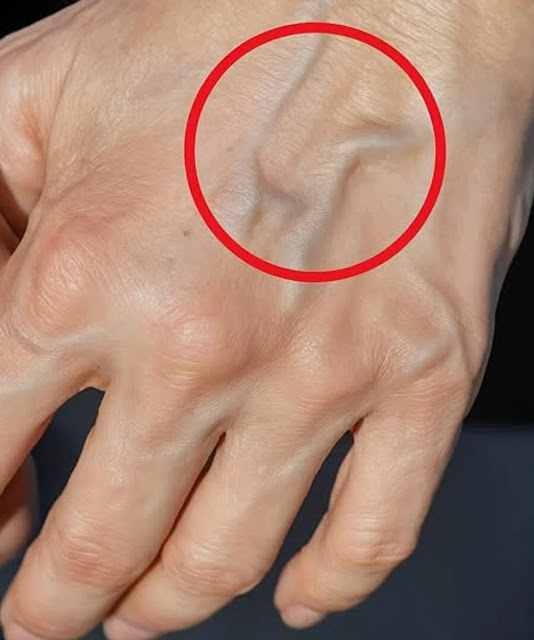
Take a quick look at your hands, arms, feet, or even your legs. Can you clearly see blue, green, or purple veins beneath your skin?
If so, you’re not alone.
Visible veins are incredibly common, yet they continue to attract attention online. Social media posts frequently claim that prominent veins reveal hidden health problems, poor circulation, exceptional fitness, unique personality traits, or even special genetic advantages.
Some posts suggest visible veins are a warning sign of disease. Others claim they indicate superior athletic ability. A few even insist they reveal something about intelligence or character.
The truth is much simpler.
For most people, visible veins are a completely normal part of human anatomy. In many cases, they tell us more about skin thickness, body composition, genetics, and age than they do about overall health.
Understanding why veins become visible can help separate medical facts from internet myths and provide reassurance for anyone who has ever wondered what those blue lines beneath the skin really mean.
Why Veins Are Visible in the First Place
The Job of Your Veins
Veins play a vital role in the circulatory system.
Their primary function is to carry blood back toward the heart after oxygen has been delivered to tissues throughout the body.
Unlike arteries, which typically lie deeper beneath the skin, many veins travel closer to the surface.
Because of this location, they can sometimes be seen through the skin, especially in certain areas of the body.
Common locations include:
- Hands
- Forearms
- Feet
- Legs
- Chest
- Neck
Whether or not you can easily see them depends on several factors.
Why Veins Look Blue
One of the most common questions people ask is why veins appear blue when blood is actually red.
The answer involves the way light interacts with skin.
Blood inside veins is dark red, not blue.
However, when light penetrates the skin and reflects back to our eyes, certain wavelengths scatter differently. This optical effect causes veins to appear blue, green, or purple depending on skin tone and lighting conditions.
So if your veins look blue, there is no cause for concern. It is simply a visual phenomenon.
Genetics Play a Major Role
Some People Naturally Have More Visible Veins
One of the biggest factors affecting vein visibility is genetics.
Some people inherit:
- Thinner skin
- Less subcutaneous tissue
- More superficial veins
- Lighter skin pigmentation
These traits make veins easier to see.
If your parents or grandparents had visible veins, there is a good chance you inherited similar characteristics.
This explains why two healthy individuals can look completely different even when they have similar lifestyles.
Skin Thickness Matters
The thickness of the skin acts almost like a curtain covering the body’s underlying structures.
Thinner skin allows more of the veins underneath to show through.
Thicker skin hides them more effectively.
This difference alone can dramatically influence vein visibility.
Body Fat and Visible Veins
Lower Body Fat Increases Visibility
One of the most common reasons veins become more noticeable is lower body fat.
A layer of fat normally sits between the skin and deeper tissues.
When that layer becomes thinner, veins appear closer to the surface.
This is why visible veins are often seen in:
- Athletes
- Bodybuilders
- Runners
- Cyclists
- Naturally lean individuals
The veins were always present.
They simply become easier to see when less tissue covers them.
Fitness Isn’t the Whole Story
Although visible veins are common among athletes, they do not automatically indicate exceptional fitness.
A person can have highly visible veins because of genetics while rarely exercising.
Likewise, a physically fit individual may have less visible veins because of thicker skin or different body composition.
Vein visibility alone is not a reliable measure of health or athletic ability.
Heat and Temperature Effects
Why Veins Stand Out More in Warm Weather
Have you ever noticed your veins appearing larger after spending time outdoors on a hot day?
This happens because blood vessels expand in response to heat.
The body uses this mechanism to help release excess heat and regulate temperature.
As veins expand, they move closer to the skin’s surface and become easier to see.
This effect is completely normal.
Hot Showers and Baths
Many people observe the same phenomenon after:
- Hot showers
- Warm baths
- Saunas
- Hot tubs
The increased temperature encourages blood vessel dilation, making veins temporarily more prominent.
Once the body cools down, the veins often become less noticeable again.
Exercise and Temporary Vein Visibility
The Exercise Pump
Physical activity increases blood flow throughout the body.
As muscles work harder, surrounding blood vessels expand to meet increased oxygen demands.
This temporary expansion often causes veins to become more visible.
Weightlifters frequently experience what is commonly called a “pump.”
During and immediately after exercise:
- Blood flow increases
- Muscles swell slightly
- Veins become more prominent
This effect is temporary and typically fades as the body returns to its resting state.
A Normal Physiological Response
For healthy individuals, increased vein visibility during exercise is generally a normal response rather than a sign of any problem.
It simply reflects the body’s ability to adapt to increased physical demands.
Aging and Vein Visibility
Why Veins Become More Noticeable With Age
Many people notice more visible veins as they get older.
Several age-related changes contribute to this effect.
Skin gradually becomes:
- Thinner
- Less elastic
- More transparent
Meanwhile, supportive tissues beneath the skin may decrease.
These changes allow underlying veins to become easier to see.
Aging Doesn’t Automatically Mean Disease
Although vein visibility often increases with age, it does not automatically indicate poor health.
In many cases, it is simply a natural consequence of normal aging.
The same processes that create wrinkles can also make veins more apparent.
Common Myths About Visible Veins
Myth #1: Visible Veins Mean Poor Circulation
This is one of the most widespread misconceptions.
In reality, many people with highly visible veins have completely normal circulation.
Vein visibility and circulation quality are not the same thing.
Myth #2: Visible Veins Mean You’re Unhealthy
For most people, visible veins are harmless.
They often reflect anatomy rather than illness.
Many healthy individuals have prominent veins throughout their lives.
Myth #3: Visible Veins Mean You’re Extremely Fit
Fitness can contribute to vein visibility, especially through reduced body fat.
However, genetics and skin characteristics often play an equally important role.
Visible veins alone do not prove athletic ability.
Myth #4: Visible Veins Reveal Personality Traits
Social media occasionally promotes claims linking vein patterns to personality characteristics.
There is no scientific evidence supporting these ideas.
Veins are blood vessels, not personality indicators.
When Visible Veins May Warrant Medical Attention
Most Cases Are Harmless
For the vast majority of people, visible veins are simply a cosmetic characteristic.
However, certain changes should be evaluated by a healthcare professional.
Potential Warning Signs
Consider seeking medical advice if visible veins are accompanied by:
- Pain
- Swelling
- Redness
- Warmth
- Sudden changes
- Skin discoloration
- Persistent discomfort
These symptoms may indicate an underlying issue requiring evaluation.
Varicose Veins
One condition that can involve prominent veins is varicose veins.
These veins often appear:
- Enlarged
- Bulging
- Twisted
Varicose veins result from weakened vein valves that allow blood to pool.
While often more of a cosmetic concern than a serious medical problem, they can sometimes cause discomfort and should be discussed with a healthcare professional if symptoms develop.
Lifestyle Factors That Influence Vein Appearance
Hydration
Hydration status can affect the appearance of blood vessels.
Although hydration does not dramatically alter vein structure, temporary changes in fluid balance may influence how prominent veins appear.
Muscle Development
Increased muscle mass can make veins more visible by pushing them closer to the skin’s surface.
This effect is especially noticeable in the arms and shoulders.
Sun Exposure
Long-term sun exposure can contribute to skin thinning over time, potentially increasing vein visibility in some individuals.
Protecting the skin remains important for overall skin health.
Why Social Media Gets It Wrong
Simple Explanations Rarely Go Viral
The internet tends to favor dramatic claims.
Statements such as:
“Visible veins mean hidden disease!”
or
“Visible veins prove elite fitness!”
generate more clicks than:
“Visible veins are usually normal anatomy.”
Unfortunately, the simpler explanation is often the more accurate one.
The Importance of Context
Visible veins must be interpreted within the context of the whole person.
Factors such as:
- Age
- Genetics
- Body composition
- Activity level
- Skin characteristics
all contribute to appearance.
No single visual feature can reliably reveal overall health.
Frequently Asked Questions
Are visible veins normal?
Yes. For most people, visible veins are completely normal.
Why are my veins becoming more noticeable?
Common reasons include aging, lower body fat, exercise, heat exposure, and genetics.
Do visible veins mean poor circulation?
Not necessarily. Many people with visible veins have perfectly healthy circulation.
Can exercise make veins stand out?
Yes. Increased blood flow during physical activity often makes veins more noticeable temporarily.
When should I see a doctor?
Consult a healthcare professional if visible veins are accompanied by pain, swelling, redness, sudden changes, or other concerning symptoms.
Final Thoughts
Visible veins are one of the most misunderstood features of the human body. Despite countless online claims linking them to disease, personality, or extraordinary fitness, the reality is usually far less dramatic.
For most people, visible veins simply reflect normal anatomy. Genetics, skin thickness, body fat levels, aging, exercise, and temperature all influence how noticeable veins appear beneath the skin.
While certain vein-related symptoms deserve medical attention, visibility alone is rarely a cause for concern. In many cases, those blue lines beneath the skin are simply a reminder of the remarkable circulatory system working quietly beneath the surface every day.
The next time you notice prominent veins on your hands or arms, remember: they often tell you more about your anatomy than your health.
And that’s perfectly normal.



Leave a Reply