
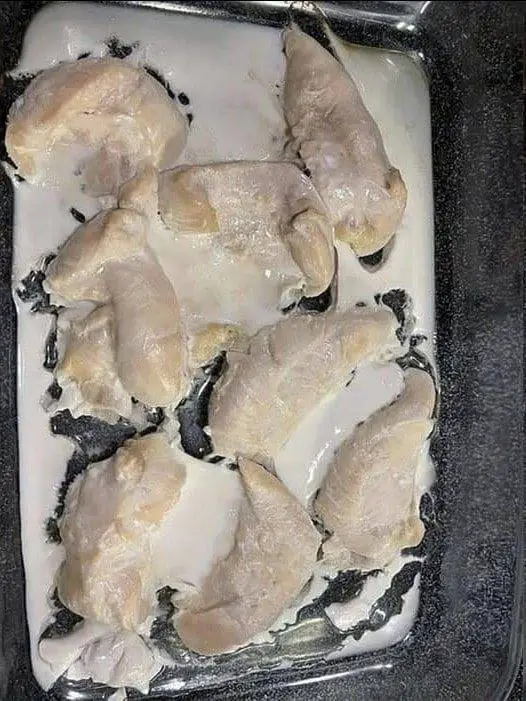
The first time you see a strange white substance oozing out of chicken while it cooks, it can be unsettling. One moment you’re confidently preparing dinner, and the next you’re staring into the pan wondering if something has gone terribly wrong. Is the chicken spoiled? Undercooked? Unsafe to eat?
Take a breath — because the truth is far less alarming.
That mysterious white stuff is completely normal, surprisingly common, and backed by simple food science. It’s not a warning sign, and it doesn’t mean your meal is ruined. In fact, once you understand what’s happening, you’ll probably stop noticing it altogether.
Let’s break it all down so you can cook chicken with confidence — no panic required.
What Is the White Stuff That Comes Out of Chicken?
The white substance you see when cooking chicken is primarily protein and water.
More specifically, it’s a coagulated protein called albumin, mixed with moisture that’s naturally present in the meat. Albumin is the same protein found in egg whites — and yes, it behaves almost exactly the same way when heated.
Why It Happens During Cooking
Chicken muscle fibers contain water and proteins. When heat is applied:
- The muscle fibers tighten and contract
- This contraction pushes moisture out of the meat
- As the temperature rises, proteins in that liquid denature and coagulate
- The result is an opaque, white, sometimes foamy substance on the surface
It’s simply biology reacting to heat.
If you’ve ever watched egg whites turn from clear to solid white in a frying pan, you’ve already seen this process in action.
Is the White Stuff Safe to Eat?
Yes — completely safe.
There’s nothing harmful, toxic, or unsafe about it. It’s not bacteria, mold, fat, or anything artificial. It’s just cooked protein and water.
As long as:
- The chicken was fresh before cooking
- It smells normal
- It’s cooked to a safe internal temperature
…the white substance is harmless and edible.
Many professional chefs ignore it entirely or simply wipe it away for presentation purposes.
Does It Mean the Chicken Is Bad or Spoiled?
No — not at all.
The presence of white protein during cooking has nothing to do with spoilage. Even the freshest, highest-quality chicken can release albumin when cooked.
However, it’s important to know the difference between normal cooking byproducts and actual signs of spoiled chicken.
When Should You Be Concerned?
While white protein is normal, there are times when chicken should not be eaten. Trust your senses before cooking, not during.
Warning Signs of Bad Chicken (Before Cooking)
Discard the chicken if you notice:
- A strong sour or rotten smell
- A slimy or sticky texture
- Gray, green, or yellow discoloration
- Packaging that’s bloated or leaking
If the chicken looked, smelled, and felt normal when raw, the white substance during cooking is not a red flag.
Why Does It Happen More with Some Chicken Than Others?
You may notice the white stuff more often in certain situations. That’s because several factors influence how much protein is pushed out during cooking.
1. High Cooking Temperatures
Cooking chicken at very high heat causes muscle fibers to contract more aggressively, forcing more moisture — and protein — out of the meat.
2. Boneless, Skinless Cuts
Chicken breasts, especially boneless and skinless ones, are more prone to releasing white protein because:
- They’re lean
- They contain less fat
- There’s nothing to shield the muscle fibers from heat
3. Frozen or Previously Frozen Chicken
Freezing damages muscle fibers slightly, making them release more moisture when cooked. That’s why frozen-then-thawed chicken often produces more white residue.
4. Commercially Processed Chicken
Some mass-produced chicken contains added water or saline solutions, which can increase moisture loss during cooking.
Is This Unique to Chicken?
Not at all. The same thing happens with many other foods.
Foods That Release Similar White Protein
- Fish, especially salmon (very common)
- Pork chops
- Turkey
- Eggs
- Shrimp
Whenever heat meets protein and moisture, coagulation occurs. Chicken just happens to make it more noticeable.
Why Does It Look So Unappetizing?
Let’s be honest — while harmless, the appearance can be off-putting.
The white substance often:
- Pools in the pan
- Forms clumps
- Looks foamy or curdled
Our brains associate unexpected textures with danger, even when none exists. It’s a visual issue, not a safety issue.
Can You Prevent or Reduce the White Stuff?
You can’t eliminate it completely, but you can reduce how noticeable it is.
1. Cook Low and Slow
Lower heat = gentler muscle contraction = less moisture loss.
Instead of blasting chicken over high heat, try:
- Medium heat on the stovetop
- Baking at moderate temperatures
- Gentle roasting
2. Brine the Chicken
Soaking chicken in saltwater for 30 minutes to a few hours helps muscle fibers retain moisture.
Simple brine:
- 4 cups water
- 2 tablespoons salt
This improves juiciness and reduces protein leakage.
3. Pat Chicken Dry Before Cooking
Removing surface moisture prevents excess liquid from mixing with proteins and forming visible residue.
4. Avoid Overcrowding the Pan
Crowded pans create steam instead of searing, which encourages moisture release.
Give chicken space so it cooks evenly.
5. Use Marinades Wisely
Marinades with salt and acid can help control moisture loss, but overly acidic marinades may actually increase protein release if used too long.
Should You Scrape It Off?
That’s entirely up to you.
- For home cooking: You can ignore it
- For presentation: You can gently wipe it away with a paper towel
- For sauces: Simply stir it in — it won’t affect flavor
It has a neutral taste and doesn’t change texture significantly once mixed.
Does It Affect Taste or Texture?
No.
The white protein:
- Has little to no flavor
- Doesn’t make chicken dry
- Doesn’t change the nutritional value
If your chicken tastes dry, the cause is overcooking — not the protein itself.
A Quick Science Breakdown (Simple Version)
- Chicken contains protein + water
- Heat causes muscle fibers to tighten
- Water is pushed out
- Protein in the liquid coagulates
- White substance appears
That’s it. No mystery. No danger.
Common Myths About the White Stuff
Myth 1: It Means the Chicken Is Undercooked
❌ False
It can appear even when chicken is fully cooked.
Myth 2: It’s Fat
❌ False
Fat turns clear when melted, not white and foamy.
Myth 3: It’s Chemicals or Preservatives
❌ False
It happens with organic, free-range, and home-raised chicken too.
Professional Chefs See This All the Time
In restaurant kitchens, this phenomenon is well known. Chefs expect it, understand it, and don’t panic over it.
In high-end plating, it’s usually wiped away for aesthetics — not safety.
Should You Stop Eating Chicken Because of This?
Absolutely not.
Chicken remains:
- One of the healthiest protein sources
- Affordable
- Versatile
- Nutritious
Understanding how it behaves during cooking simply makes you a more confident cook.
Final Thoughts: Stay Calm and Keep Cooking
The next time you see that white substance appear in your pan, remember this:
- Your chicken is safe
- Your meal is not ruined
- Nothing has gone wrong
It’s just protein reacting to heat — exactly as nature designed it to.
Cooking is part science, part art, and part trust. And now, you’re equipped with the knowledge to cook chicken without second-guessing every sizzle and bubble.
So smile, flip that chicken, and enjoy your meal.
You’ve got this. 🍗✨

Leave a Reply